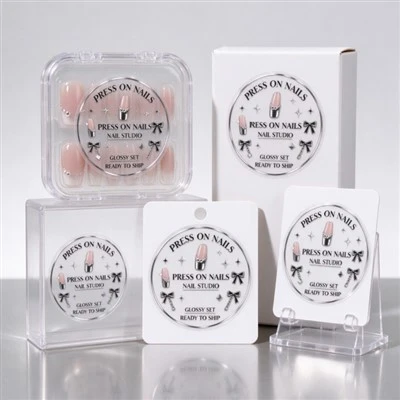
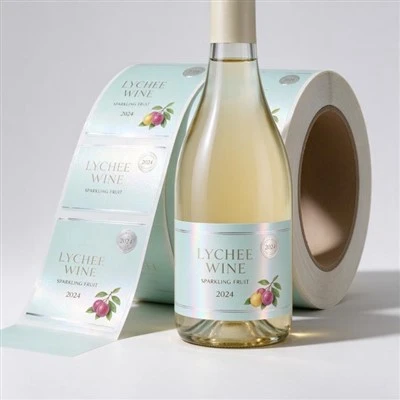
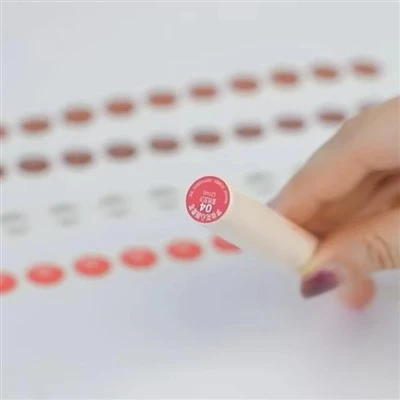
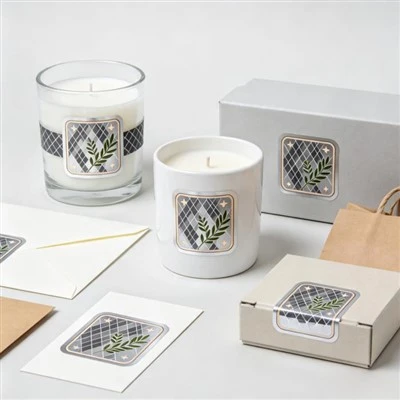
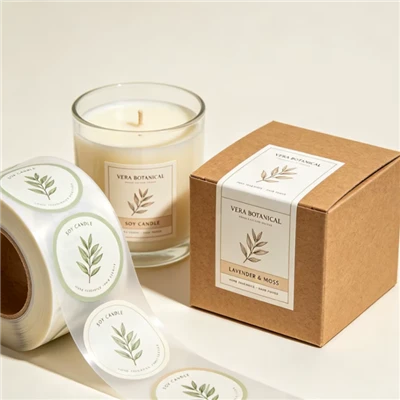
Water, humidity, condensation, and frequent handling can create unexpected problems for product labels. A label may look perfect when first applied, yet develop lifted edges, cloudy areas, or poor adhesion after the product is chilled, washed, or stored in a humid environment. For brands that need reliable packaging, waterproof BOPP labels are a practical option worth considering.
BOPP, short for biaxially oriented polypropylene, is a plastic film commonly used for product labels because it offers good moisture resistance, a smooth printing surface, and dimensional stability. These properties make BOPP label material suitable for many food, beverage, cosmetic, and personal care applications. However, choosing the right film is only one part of the decision. Adhesive performance, printing quality, container material, and application conditions also affect how the finished label performs.
This guide explains why waterproof BOPP labels are widely used for packaging, how to choose suitable adhesives, what can cause labels to lift or lose their appearance, and how to evaluate a custom label before mass production.

Why BOPP Labels Are Suitable for Waterproof Packaging
BOPP is a polypropylene film stretched in two directions during manufacturing. This process gives the film useful mechanical properties, including dimensional stability and resistance to moisture absorption. Unlike ordinary unprotected paper, BOPP film does not readily absorb water into its structure, making it a useful face material for products exposed to splashes, humidity, or condensation.
For packaging manufacturers, this offers several practical advantages. The film can maintain its general shape when exposed to moisture, while its smooth surface supports printed logos, product names, instructions, and decorative graphics. Depending on the selected construction and printing process, BOPP labels can also be produced in clear, white, and other finishes to suit different brand identities.
Waterproof BOPP labels are commonly considered for shampoo bottles, body wash containers, lotion bottles, beverage packaging, and selected food products. In these applications, the label may encounter water during use, storage, transportation, or refrigeration. A suitable film label can help preserve the appearance of the packaging better than an untreated paper label in many wet environments.
Nevertheless, waterproof performance should not be judged by the face material alone. A complete pressure-sensitive label consists of three main elements: the face material, the adhesive, and the release liner. The liner protects the adhesive before application, while the adhesive bonds the finished label to the container. Once applied, the film, adhesive, printed surface, and container must work together.
For example, a BOPP label may resist water effectively but still lift from a plastic bottle if the adhesive is not compatible with the surface. Similarly, an unsuitable ink or coating may become damaged through repeated rubbing even if the film itself remains intact.
This is why buyers should evaluate the complete construction rather than relying on the words "waterproof" or "water-resistant" in a material description. For a broader introduction to material choices and environmental requirements, see 【Waterproof Labels: Everything Brands Need to Know】.
Choosing the Right BOPP Label Material for Your Product
Not every product requires the same BOPP construction. The most suitable option depends on the container's appearance, the printed design, the amount of moisture involved, and the conditions the package will experience.
White BOPP Labels for Clear Printing and Product Information
White BOPP is a practical option when the design needs a solid background and strong contrast. It can help product names, ingredient information, logos, and colorful graphics remain visible on different container colors.
This construction may be suitable for shampoo bottles, cleaning products, personal care packaging, and many food containers. It is particularly useful when the label carries detailed text or when the bottle surface is colored and could otherwise affect the appearance of the printed design.
Clear BOPP Labels for Transparent Packaging
Clear BOPP labels allow the container or product behind the label to remain visible through unprinted areas. They are often considered for transparent beverage bottles, skincare containers, and minimalist packaging designs.
However, transparent labels require attention to adhesive clarity and application quality. Trapped moisture, air bubbles, dust, or an adhesive that appears cloudy on the chosen container may affect the final appearance. If the product will be chilled or exposed to condensation, test the actual label construction rather than assuming that transparent film will remain visually clear in every condition.
Other Construction Considerations
The selected BOPP film should also match the printing and finishing requirements. Brands may consider gloss or matte finishes, transparent areas, white ink, or other decorative effects depending on the design. The finishing method should not interfere with readability or the expected environmental performance.
For buyers comparing film options, 【BOPP vs Vinyl Labels: Which Material Is Right for Your Product?】 explains how material characteristics influence label selection. The final choice should be based on the actual package and its intended use rather than a material name alone.

How to Choose the Right Adhesive for Waterproof BOPP Labels
The adhesive is one of the most important factors in determining whether waterproof BOPP labels stay attached during storage and use. A label can have a moisture-resistant face material and still fail if the adhesive does not form a suitable bond with the container.
Glass Bottles and Jars
Glass generally provides a relatively smooth surface for labeling, but the surface must be clean and dry. Dust, oil, condensation, and cleaning residues can interfere with adhesion.
For beverage bottles, cosmetic jars, and other glass containers, buyers should consider whether the label will be applied at room temperature, on a chilled container, or in a production environment where condensation may form. If the finished product will be stored in a refrigerator or ice bucket, the adhesive should be selected and tested for those conditions.
Plastic Bottles and Containers
Plastic packaging requires particular attention because different plastics have different surface characteristics. Polypropylene (PP) and polyethylene (PE), for example, can be more challenging for some pressure-sensitive adhesives than higher-surface-energy materials.
This matters for shampoo bottles, lotion containers, and flexible personal care packaging. A label that performs well on a glass sample may not provide the same adhesion on a PP or PE bottle. Curved surfaces and flexible containers can introduce additional stress around the label edges.
For these applications, discuss the exact container material with your label supplier and test the proposed construction on the real packaging. Do not assume that all plastic bottles require the same adhesive.
Cold, Wet, or Condensation-Prone Applications
Cold temperatures can reduce the initial tack of some adhesives, while water on the container can interfere with the adhesive's contact with the surface. As a result, labeling a cold bottle with condensation may be more difficult than labeling a clean, dry container.
Where production conditions allow, applying labels to clean, dry containers can improve consistency. If the product must be labeled under cold or moisture-prone conditions, a specialized adhesive construction may be needed. Its suitability should be confirmed through application testing.
For more details about selecting an adhesive for different surfaces and conditions, read 【How to Choose the Right Label Adhesive for Your Product】.


Why Waterproof Labels May Still Peel, Bubble, or Lose Their Appearance
One common misconception is that a waterproof film automatically makes the entire label waterproof in every situation. In practice, label failures often result from a combination of material selection, adhesive compatibility, application conditions, and the way the product is used.
Edge lifting may occur when the adhesive is unsuitable for the container, the surface is contaminated, or the label is applied around a tight curve. If the label is too stiff for the container shape, the edges may experience greater stress and begin to lift.
Bubbles or cloudy areas can develop when air or moisture becomes trapped between the label and the container. This is particularly noticeable with transparent labels, where trapped moisture or an adhesive that turns cloudy can affect the appearance.
Poor adhesion after refrigeration may result from condensation, low application temperatures, or an adhesive that was not designed for the intended conditions. A label that adheres well to a dry bottle at room temperature may behave differently when applied to a cold or damp surface.
Print damage or fading is a separate issue. Even when the BOPP film resists moisture, the printed graphics, ink system, varnish, or laminate may not provide the required resistance to rubbing, oils, or cleaning agents. The finished label should therefore be evaluated for both adhesion and print durability.
To reduce these risks, confirm the actual container material, application temperature, storage environment, and exposure to water or oils before ordering. Then test the complete label construction on representative packaging.
Our guide 【How to Test Label Adhesive Before Mass Production】 provides a practical testing process that includes initial adhesion, environmental exposure, edge inspection, and final application performance. Testing should reflect the actual product's conditions rather than follow an arbitrary fixed duration.
Applications of Waterproof BOPP Labels in Packaging
The versatility of BOPP film makes it suitable for many packaging projects, but each application has its own requirements.
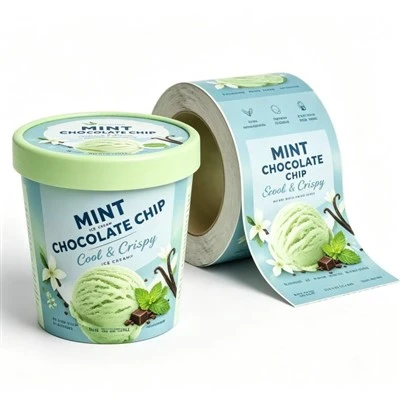
Food and beverage packaging: Bottles, jars, and selected food containers may encounter condensation, refrigeration, splashes, or repeated handling. White or clear BOPP can be considered depending on the product presentation, while the adhesive and printing system should match the intended storage conditions.
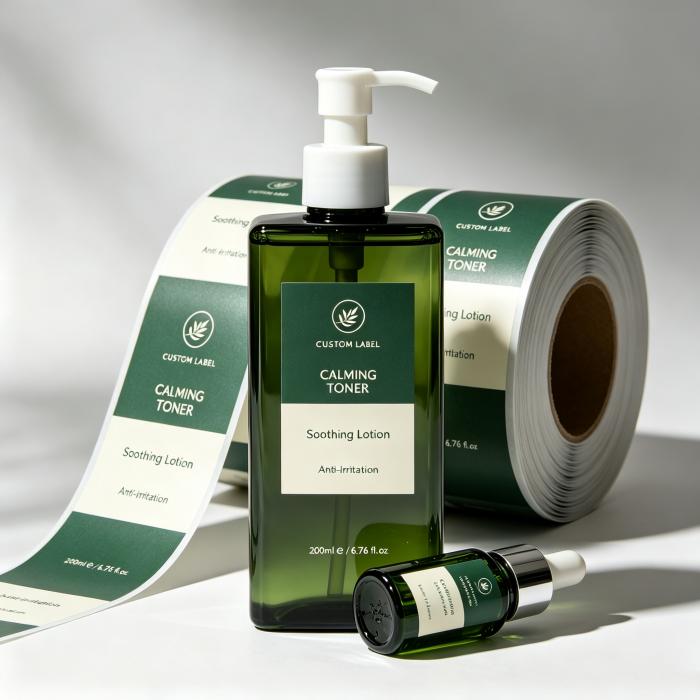
Cosmetic and personal care packaging: Shampoo, conditioner, body wash, lotion, and skincare containers are frequently used in bathrooms or other humid environments. BOPP labels can provide a moisture-resistant face material and support a range of printed designs. Adhesion should be tested on the actual bottle, particularly when the container is made from flexible or low-surface-energy plastic.
Household and cleaning products: Labels on cleaning bottles may encounter water, splashes, and occasional contact with product residues. In addition to moisture resistance, the label may need to withstand contact with oils or specific cleaning ingredients. Compatibility should be tested against the actual formulation and expected exposure.
Refrigerated products: Cold storage can create condensation when products move between different temperatures. Brands should consider both the application conditions and the product's later storage environment. If labeling takes place before chilling, the construction should be tested after the product undergoes representative temperature changes.
In all these applications, the best waterproof product labels are not simply those made from a water-resistant film. They are labels designed around the complete packaging system, including the surface, adhesive, printing, and expected handling conditions.
How to Test Waterproof BOPP Labels Before Mass Production
Before approving an order, buyers should evaluate samples on the actual package. A material specification or digital proof cannot fully predict how a finished label will behave in production and use.
Start by applying the sample to the intended container. Check whether the label aligns correctly, forms a smooth bond, and follows the shape of the package without excessive wrinkles or trapped air. For curved bottles, inspect the leading and trailing edges carefully.
Next, evaluate initial adhesion and allow the adhesive to develop according to the supplier's recommendations. Some adhesives build their bond over time, so an immediate check alone may not represent final performance.
Then expose the labeled package to the conditions it is expected to encounter. Depending on the product, this may include water splashes, refrigeration, condensation, humidity, or contact with relevant oils or cleaning substances. Inspect the label for edge lifting, bubbles, cloudiness, print transfer, and changes in appearance.
Finally, assess the result against agreed acceptance criteria. For example, the brand may need the label to remain readable, attached, and visually consistent throughout a specified storage or use scenario. The exact testing procedure should be matched to the application, and any required performance limits should be agreed before production.
If the product is applied by an automated labeling line, test the construction under representative application conditions as well. Label positioning, dispensing, container shape, and application pressure can all affect the outcome.
What to Confirm When Ordering Custom Waterproof BOPP Labels
A clear quotation begins with a clear description of the project. Before contacting a supplier, prepare the following details:
Container information: Confirm whether the package is glass, PET, PP, PE, or another material. Provide the container dimensions and shape.
Label appearance: Specify clear or white BOPP, label dimensions, artwork, color requirements, and any gloss, matte, or other finishing preferences.
Adhesion requirements: Explain whether the product will be used on a curved, flexible, or coated surface and whether the label must be removable or permanently attached.
Environmental conditions: Identify exposure to moisture, condensation, refrigeration, oils, or cleaning products.
Printing and quantity: Provide the artwork, order quantity, application method, and any requirements for variable information or production-line compatibility.
Quality expectations: Agree on how label readability, adhesion, print durability, and environmental performance will be checked.
At SpeedPrint, customers can discuss customized BOPP label materials, sizes, printing, and finishes for different packaging applications. The recommended solution should be based on the specific container and performance requirements, with sample testing completed before mass production.

FAQ About Waterproof BOPP Labels
1. Are BOPP labels waterproof?
BOPP film has good resistance to moisture and does not readily absorb water like ordinary unprotected paper. However, the performance of the complete label depends on the adhesive, printing, finishing, container surface, and application conditions. A finished label should be tested for its intended environment.
2. Can waterproof BOPP labels be used on shampoo and lotion bottles?
Yes. BOPP labels are commonly considered for personal care packaging because the film can withstand moisture exposure. The adhesive must still be suitable for the bottle material and shape, particularly for flexible PP or PE containers.
3. Why does my BOPP label peel off after getting wet?
Possible causes include an incompatible adhesive, surface contamination, condensation during application, insufficient contact pressure, or stress around curved edges. The label should be tested on the actual container under representative conditions to identify the likely cause.
4. Can BOPP labels be used on refrigerated beverage bottles?
They can be suitable, but the adhesive and application process need to match the cold-storage conditions. Condensation can interfere with adhesion, so brands should evaluate the complete construction on the intended bottle and test it after chilling.
5. Are clear BOPP labels as waterproof as white BOPP labels?
Both can offer moisture-resistant film facestocks, but the final performance depends on the complete construction. Clear labels may also make trapped air, moisture, or adhesive cloudiness more visible, so appearance should be evaluated separately from basic water resistance.
6. Can waterproof BOPP labels withstand oil or cleaning chemicals?
Not necessarily. Water resistance does not automatically mean resistance to oils, solvents, detergents, or other chemicals. The ink, adhesive, and finish should be evaluated against the specific substance and exposure conditions.
7. How can I test BOPP labels before placing a bulk order?
Apply samples to the actual package, check initial adhesion, allow the bond to develop as recommended, and expose the labels to the relevant conditions. Inspect the edges, printed surface, and overall appearance, then confirm that the results meet your agreed requirements before approving mass production.
Conclusion
Waterproof BOPP labels are a useful choice for many packaging applications that require a moisture-resistant film, clear printing, and a professional appearance. They can work well for food and beverage containers, cosmetic bottles, personal care packaging, and other products exposed to humidity or splashes.
However, choosing the right BOPP film is only the starting point. Adhesive compatibility, printing durability, container shape, condensation, and application conditions all influence the performance of the finished label.
For better results, define the product's real-world requirements, select a suitable label construction, and test samples on the actual packaging before mass production. SpeedPrint can help you evaluate custom BOPP label options based on your packaging material, design, and application needs.
References
Avery Dennison – Pressure-Sensitive Labels
Avery Dennison – Pressure-Sensitive Labeling and Water
Avery Dennison – Z3338 Adhesive Technical Overview