Product Overview
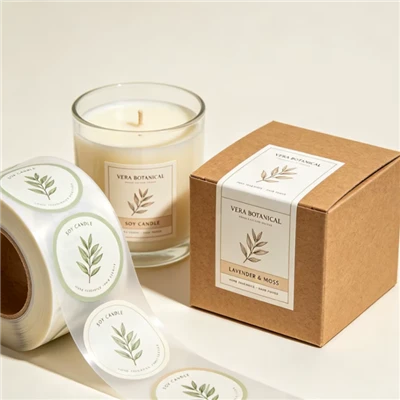
Foil and embossed labels are pressure-sensitive or application-specific components that combine metallic decorative finishes with physical tactile relief for industrial packaging, premium retail goods, and secure brand identification.
These multi-layer structures integrate specialty face stocks, metallic transfer layers, and engineered adhesives to deliver high visual contrast and physical texture. Engineered for automated or manual dispensing, our conversion lines process paper, polyester (PET), and vinyl substrates with precise die-cutting tolerances down to +/- 0.1 mm. They integrate directly onto corrugated boxes, glass bottles, rigid plastic containers, and coated carton stock across high-speed packaging lines.
-
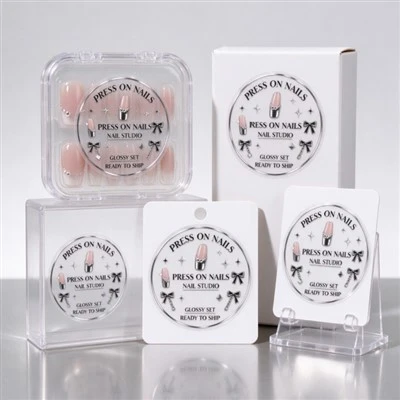
![Blind Embossed Paper Packaging Labels For Elegant Product Presentation]() Blind Embossed Paper Packaging Labels For Elegant Product PresentationBlind Embossed Paper Packaging Labels add subtle raised texture to logos, product names, and selected design elements for a refined packaging appearance. Made from adhesive paper, these custom...
-
![Custom Gold Foil Thank You Stickers For Gift Boxes, Bags And Retail Packaging]() Custom Gold Foil Thank You Stickers For Gift Boxes, Bags And Retail PackagingCustom Gold Foil Thank You Stickers Self Adhesive Labels for Gift Boxes Parcels Cards Paper Bags and Small Retail Packaging add an elegant branded detail to gifts, parcels, cards, paper bags, and...
-
![Gold Foil Roll Labels for Luxury Skincare Packaging]() Gold Foil Roll Labels for Luxury Skincare PackagingThese custom roll adhesive labels are made of premium PVC material, crafted with exquisite gold foil embossing for high-end skincare and cosmetic bottles. With waterproof, oil-proof and...
-
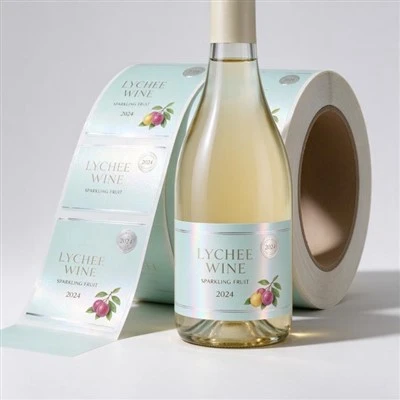
![Embossed Wine Bottle Labels Premium]() Embossed Wine Bottle Labels PremiumLuxury Wine Bottle Labels with Tactile Texture, Metallic Foil Stamping, and 3D Embossed Effects for High-End Branding


Label performance depends on the interaction between face stock, decorative finish, adhesive system, and release liner. The appropriate construction should be selected according to packaging materials, application conditions, and visual requirements.
PET Film Substrates: 25 um to 50 um metallized polyester films providing dimensional stability, chemical resistance, and moisture protection.
Vinyl Film Substrates: Selected grades providing conformability for specialized contours, subject to environmental conditions.
Cold Foil: UV-curable adhesive applied via flexographic plates, laminated with foil on press for high-speed, cost-effective runs.
Pigment Options: Gold, silver, copper, holographic diffraction patterns, and custom metallic shades.
Rubber-Based Hotmelt: Aggressive initial adhesion for rough, textured, or corrugated surfaces.
Removable / Low-Tack: Clean peel capability without residue for temporary promotional seals.
Release Liners: Siliconized glassine and kraft paper grades engineered for smooth matrix stripping and tension control during high-speed web handling.
Key Features & Benefits
Tactile Relief:
Single-level and multi-level embossing dies create a raised profile height up to 0.3 mm, enhancing brand recognition and physical contrast.
Abrasion Resistance:
Protective UV varnish or over-laminate films shield metallic foil from scuffing during transit and automated line handling.
Registration Accuracy:
Servo-driven rotary die-cutting and optical registration systems maintain foil-to-emboss alignment within +/- 0.05 mm.
Die-Cut Versatility:
Custom shapes, square corners with controlled radii, and perforated matrix stripping for reliable high-speed dispensing.
Printing & Customization Options
Production combines flexographic, rotary letterpress, and digital printing platforms with inline converting modules.

Printing Methods:
UV Flexography up to 10 colors for Pantone color matching and solid background coverage.
Rotary Silk Screen for heavy ink deposition, tactile varnishes, and high-opacity metallic effects.
Digital Inkjet (UV/aqueous) for variable data printing, serial numbers, and short-run personalization.
Finishing Combinations:
Inline foil stamping coupled with blind or registered embossing in a single pass.
Matte, gloss, or soft-touch protective lamination.
Back-printing on liner or adhesive face for transparent container applications.
Artwork Requirements: Vector artwork in AI, EPS, or PDF format with outlined fonts. Separate spot color channels should be provided for foil areas, and a grayscale vector file for embossing relief depth.

Manufacturing & Quality Control
Production follows strict Standard Operating Procedures within a controlled converting environment, moving systematically from raw material intake to final rewinding.
Quality Assurance Protocols
Vision Inspection Systems (AVIS):
Inline cameras detect missing foil, misregistration, ink voids, and die-cut deviations in real time at speeds up to 150 meters per minute.
Adhesion & Peel Testing:
180-degree peel adhesion tests performed on standard steel and polyethylene test panels per ASTM D3330.
Rub Resistance Testing:
Sutherland Rub Tester (ASTM D5264) utilized to verify foil abrasion durability against friction.
Thermal Cycling:
Environmental chamber testing from -20 °C to +80 °C to evaluate adhesive stability and foil cracking resistance.
Applications
Wine & Spirits:
Premium bottle neck bands and face labels with heavy emboss relief and metallic foil accents.
Cosmetics & Personal Care:
High-gloss cosmetic jar seals, tube labels, and carton branding elements.
Electronics & Appliances:
Rating plates, serial number labels, and metallic brand badges.
Security & Authentication:
Holographic tamper-evident seals and warranty validation labels.
Technical Specifications
|
Parameter |
Specification Range |
Test Standard / Method |
|
Face Stock Thickness |
25 um to 150 um (Film) / 80 to 120 gsm (Paper) |
ISO 534 |
|
Embossing Relief Depth |
0.05 mm to 0.30 mm (Substrate dependent) |
Micrometer caliper measurement |
|
Foil Adhesion / Scratch Resistance |
Grade 4 to 5 (No flaking after 100 cycles) |
ASTM D5264 (Sutherland Rub) |
|
Service Temperature Range |
-30 °C to +120 °C (Adhesive dependent) |
Internal thermal chamber test |
|
Minimum Application Temp |
+5 °C to +10 °C |
Surface pyrometer check |
|
Core Inner Diameter |
40 mm (1.57 in) / 76 mm (3 in) |
Industrial standard tolerance |
FAQ
SpeedPrint Era (Xiamen) Digital Co., Ltd. is one of the most professional foil / embossed labels manufacturers and suppliers in China, featured by quality products and low price. Please rest assured to wholesale advanced foil / embossed labels made in China here and get quotation from our factory. We also accept customized orders.
foil embossed labels, Gold Foil Roll Labels for Luxury Skincare Packaging, textured wine bottle labelsPopular Products