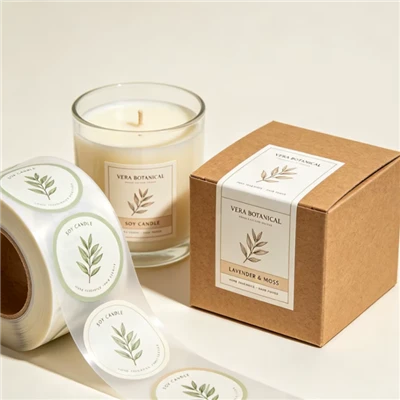
Water is one of the most common causes of label failure. Condensation on beverage bottles, humidity in bathrooms, splashes during cleaning, refrigeration, and outdoor exposure can all affect how a label looks and performs.
For brands, waterproof labeling is therefore not simply about preventing paper from getting wet. A reliable waterproof label needs to maintain adhesion, readability, appearance, and structural integrity throughout the product's expected use.
This guide explains how waterproof labels work, what makes a label truly suitable for wet environments, how to choose materials and adhesives, and which products benefit most from waterproof labeling.

What Are Waterproof Labels?
Waterproof labels are labels designed to resist water and moisture without losing their essential performance.
A waterproof label normally involves more than the face material. Its overall performance depends on several components:
Face material
Adhesive
Ink or printing system
Surface coating or laminate
Application surface
Environmental conditions
This is important because a label can have a waterproof face material but still fail if the adhesive is not suitable for the application.
For brands developing 【custom product labels】, waterproof performance should therefore be considered as a complete label construction rather than simply choosing a "waterproof sticker."
Why Do Products Need Waterproof Labels?
Moisture can affect packaging in several different ways.
A label may experience:
Direct water contact
Condensation
High humidity
Refrigeration
Ice or melting water
Cleaning chemicals
Outdoor rain
Frequent handling with wet hands
A paper label may absorb moisture, causing wrinkles, fading, tearing, or edge lifting.
For some products, this is only an appearance problem. For others, it can affect important product information.
A damaged label can make it harder to read:
Product names
Ingredients
Instructions
Warnings
Barcodes
Batch information
Brand information
Water resistance is therefore both a packaging quality factor and an information protection factor.
Waterproof Labels vs Water-Resistant Labels
These terms are sometimes used interchangeably, but they do not always describe the same level of performance.
Water-Resistant Labels
Water-resistant labels can withstand limited exposure to moisture or occasional contact with water.
They may be suitable for products that experience:
Light splashes
Moderate humidity
Short-term moisture exposure
Waterproof Labels
Waterproof labels are designed for more demanding moisture exposure and typically use synthetic film materials with suitable adhesives and printing systems.
They are more appropriate for products that may encounter:
Repeated water exposure
Condensation
Refrigeration
Wet handling
Outdoor conditions
However, "waterproof" should always be evaluated according to the actual application environment rather than treated as an absolute claim.

What Makes a Label Waterproof?
A waterproof label is a system made up of multiple elements.
1. Waterproof Face Material
The face material is the visible layer of the label.
Common synthetic materials include:
BOPP
PET
PVC
Other synthetic films
Unlike conventional paper, these materials do not readily absorb water.
For brands comparing materials, 【BOPP labels】 are often a practical option for consumer packaging because they combine moisture resistance with good printability and cost efficiency.
For applications requiring higher durability or chemical resistance, 【PET labels】 may be more appropriate.
2. Suitable Adhesive
Even when the label material itself is waterproof, the label can still fail if the adhesive is not compatible with the application.
Adhesive performance can be affected by:
Container material
Surface texture
Temperature
Moisture
Chemicals
Application conditions
For example, applying a label to a cold, wet bottle is very different from applying it to a clean, dry glass container.
The adhesive must be selected according to the actual packaging environment.
3. Durable Printing
The printed information also needs to withstand the environment.
Depending on the application, brands may require printing that resists:
Water
Abrasion
Oils
Cleaning agents
Chemicals
UV exposure
A waterproof face material does not automatically mean that every printing system will have the same level of resistance.
4. Protective Finishing
Certain applications may benefit from additional surface protection.
Options can include:
Matte coating
Gloss coating
Lamination
Special protective films
These finishes can provide additional protection while also changing the visual appearance of the label.
For premium packaging, protective finishing can combine durability with a more refined appearance.
Waterproof Label Materials: Which One Should You Choose?
There is no single material that is best for every product.
BOPP Labels
BOPP is widely used for consumer packaging.
Advantages include:
Good water resistance
Good printability
Flexible application
Good cost-performance balance
Common applications include:
Beverages
Food
Cosmetics
Personal care products
PET Labels
PET provides higher mechanical strength and excellent dimensional stability.
It is often considered when labels need greater resistance to:
Chemicals
Abrasion
Temperature changes
Frequent handling
Common applications include:
Industrial products
Healthcare packaging
Chemical products
Premium packaging
PVC Labels
PVC film can provide flexibility and durability for certain applications, particularly where conformability is important.
However, material selection should consider the product's sustainability goals and end-of-life packaging requirements.
Waterproof Paper Alternatives
Some specially treated paper products can provide improved moisture resistance, but they generally should not automatically be considered equivalent to synthetic waterproof films in demanding wet environments.

Waterproof Labels for Cosmetics
Cosmetic products frequently encounter moisture.
Think about products such as:
Shampoo
Body wash
Facial cleanser
Hand soap
Hair products
Bath products
These products may be stored in bathrooms or handled with wet hands.
A label that wrinkles, peels, or becomes difficult to read can make even a high-quality cosmetic product look poorly packaged.
For beauty brands, waterproof labels also provide an opportunity to combine performance with appearance.
Clear films, matte finishes, glossy surfaces, and premium printing can be used to create 【custom cosmetic labels】 that remain attractive in humid environments.
Waterproof Labels for Beverage Packaging
Beverage packaging is one of the clearest applications for waterproof labeling.
Bottles and containers can experience:
Refrigeration
Condensation
Ice
Cold storage
Wet handling
Transportation
A label that performs well in a dry warehouse may behave differently after several hours in a refrigerator.
This is why beverage brands should consider the entire distribution and consumption environment when selecting labels.
Waterproof labels can help preserve:
Brand graphics
Product information
Barcodes
Promotional designs
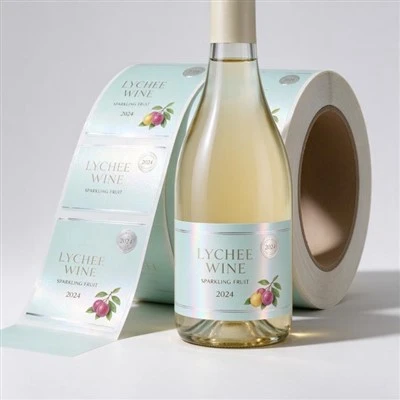
For beverage brands using transparent containers, clear waterproof labels can also create a clean and modern packaging appearance.
Waterproof Labels for Outdoor Products
Outdoor products face more than water.
Depending on the application, labels may be exposed to:
Rain
Sunlight
Temperature changes
Dirt
Abrasion
Frequent handling
For these products, waterproof performance should be considered together with UV and abrasion resistance.
A label that survives rain but fades quickly under sunlight may still be unsuitable for long-term outdoor use.
For demanding applications, brands may need 【durable outdoor labels】 designed around the expected exposure conditions.
Waterproof Labels for Cleaning Products
Cleaning products can present a particularly challenging labeling environment.
Products such as:
Detergents
Disinfectants
Surface cleaners
Bathroom cleaners
Industrial cleaners
may come into contact with water and chemical substances during use.
In these cases, label selection should consider both water resistance and chemical resistance.
PET and other durable synthetic materials can be considered for applications where labels need to maintain their appearance around cleaning agents.
The adhesive is equally important because repeated handling can cause label edges to lift if the construction is not appropriate.
Waterproof Labels for Refrigerated and Cold Products
Cold environments create a unique labeling challenge.
When a cold bottle or container is removed from refrigeration, condensation can form on the surface.
This can create problems such as:
Poor initial adhesion
Edge lifting
Wrinkling
Reduced label stability
The issue is not simply whether the label material absorbs water.
The complete label construction and application conditions matter.
Brands should consider the temperature of the container at the time of application as well as the temperature during storage and use.
Waterproof Labels for Different Container Materials
The same waterproof label may perform differently depending on the container.
Glass
Glass generally provides a smooth surface, but condensation and surface contamination can affect adhesion.
Plastic
Plastic containers may have curved surfaces or low-surface-energy characteristics that require careful adhesive selection.
Metal
Metal packaging may be exposed to temperature changes and condensation, particularly in outdoor or refrigerated applications.
Flexible Packaging
Flexible packaging can bend and deform during use, making flexibility and adhesive performance particularly important.
This is why label specifications should be based on the entire packaging system, not just the label itself.
Waterproof Labels and Brand Design
Waterproof performance does not mean brands need to sacrifice appearance.
Modern printing allows waterproof labels to combine durability with sophisticated packaging design.
Brands can choose:
Transparent backgrounds
High-resolution graphics
Matte finishes
Gloss finishes
Metallic effects
Custom shapes
Variable information
For products where packaging appearance strongly influences purchasing decisions, the label needs to perform technically while still supporting the brand's visual identity.
This is especially important for 【premium packaging labels】 used in competitive retail markets.
Common Mistakes When Choosing Waterproof Labels
Choosing Material Based Only on Price
A cheaper material may not provide sufficient durability for the actual application.
Ignoring the Adhesive
A waterproof film cannot compensate for an adhesive that is unsuitable for the container or environment.
Testing Only Under Dry Conditions
A label should ideally be evaluated under conditions similar to actual storage and use.
Assuming Waterproof Means Chemical-Proof
Water resistance and chemical resistance are different performance characteristics.
Ignoring UV Exposure
Outdoor labels may require UV-resistant printing or materials in addition to waterproof construction.
Focusing Only on Appearance
A beautiful label is not successful if it peels, fades, or becomes unreadable during normal use.
How to Choose the Right Waterproof Label
Before ordering, consider these questions:
What Will the Label Be Exposed To?
Water, condensation, chemicals, sunlight, or abrasion may require different solutions.
What Is the Container Material?
Glass, plastic, metal, and flexible packaging can have different adhesive requirements.
How Long Must the Label Last?
Temporary packaging and long-term outdoor products have very different durability requirements.
Does the Product Need Special Finishing?
A matte, gloss, transparent, or premium finish can change both appearance and performance.
Does the Product Need Chemical Resistance?
Cleaning products and industrial applications may require more than basic waterproofing.
For brands unsure about the right combination, a professional 【custom label manufacturer】 can help evaluate material, adhesive, printing, and finishing requirements before production.

Waterproof Labels vs Waterproof Stickers
The terms "waterproof labels" and "waterproof stickers" are often used for similar products, but their intended use can be different.
Waterproof stickers are often associated with promotional, decorative, or general-purpose applications.
Waterproof labels are more commonly associated with product packaging and information that needs to remain attached and readable throughout the product lifecycle.
For commercial packaging, factors such as adhesive performance, printing durability, material compatibility, and production consistency are generally more important than simply whether the product is described as a waterproof sticker.
How Waterproof Labels Support Long-Term Packaging Performance
A good waterproof label should not only survive its first contact with water.
It should continue to perform throughout the product's expected lifecycle.
This means considering:
Application → Storage → Transportation → Retail → Consumer Use
At each stage, the label may experience different conditions.
For example, a beverage label may move from a dry warehouse to refrigerated transportation, then to a wet refrigerator, and finally into a customer's hands.
Designing the label around the complete journey is more reliable than testing only one condition.
Frequently Asked Questions
Are waterproof labels completely resistant to water?
Synthetic film labels such as BOPP and PET provide excellent water resistance, but actual performance depends on the complete label construction, adhesive, printing system, and exposure conditions.
What is the best material for waterproof labels?
There is no universal best material. BOPP is a strong choice for many consumer products, while PET is often preferred for applications requiring higher durability or chemical resistance.
Are waterproof stickers suitable for product packaging?
They can be, but commercial product packaging requires more than water resistance. Adhesion, printing durability, material compatibility, and application conditions should also be considered.
Are BOPP labels good for beverages?
Yes. BOPP is widely used for beverage packaging because of its moisture resistance, printability, and cost-performance balance.
Are PET labels suitable for cleaning products?
PET can be a good choice when the label requires higher durability and chemical resistance. The adhesive and printing system should also be selected for the specific cleaning environment.
Can waterproof labels be used outdoors?
Yes, but outdoor applications may require additional UV and abrasion resistance. Waterproof performance alone may not be sufficient for long-term outdoor exposure.
Can waterproof labels be customized?
Yes. Brands can customize size, shape, artwork, material, adhesive, finish, and printing according to their packaging requirements.
Can waterproof labels be used on plastic bottles?
Yes. However, the adhesive should be selected according to the specific plastic surface and application conditions.
Conclusion
Waterproof labels are not simply labels made from a material that does not absorb water. Reliable moisture-resistant labeling requires the right combination of material, adhesive, printing, finishing, container surface, and application environment.
BOPP is often an efficient choice for food, beverage, cosmetic, and personal care packaging, while PET can provide additional durability for industrial, chemical, healthcare, and demanding applications.
The most effective approach is to start with the product's real environment and work backward to the label construction.
When brands evaluate water exposure, temperature, chemicals, handling, container material, and expected lifespan together, they can choose a label solution that performs reliably while maintaining the appearance of the packaging.
References
FINAT – European Association for the Self-Adhesive Label Industry
Avery Dennison – Label Materials and Solutions
UPM Raflatac – Self-Adhesive Label Materials
Smithers – Label and Packaging Industry Research
Packaging Europe – Packaging Materials and Sustainability Insights