Product Overview
Multilayer Labels, also known as Extended Content Labels (ECL), are pressure-sensitive labels designed to provide additional printable space through peel-and-read layers, fold-out panels, or booklet-style constructions. They allow manufacturers to present multilingual instructions, safety information, dosage details, ingredient declarations, and regulatory text within the existing label area of a product container.
By integrating multiple printed panels into a compact label structure, ECL labels help packaging manufacturers accommodate extensive information without increasing the external dimensions of the primary container or adding a separate loose leaflet.
Available configurations are tailored to the required information volume, container material, labeling equipment, and intended use. Material selection, adhesive type, label dimensions, printing method, and layer construction are specified according to actual packaging and application conditions.
-
![Custom Multi Layer Peel Off Booklet Labels For Cosmetic And Daily Product Packaging]() Custom Multi Layer Peel Off Booklet Labels For Cosmetic And Daily Product PackagingCustom Multi Layer Peel Off Booklet Labels are designed for daily-use and cosmetic products that require extra space for detailed information, instructions, and branding elements. Made from...
-
![Custom Waterproof Peelable Double Sided Labels For Bottles And Packaging]() Custom Waterproof Peelable Double Sided Labels For Bottles And PackagingCustom Waterproof Peelable Double Sided Labels for Bottles and Packaging feature a layered PP structure that provides extra space for product information while keeping the main label clean and...
-
![Custom Waterproof Double Sided Booklet Labels For Product Packaging]() Custom Waterproof Double Sided Booklet Labels For Product PackagingCustom Waterproof Double Sided Booklet Labels for Product Packaging provide extra space for instructions, ingredients, warnings, and product information within a compact label format. Made from...
-
![Custom Clear Double Sided Labels For Glass Bottles]() Custom Clear Double Sided Labels For Glass BottlesCustom clear double sided labels are designed for glass bottles and transparent packaging, combining a clean see-through appearance with two-sided printing. The transparent material keeps the...
-
![Multilayer Custom Garment Paper Back Adhesive Labels]() Multilayer Custom Garment Paper Back Adhesive LabelsThese custom multi-layer piggyback paper stickers are specially designed for apparel and footwear industries. Made of eco-friendly adhesive paper, they are writable, oil-proof and water-resistant...
-
![Peel and Reveal Booklet Labels]() Peel and Reveal Booklet LabelsExpandable Multi-Page Peel and Reveal Label Solution for Skincare, Cosmetic and Personal Care Product Packaging with Full Custom Printing


Materials & Construction
Material selection affects label thickness, opening and resealing behavior, print quality, adhesion, and compatibility with automated dispensing equipment. The appropriate combination depends on the container substrate, environmental exposure, and required label construction.
Face Materials:
Paper: Suitable for applications requiring readable text, multilingual instructions, and extensive printed information. Paper grade, opacity, and basis weight are selected according to construction and printing requirements.
Polypropylene (PP / BOPP): Available for film-based label constructions. Surface treatment and print-receptive coatings are specified according to the selected printing process.
Polyester (PET): Available for applications requiring a dimensionally stable film substrate. Suitability depends on the specific grade, printing system, adhesive, and service environment.
Specialty Materials: Alternative face materials and coatings are evaluated based on container compatibility, appearance requirements, and application conditions.


Adhesive Systems:
Permanent Adhesives: Selected according to the container surface, application temperature, required bond strength, and expected service conditions.
Rubber-Based Adhesives: Considered for applications requiring high initial tack, subject to compatibility with the substrate and operating environment.
Acrylic Adhesives: Available in formulations for specific temperature, moisture, UV exposure, or chemical-resistance requirements. Performance is verified for the selected formulation and target conditions.
Repositionable Adhesives: Specified for peel-and-read constructions requiring repeated opening and closing, subject to label design and adhesive performance.
Release Liners:
Glassine paper and PET release liners are selected according to label construction, dispensing equipment, liner stiffness, and required release characteristics. Liner thickness, release force, and compatibility with the selected adhesive are confirmed for each configuration.
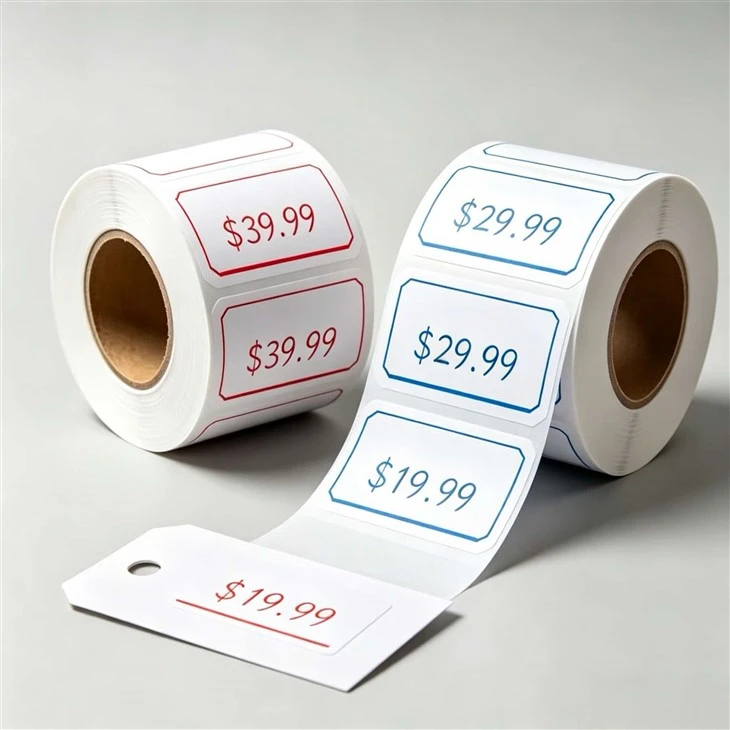
Key Features & Benefits
Expanded Information Capacity: Multilayer constructions provide additional printable panels within the footprint of a base label, expanding available print area without increasing the outer packaging footprint.
Peel-and-Read Access: Peel-and-read designs allow users to access information printed beneath the top panel. Adhesive patterns and resealing performance are engineered for applications requiring repeated opening and closing.
Customizable Construction: Face materials, adhesive systems, liner types, panel layouts, and label dimensions are selected according to packaging requirements and production constraints.
Automated Labeling Compatibility: Roll labels are configured for automated application equipment. Compatibility relies on label dimensions, liner properties, die-cutting quality, roll winding direction, web tension, and applicator design. Required operating speeds are verified through equipment specifications and application trials.
Application-Specific Resistance: Material and adhesive combinations are selected for defined exposure conditions, including moisture, UV radiation, oils, or specified chemicals. Resistance is verified using relevant material data or test results.
Optional Tamper-Evident Features: Perforations or structural features can be incorporated to indicate visible damage or interference with the label where supported by the product design.
Printing & Customization Options

Printing Methods:
Flexographic Printing: Suitable for roll-label production matching artwork, material, and volume requirements.
UV Printing: Utilized with compatible inks and substrates, subject to the printing system and curing requirements.
Digital Printing: Considered for variable content, shorter production runs, or artwork changes depending on equipment availability.
Rotary Screen Printing: Specified for designs requiring particular ink deposit or opacity characteristics.
Variable Data: Serial numbers, batch codes, and 2D Data Matrix codes are incorporated where supported by the printing process.
Surface Finishes: Matte or gloss varnish, protective overlamination, print-receptive coatings, thermal-transfer-compatible surfaces, and other application-specific treatments checked against the print method and end-use conditions.
Customization Parameters:
Label Dimensions: Custom width, height, and panel dimensions within manufacturing limits.
Layer Configuration: Number of plies and folding layout according to information volume and production capability.
Die-Cut Shape: Standard or custom shapes subject to tooling and design feasibility.
Roll Winding Direction: Unwind direction selected to match applicator setup.
Perforation: Optional perforations for removable sections or designated functions.


Manufacturing and inspection procedures align with product construction, customer specifications, and quality requirements.
Production Process: Involves printing, laminating or assembling multiple layers, folding, die-cutting, waste removal, slitting, and rewinding. Process parameters are controlled to meet approved specifications for print registration, panel alignment, die-cutting, and finished-roll dimensions.
Inspection and Process Control:
Print Inspection: Verification of printed content, color requirements, legibility, and registration against approved artwork.
Die-Cutting Inspection: Checking cut position, cut quality, and liner integrity.
Layer Alignment: Verification that printed panels and folding structures match the approved design.
Adhesive and Resealing Evaluation: Testing constructions requiring adhesion, peel opening, or repeated resealing.
Finished-Roll Inspection: Checking roll dimensions, winding direction, and visible defects against agreed acceptance criteria.
Testing and Verification: Peel adhesion testing, loop tack testing, release force testing, dimensional measurements, and environmental testing are conducted based on intended applications and agreed specifications.
Applications
Pharmaceutical and Healthcare Packaging:
Accommodates multilingual instructions, dosage information, warnings, and printed content on bottles, vials, and healthcare containers based on container dimensions and adhesive compatibility.
Agrochemical Packaging:
Provides space for product instructions, precautionary statements, and application directions on containers exposed to outdoor storage and harsh elements.
Industrial and Specialty Chemicals:
Used on chemical, lubricant, and industrial product containers where extensive identification and safety information must fit within a limited label area.
Cosmetics and Personal Care:
Accommodates ingredient declarations, usage instructions, multilingual text, and market-specific product information matching package shapes and surface materials.
Technical Specifications
|
Parameter |
Standard Specification Range |
Testing Method / Condition |
|
Label Type |
Peel-and-read, fold-out, or booklet-style |
Subject to approved design |
|
Number of Plies |
2-ply up to 5-ply constructions |
Verified against layout requirements |
|
Total Thickness |
80 micrometers to 220 micrometers (dependent on ply count) |
Micrometer measurement |
|
Adhesive Peel Strength |
12 to 25 N/25mm (24-hour dwell) |
Standard peel test on specified substrate |
|
Release Force |
8 to 18 g/in (at 300 mm/min pull speed) |
Controlled release test |
|
Core Inner Diameter |
76.2 mm (3 inches) standard; 25.4 mm / 38.1 mm optional |
Industrial standard |
|
Operating Temperature |
-20°C to +80°C (Standard); higher options available |
Thermal chamber validation |
FAQ
SpeedPrint Era (Xiamen) Digital Co., Ltd. is one of the most professional multilayer labels manufacturers and suppliers in China, featured by quality products and low price. Please rest assured to wholesale advanced multilayer labels made in China here and get quotation from our factory. We also accept customized orders.
multi layer booklet labels, Multilayer Custom Garment Paper Back Adhesive Labels, multilayer labelsPopular Products