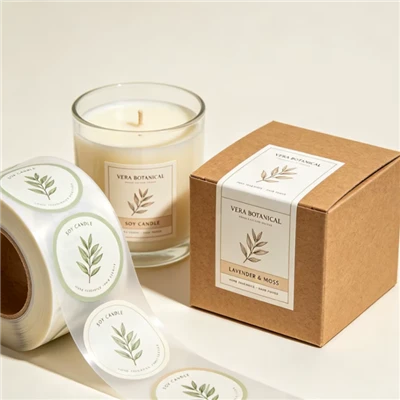
Product Overview
Custom cosmetic labels are pressure-sensitive labels designed for skincare, hair care, color cosmetics, and personal care packaging. They provide product identification, branding, and printed information on containers made from glass, PET, HDPE, LDPE, and other compatible packaging materials.
We supply custom-converted labels in roll-fed formats for automatic application, with material, adhesive, printing, and finishing options selected according to container geometry, packaging conditions, and production requirements.
From rigid glass serum bottles to flexible cosmetic squeeze tubes, the appropriate label construction depends on the container surface, curvature, dispensing conditions, and exposure to water, oils, alcohol-based products, and other ingredients.
-
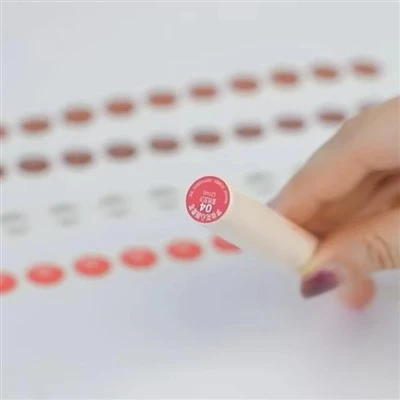
![Custom Lipstick Bottom Shade Labels]() Custom Lipstick Bottom Shade LabelsCustom Lipstick Shade Labels are waterproof PP self-adhesive stickers designed for lipstick tubes and other cosmetic packaging. They can be customized with shade numbers, color names, logos,...
-
![Custom Gold And Silver Foil Perfume Labels]() Custom Gold And Silver Foil Perfume LabelsCustom Gold and Silver Foil Perfume Labels feature metallic details and personalized branding for fragrance bottles and cosmetic packaging. SpeedPrint offers coated paper labels with custom...
-
![Custom Serum Bottle Labels With Waterproof PVC Stickers For Skincare Packaging]() Custom Serum Bottle Labels With Waterproof PVC Stickers For Skincare PackagingCustom Serum Bottle Labels are designed for skincare brands, beauty products, and personal care packaging. Made with durable PVC materials and strong adhesive, these labels provide a refined...
-
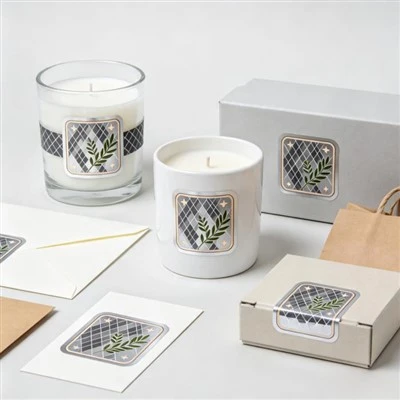
![Custom Waterproof Label Roll PVC Box Gold Foil Logo Stamping Roll Form Custom Paper Box Manufacturer]() Custom Waterproof Label Roll PVC Box Gold Foil Logo Stamping Roll Form Custom Paper Box...Custom Waterproof Roll Labels with Gold Foil are designed for cosmetics, candle jars, gift boxes, and premium product packaging. Featuring strong adhesive, durable materials, and customized...
-
![Custom Silver Foil Stamping Cosmetic Label Rolls For Premium Packaging]() Custom Silver Foil Stamping Cosmetic Label Rolls For Premium PackagingCustom Silver Foil Stamping Cosmetic Label Rolls feature metallic silver details, high-quality printing, and strong adhesive for an elegant, professional packaging appearance. Made from PP...
-
![Custom Waterproof Essence Bottle Labels With Gold Foil And UV Printing]() Custom Waterproof Essence Bottle Labels With Gold Foil And UV PrintingCustom Waterproof Essence Bottle Labels with Gold Foil and UV Printing are made from durable vinyl, offering water resistance, strong adhesion, and a refined finish for serum bottles, essence...
-
![Hot Stamping Clear Vinyl Adhesive Stickers For Cosmetic Packaging]() Hot Stamping Clear Vinyl Adhesive Stickers For Cosmetic PackagingHot Stamping Clear Vinyl Adhesive Stickers for Cosmetic Packaging feature a transparent vinyl base with customizable hot stamping, embossing, and debossing for refined branding. Available in...
-
![Luxury PVC Candle Roll Labels With Silver Foil For Aromatherapy Products]() Luxury PVC Candle Roll Labels With Silver Foil For Aromatherapy ProductsLuxury PVC Candle Roll Labels with Silver Foil are designed for scented candles, aromatherapy, and fragrance packaging, combining a waterproof PVC surface with strong permanent adhesion and an...
-
![Custom Waterproof Cosmetic Bottle Labels For Skincare And Personal Care Packaging]() Custom Waterproof Cosmetic Bottle Labels For Skincare And Personal Care PackagingCustom Waterproof Cosmetic Bottle Labels are made for skincare, body care, lotion, toner, and other personal care packaging, offering durable printing and moisture-resistant performance. Available...
-
![Custom Long Strip Die Cut Self-Adhesive Cosmetic Pen Labels With Rose Gold Foil]() Custom Long Strip Die Cut Self-Adhesive Cosmetic Pen Labels With Rose Gold FoilCustom Long Strip Die Cut Self-Adhesive Cosmetic Pen Labels with Rose Gold Foil are made from BOPP with rose gold hot foil, offering a premium appearance with strong adhesion, waterproof,...
-
![Custom Luxury Cosmetic Labels For Skincare And Beauty Product Packaging]() Custom Luxury Cosmetic Labels For Skincare And Beauty Product PackagingCustom Luxury Cosmetic Labels for Skincare and Beauty Product Packaging are designed to help beauty brands create a refined and professional product appearance. With customized materials, premium...
-
![Custom Clear Labels For Shampoo And Skincare Packaging]() Custom Clear Labels For Shampoo And Skincare PackagingCustom Clear Labels for Shampoo and Skincare Packaging are made from transparent vinyl, allowing the bottle surface and product appearance to remain visible through the label. With waterproof...


Materials & Construction
A pressure-sensitive cosmetic label consists of a face stock, adhesive layer, and release liner. The performance of the finished label depends on the compatibility of these components with the packaging substrate and application environment.
Face Stocks
BOPP (Biaxially Oriented Polypropylene): Available in clear, white, and selected metallized constructions. BOPP is commonly considered for moisture-resistant cosmetic packaging, including bottles, jars, and selected squeeze-tube applications. Clear BOPP may be used for transparent label designs, subject to adhesive clarity and container compatibility.
PE (Polyethylene): Flexible PE face stocks may be suitable for squeezable containers and curved surfaces. Their conformability can help accommodate packaging movement, but performance depends on film grade, adhesive selection, label geometry, and the degree of container deformation.
PET (Polyethylene Terephthalate): PET face stocks offer dimensional stability and are used in applications requiring a relatively rigid film label. Potential uses include transparent packaging panels, product information labels, and selected seal applications, depending on the required construction.
Textured Specialty Papers: Paper face stocks with textured, embossed, or tactile finishes can support premium skincare and beauty packaging designs. Suitability for wet environments depends on the paper grade, surface treatment, adhesive, and protective finish.


Adhesives
Permanent Acrylic Adhesives: Acrylic adhesive systems are commonly considered for glass and selected plastic containers. The appropriate grade depends on surface energy, application temperature, required adhesion, aging conditions, and exposure to cosmetic formulations.
High-Tack Adhesives: High-tack acrylic or rubber-based options may be evaluated for low-surface-energy plastics, including selected PE and PP packaging. Actual adhesion should be verified on the intended container material and surface finish.
Removable and Repositionable Adhesives: These options may be suitable for promotional labels, temporary product information, and selected peel-off applications. Clean removal depends on the adhesive formulation, substrate, dwell time, environmental conditions, and removal procedure.
Low-Migration Adhesive Options: For packaging projects with specific migration requirements, low-migration adhesive systems may be considered. Suitability must be assessed against the packaging structure, intended use, formulation, and applicable regulatory requirements. Supporting technical documentation should be reviewed before making compliance claims.
Release Liners
Glassine and Other Paper Liners: Paper release liners are available in different grades and basis weights. The appropriate liner depends on die-cutting requirements, dispensing performance, label dimensions, and converting conditions.
PET Release Liners: PET liners may be considered where dimensional stability, tear resistance, or consistent liner thickness is important. Their suitability for a particular dispensing line should be evaluated against die-cutting quality, liner release force, web tension, and equipment configuration.
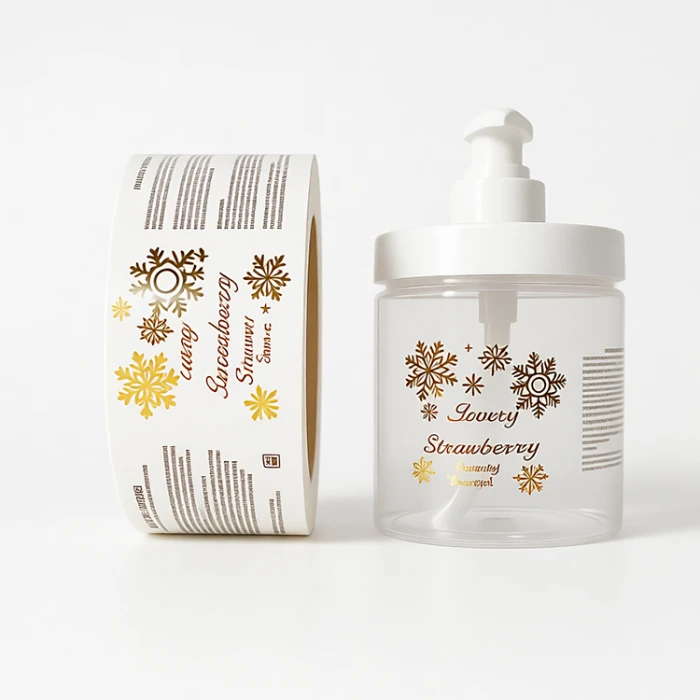
Key Features & Benefits
Material Options for Different Packaging Surfaces:
Face stocks and adhesives can be selected for compatible glass, PET, HDPE, LDPE, and PP containers. Surface condition, curvature, and application requirements should be considered during material selection.
Flexibility for Squeeze-Tube Applications:
Conformable face stocks and suitable adhesive systems can be evaluated for flexible cosmetic tubes. Label performance during repeated compression depends on the tube material, label dimensions, curvature, and degree of deformation. Application-specific testing is recommended.
Moisture Resistance:
Film-based face stocks offer moisture-resistant options for packaging used in bathrooms and other wet environments. The performance of the complete label depends on the face stock, adhesive, printing system, protective finish, and exposure conditions.
Print Protection and Surface Finishes:
Protective varnishes and laminates may be specified to improve resistance to abrasion, moisture, and selected cosmetic ingredients. The appropriate protection system should be evaluated against the actual chemicals, concentrations, contact duration, and handling conditions.
Die-Cutting and Dispensing Compatibility:
Label dimensions, gap spacing, matrix removal, liner selection, and winding configuration can be specified to match the intended application equipment. Production-line compatibility should be verified using the actual label construction and applicator requirements.
Documentation and Compliance Support:
Technical data sheets, material declarations, and applicable test reports may be provided where available. Regulatory suitability depends on the specific materials, intended use, and destination market. Compliance should be confirmed for the actual product configuration.
Printing & Customization Options
Printing and finishing options can be selected according to artwork complexity, order quantity, visual requirements, and the intended packaging surface. Available processes should be confirmed for each project.
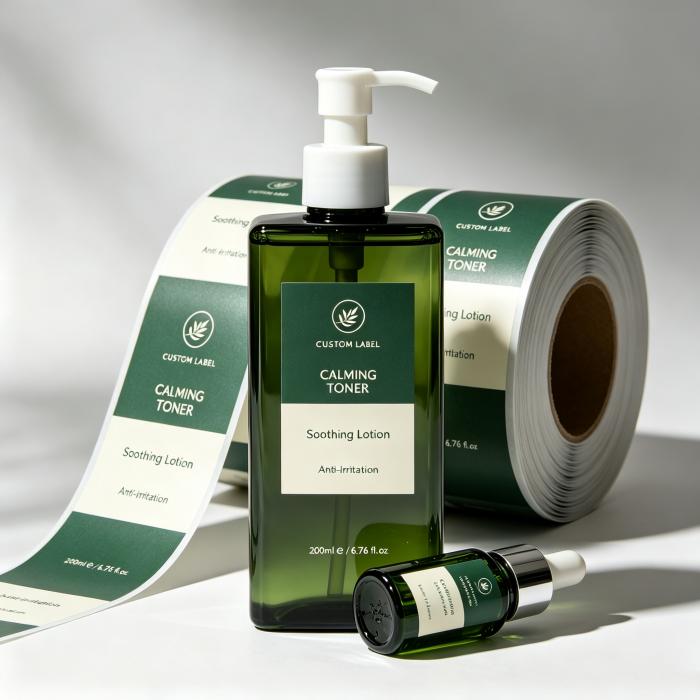
Printing Methods
UV Flexographic Printing: Suitable for many production runs requiring repeatable artwork, spot colors, and roll-label conversion. Final print quality and achievable color consistency depend on the substrate, ink system, artwork, and process controls.
Digital Printing: May be suitable for short runs, multiple SKUs, product variants, and projects requiring variable artwork or data. Available capabilities depend on the selected press and finishing configuration.
Rotary Screen Printing: Can be used for selected designs requiring opaque ink deposits or tactile raised effects. Suitability depends on the substrate, ink system, artwork, and required finish.
Decorative Finishes
Hot Stamping and Cold Foil: Metallic effects for selected brand elements, logos, and decorative details.
Matte and Gloss Finishes: Surface treatments selected according to the desired visual appearance.
Tactile Coatings: Selected textured or raised effects for packaging differentiation.
Protective Varnishing and Lamination: Optional finishes evaluated for the required abrasion, moisture, and chemical resistance.
Variable Data Printing: Batch codes, sequential numbering, and other variable information, subject to printing-system capabilities.
Clear Label Designs: Transparent constructions for selected no-label-look applications, depending on container color, adhesive clarity, and print design.
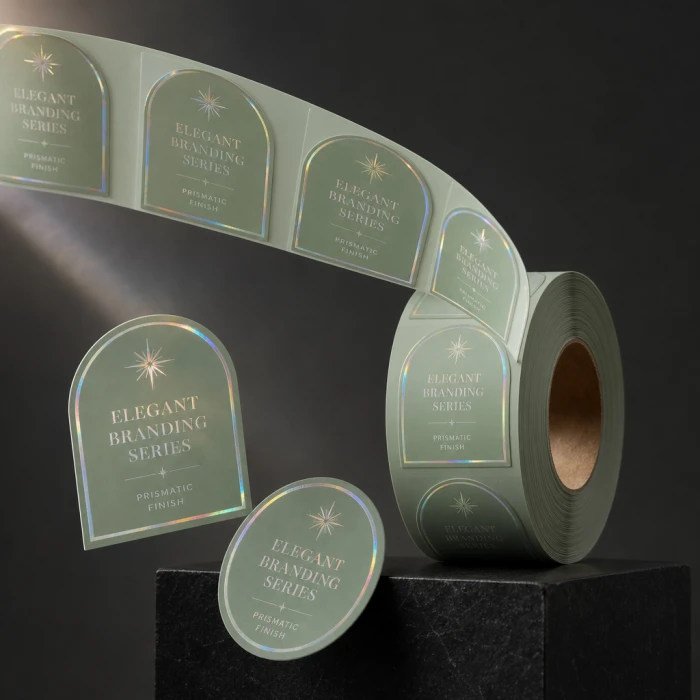
Manufacturing & Quality Control
Label quality depends on material selection, printing control, die-cutting accuracy, adhesive performance, and converting conditions. Inspection procedures should be matched to the product specification and the actual production process.
Production Process A typical converting workflow includes
Material Selection: Review face stock, adhesive, and release liner against packaging and application requirements.
Printing: Produce approved artwork using the selected printing process.
Finishing: Apply specified varnishes, laminates, foils, or other available finishes.
Die-Cutting: Convert the printed web to required label dimensions and shape.
Matrix Removal and Rewinding: Remove waste matrix where applicable and rewind labels according to the agreed configuration.
Final Inspection and Packing: Check finished rolls against approved order specification.
Quality Control Considerations
Incoming Material Inspection: Relevant checks include face-stock thickness, paper basis weight, material identification, and supplier documentation.
Print Quality and Color Control: Printed labels can be checked against approved artwork and color references. Measurement methods and acceptance tolerances should be established according to customer requirements and the production process.
Die-Cutting and Converting Inspection: Inspection covers label dimensions, cut quality, matrix removal, label spacing, roll alignment, and winding configuration.
Adhesion Testing: Peel adhesion can be evaluated on the intended container substrate using an agreed test method and specified test conditions, identifying the tested material combination.
Environmental and Chemical Compatibility: Testing assesses resistance to water, selected cosmetic ingredients, abrasion, or aging, reflecting actual intended application conditions as closely as practical.
Applications
Skincare Packaging:
For glass and plastic serum bottles, cream jars, toner containers, and airless pump dispensers. Material and adhesive selection account for container geometry, handling, moisture exposure, and desired visual finish.
01
Hair Care Packaging:
For shampoo and conditioner bottles, squeeze tubes, and selected styling-product containers. Relevant considerations include wet-environment exposure, container flexibility, and contact with the packaged formulation.
02
Color Cosmetics:
For foundation bottles, mascara tubes, lip gloss containers, and selected compact packaging. Options include transparent labels, decorative finishes, product information labels, and customized shapes.
03
Daily Personal Care:
For body wash bottles, lotion pumps, hand sanitizer containers, and deodorant packaging. Label construction is selected according to packaging material, product formulation, handling conditions, and applicable labeling requirements.
04
Premium and Private-Label Packaging:
For skincare and beauty brands requiring customized artwork, multiple product variants, distinctive finishes, or coordinated label designs across a product range. Printing method and order structure are selected according to SKU count, volume, and project requirements.
05
Technical Specifications
|
Technical Parameter |
Specification / Selection Basis |
Verification Method |
|
Face Stock Material |
BOPP, PE, PET, textured paper, or other available materials |
Material specification / technical data sheet |
|
Face Stock Thickness |
Specify selected film thickness in micrometers or paper basis weight in grams per square meter |
Applicable thickness or basis-weight method |
|
Adhesive Type |
Permanent, removable, repositionable, or application-specific adhesive |
Adhesive technical data sheet |
|
Adhesive Coat Weight |
Confirm actual value and measurement basis for the selected construction |
Supplier specification / agreed test method |
|
Label Dimensions |
Specify width, height, shape, corner radius, and spacing |
Approved drawing / dimensional inspection |
|
Peel Adhesion |
Confirm substrate, test method, dwell time, and acceptance criteria |
Applicable test method (e.g., standard peel test) |
|
Minimum Application Temp. |
Confirm for selected adhesive and application conditions |
Adhesive technical data sheet |
|
Service Temperature |
Confirm applicable range for complete label construction |
Supplier documentation / application testing |
|
Release Liner |
Paper or PET, subject to die-cutting and dispensing requirements |
Material specification / dispensing assessment |
|
Core Inner Diameter |
76.2 mm (3 inches) as a proposed standard option, subject to confirmation |
Customer specification / dimensional inspection |
|
Roll Diameter and Width |
Specify maximum roll diameter and web width supported by order |
Production capability confirmation |
|
Winding Direction |
Specify required unwind position and leading-edge orientation |
Approved winding diagram / applicator requirements |
|
Printing and Finishing |
Select available printing processes, coatings, laminates, and decorative effects |
Approved artwork / production specification |
|
Regulatory Documentation |
Identify applicable declarations and supporting documents for selected materials |
Technical documentation / applicable regulatory review |
Frequently Asked Questions
SpeedPrint Era (Xiamen) Digital Co., Ltd. is one of the most professional cosmetics & personal care labels manufacturers and suppliers in China, featured by quality products and low price. Please rest assured to wholesale advanced cosmetics & personal care labels made in China here and get quotation from our factory. We also accept customized orders.
Facial Care Labels, Gold foil adhesive labels, shape cosmetic stickersPopular Products