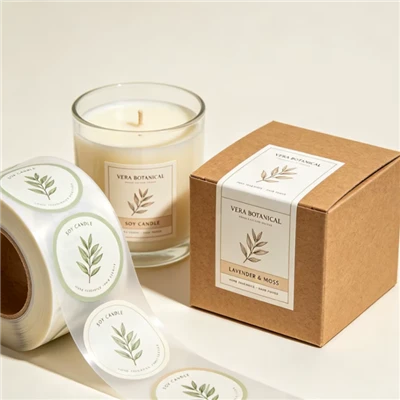
Counterfeit cosmetics can damage a brand's reputation, reduce customer trust, and create serious concerns about product safety. For skincare, perfume, makeup, and other beauty products, packaging is not only a way to present a product-it can also help customers verify its authenticity. Cosmetic anti-counterfeit QR code labels provide a practical way to connect physical packaging with digital product verification, helping brands strengthen their anti-counterfeiting strategies while improving the consumer experience.
For cosmetic manufacturers, distributors, and beauty brands, the right anti-counterfeit labels should do more than display a QR code. They need to combine reliable printing, suitable label materials, secure verification technology, and a design that fits the product's packaging. Depending on the project, brands can choose QR code security labels, tamper-evident stickers, holographic features, serialized codes, or a combination of several technologies.
This guide explains how cosmetic anti-counterfeit QR code labels work, which security features brands can consider, how to select materials and printing effects, and what to discuss with a custom label manufacturer before mass production.

Why Cosmetic Brands Need Anti-Counterfeit Labels
The beauty industry uses a wide range of packaging formats, from small serum bottles and lipstick tubes to skincare jars, perfume bottles, and retail cartons. These products can be attractive targets for counterfeiters because consumers often rely on brand recognition, packaging appearance, and online product listings when making purchasing decisions.
Counterfeit products may imitate a brand's logo, colors, packaging structure, and label design. Even when the packaging looks convincing, the contents, ingredients, manufacturing conditions, or storage history may not match the genuine product. A professional-looking label alone cannot prove authenticity, which is why brands increasingly consider additional security features.
Anti-counterfeit labels can support several important business goals. First, they give customers a convenient way to access product verification information. Second, they help brands distinguish genuine products from unauthorized copies when the verification system is properly designed. Third, visible security features can make packaging more difficult to reproduce convincingly. Finally, product-level identification can help businesses investigate suspicious products and monitor distribution channels.
For premium skincare and perfume brands, security also needs to fit the packaging's visual identity. A label that looks industrial or overly complicated may not suit a luxury cosmetic bottle. Combining a discreet QR code with refined printing, metallic details, or a tamper-evident structure can help balance security and appearance.
The most effective solution depends on the product, distribution model, risk level, and available verification technology. A simple QR code may be sufficient for directing customers to product information, while a stronger anti-counterfeiting program may require unique codes, a secure database, and additional physical security features.
How Cosmetic Anti-Counterfeit QR Code Labels Work
A QR code is a two-dimensional code that a smartphone can scan to open a website, display information, or initiate a verification process. On cosmetic packaging, the code may connect customers to a product page containing the product name, batch information, authenticity instructions, or other approved details.
However, QR code security labels are not automatically counterfeit-proof. If every product uses the same QR code and the destination contains only ordinary product information, counterfeiters may be able to copy the code and print it on imitation packaging. The security value comes from how the code is generated, managed, and verified-not simply from its appearance.
For stronger protection, brands can consider assigning a unique serial number or QR code to each individual product. When a customer scans the code, the verification platform checks the code against the brand's records and returns an appropriate result. Depending on the system, it may also detect repeated scans, suspicious locations, unusual scan frequency, or other warning patterns.
A typical verification workflow includes several stages:
Code generation: A unique identifier is created for each product or designated packaging unit.
Secure data management: The identifier is associated with relevant product records in a controlled database.
Label production: The QR code is printed clearly on the label and linked to the correct product record.
Packaging and distribution: The label is applied to the intended product, with appropriate controls to reduce code mixing or duplication.
Consumer verification: Customers scan the code and receive a result through the official verification platform.
Risk monitoring: The brand reviews repeated scans, suspicious activity, and reported counterfeit products where the system supports these functions.
A verification result should be designed carefully. For example, the first scan of a valid code may return a positive result, while a code scanned unusually often or from unexpected locations may require further investigation. A repeated scan does not automatically prove that a product is counterfeit, so the platform should avoid making unsupported conclusions.
Brands should also ensure that customers can recognize the official verification page. Clear branding, an appropriate domain, and straightforward instructions can reduce confusion and help customers avoid fraudulent websites.

Security Features to Consider for Cosmetic QR Code Labels
The QR code itself is only one part of a security label. Depending on the product's value and counterfeiting risk, brands can combine digital identification with physical features that make copying, removal, or substitution more difficult.
Unique QR codes and serial numbers are useful when each product needs an individual identity. Unlike one shared code printed on every package, unique identifiers allow the verification platform to track individual codes and potentially flag unusual scan behavior. Brands should establish procedures for generating, assigning, checking, and protecting these codes before production begins.
Tamper-evident labels help show whether packaging has been opened, disturbed, or interfered with. Depending on the construction, the label may break apart, reveal a message, or leave visible evidence when someone attempts to remove it. This can be particularly useful for selected cartons, sealed packages, and products where packaging integrity matters. Tamper evidence does not independently prove that the contents are genuine, but it can add another layer of protection.
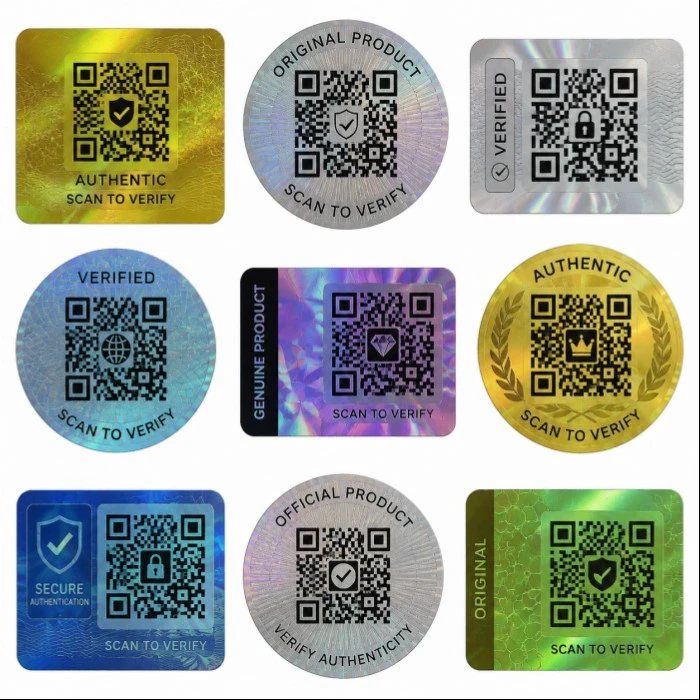
Holographic security labels use distinctive optical effects that can be difficult to reproduce accurately without the appropriate production capabilities. Holographic patterns can be combined with a brand logo, serial number, QR code, or other visual elements. Their effectiveness depends on the design, production controls, and whether the security feature is itself copied or compromised.
Anti-transfer and destructible labels are designed to make removal and reuse more difficult. Some constructions split or visibly damage when peeled away, while others are intended to reduce the chance of transferring an intact label from genuine packaging to a counterfeit product. The best construction depends on the surface, container shape, adhesive requirements, and intended removal behavior.
Hidden or restricted security features can provide another verification layer for authorized personnel. These may include concealed information, controlled verification details, or features that are not obvious from the front of the package. Such features need clear inspection procedures so that distributors, service teams, or investigators know how to use them.
For products with higher security requirements, brands may combine several of these approaches into one coordinated system. For example, a perfume carton could carry a unique QR code and a tamper-evident seal, while the code connects to a brand-controlled verification page.
The goal is not to add every possible feature. It is to select a combination that is practical to produce, suitable for the packaging, and aligned with the brand's actual risk.
Choosing Materials and Printing for Cosmetic Security Labels
The material used for a cosmetic anti-counterfeit QR code label affects more than appearance. It can influence print clarity, resistance to moisture, adhesion to the container, durability during distribution, and whether the label remains readable throughout the product's intended use.
For skincare bottles, lotion containers, and other plastic packaging, BOPP or other suitable film materials may be considered when moisture resistance and a clean appearance are priorities. The exact choice should account for the plastic surface, container shape, storage conditions, and whether the product will encounter oils, condensation, or frequent handling.
PET label materials may be suitable for selected applications that require dimensional stability, durability, or a premium film appearance. For glass perfume bottles and high-end cosmetic packaging, the material can be selected alongside transparent, white, metallic, or specialty finishes to support the brand's design.
Paper labels may work well for outer cartons, gift packaging, or products where a paper texture complements the visual identity. However, paper and film should not be treated as interchangeable. A material that performs well on a dry carton may be unsuitable for a curved bottle exposed to water or oily residue.
Adhesive selection is equally important. Glass, PP, PE, and other packaging surfaces can behave differently, and a label that sticks well to one container may lift or detach from another. Curved surfaces, small diameters, surface coatings, and application temperature can all affect performance. Brands should test the complete label construction on the actual package before approving mass production. For more guidance, see 【How to Test Label Adhesive Before Mass Production】.
Printing quality also affects whether QR codes can be scanned reliably. Codes should have sufficient contrast, a suitable quiet zone, and enough space around the printed modules. Fine details should remain clear after printing, finishing, die-cutting, and application. Metallic or holographic effects should be positioned so that they do not interfere with the scanner's ability to read the code.
Before approving the artwork, brands should confirm the final code size, error-correction settings, surface finish, and intended scanning conditions with their QR system provider and label manufacturer. Every production version should be tested using representative smartphones or scanning devices. If the code is printed on a curved bottle, it should also be tested after the label has been applied.
For a broader comparison of film materials, read 【BOPP vs Vinyl Labels: Which Material Is Right for Your Product?】. Brands evaluating different visual effects can also review 【Label Printing Processes】 to understand how printing and finishing options influence the final packaging appearance.

Balancing Security, Branding, and Consumer Experience
Cosmetic packaging must protect brand identity while remaining attractive and easy to use. A security label should therefore be integrated into the overall packaging design rather than added as an afterthought.
For luxury skincare and perfume products, a small QR code can be placed on a side panel, the back of a bottle, or an outer carton where it remains accessible without dominating the design. Metallic foil, a restrained holographic effect, or a carefully selected surface finish can help the security element fit the premium look.
For everyday skincare and personal-care products, readability and practicality may be more important than elaborate decoration. The code should be easy to locate, the scanning instructions should be clear, and the verification page should work well on mobile devices. If customers need to remove a seal before scanning, the instructions should explain that process.
Brands should also consider how the label will be applied on the production line. A design that looks good on a flat proof may be difficult to scan when wrapped around a narrow bottle or placed near a seam. Codes should avoid areas likely to be covered by caps, packaging folds, shrink sleeves, or other labels.
Security features should be chosen according to the product's risk and price point. A simple product information QR code may be appropriate for some products, while premium or frequently counterfeited items may benefit from serialized codes, tamper evidence, or holographic elements. A more complex label is not necessarily a more effective one if the verification system and production process cannot support it reliably.
If the project also requires a premium appearance, explore 【Custom Holographic Security Labels】 for a possible physical security option. For broader packaging requirements, 【Custom Cosmetic Labels】 can serve as an internal link to your relevant product page.


What to Confirm Before Ordering Custom Anti-Counterfeit QR Code Labels
Before requesting a quotation, cosmetic brands should prepare the key information that affects label design, security, and production. This helps the manufacturer evaluate the project more accurately and reduces avoidable changes after sampling.
First, confirm the packaging format. A glass perfume bottle, flexible cosmetic tube, plastic lotion bottle, and paper carton may require different materials, adhesives, sizes, and label structures. If possible, provide a physical sample or clear photographs showing the surface and application area.
Second, define the security objective. Decide whether the QR code is intended to provide product information, verify authenticity through unique identifiers, support distribution tracking, or work alongside a tamper-evident feature. These objectives require different levels of system integration.
Third, confirm how the codes will be supplied and managed. The brand may generate codes through its own platform or work with a technology provider. The printing supplier needs clear instructions for variable-data printing, code sequence management, artwork approval, and quality checks. The process should prevent duplicated codes, missing numbers, incorrect code-to-product assignments, and unauthorized access to code data.
Fourth, determine the material and finishing requirements. Discuss whether the label needs to be waterproof, oil-resistant, removable, destructible, transparent, metallic, or suitable for curved containers. These requirements should be tested on the actual packaging rather than selected from appearance alone.
Finally, establish inspection and acceptance criteria. Confirm the required QR code readability, visual quality, dimensions, adhesive performance, and any agreed security features. For serialized projects, also establish how code uniqueness and data accuracy will be checked before shipment.
At SpeedPrint, brands can discuss custom label materials, printing effects, QR code placement, and packaging requirements as part of the label development process. The appropriate production arrangement depends on the project's specifications and whether the customer already has a QR verification platform. A label manufacturer can help produce the printed security label, but the authenticity database and verification software should be clearly assigned to the appropriate provider.
FAQ About Cosmetic Anti-Counterfeit QR Code Labels
1. What are cosmetic anti-counterfeit QR code labels?
They are labels that incorporate QR codes into a product authentication strategy. Depending on the system, the code can direct consumers to product information or connect to a verification platform that checks a unique product identifier. Additional security features may include holographic effects, tamper-evident constructions, or serial numbers.
2. Can a normal QR code prevent counterfeit cosmetics?
No. A standard QR code can be copied and printed onto imitation packaging. For stronger authentication, brands should consider unique identifiers, a secure verification database, controlled code generation, and monitoring for suspicious scan activity. Additional physical security features may further support the system.
3. Can QR codes be combined with holographic security labels?
Yes. A QR code can be incorporated into a design that also uses holographic effects, provided the final construction preserves reliable scanning. The code should be tested after printing and finishing, especially if reflective materials or complex visual patterns are used.
4. Which material is best for cosmetic QR code labels?
There is no single material that suits every cosmetic product. BOPP, PET, paper, and other constructions may be suitable depending on the container, surface, moisture exposure, appearance requirements, and adhesive performance. The final selection should be validated on the actual packaging.
5. Can anti-counterfeit labels be used on perfume bottles and skincare packaging?
Yes. They can be designed for perfume bottles, skincare containers, makeup packaging, cosmetic cartons, and other beauty products. Label size, material, adhesive, code placement, and security features should be tailored to each package format.
6. How do brands know whether a scanned product is genuine?
A QR code alone cannot guarantee authenticity. A verification platform can check the code against product records and may flag duplicated or suspicious scanning behavior. The reliability of the result depends on code management, database security, monitoring rules, and how the brand handles verification exceptions.
7. What should be tested before mass production?
Brands should check code readability, print clarity, label dimensions, adhesive performance, resistance to relevant environmental conditions, and the correct association between each code and its product record. The label should be tested on the actual package under representative application and use conditions.
8. Can SpeedPrint customize cosmetic anti-counterfeit labels?
SpeedPrint can discuss custom label materials, sizes, printing, finishes, and packaging applications according to project requirements. For QR authentication projects, brands should also confirm whether code generation and verification software will be provided by their own team or a specialist technology partner.
Conclusion
Cosmetic anti-counterfeit QR code labels can help beauty brands connect physical packaging with digital product verification while supporting brand protection and consumer confidence. However, an effective solution requires more than printing a scannable code. Unique identifiers, secure data management, suitable label materials, reliable printing, and appropriate verification procedures all contribute to the result.
For cosmetic manufacturers and purchasing teams, the best approach is to start with the product's security needs, packaging structure, and production process. Test the complete label on the actual container, confirm QR code readability, and establish clear quality-control requirements before mass production.
SpeedPrint can help brands explore custom label constructions and printing options for cosmetic packaging. Contact the team to discuss your packaging format, required security features, and customization specifications.
References
GS1 – 2D Barcodes and QR Codes
European Union Intellectual Property Office (EUIPO)
Avery Dennison Label and Packaging Materials