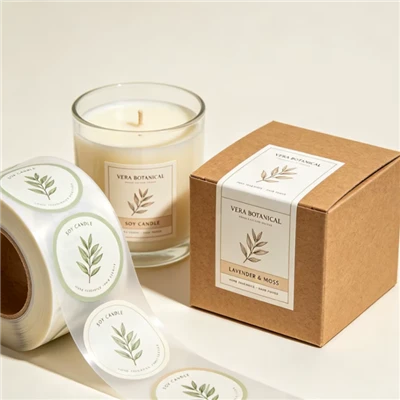
Before placing a large order, label durability testing can reveal problems that may not be visible during a simple visual inspection. Ink fading, surface wear, wrinkles, edge changes, and water or oil damage can all affect the final appearance of a product. Testing these factors in advance can help you select more suitable materials, printing processes, and finishes for your packaging.
If you are already testing whether a label will stay attached to the packaging, you can also review 【How to Test Label Adhesive Before Mass Production】. Adhesion and durability are related, but they are not the same thing. A label can remain firmly attached while its printed surface becomes damaged or its appearance deteriorates over time.


Why Label Durability Testing Matters
A label is often exposed to much more than the conditions found during production and packaging. A cosmetic bottle may be touched repeatedly with wet or oily hands. A food package may encounter condensation or moisture in storage. A household or industrial product may experience friction, transportation, temperature changes, or frequent handling.
This is why a successful label should be evaluated based on its intended application rather than appearance alone.
For example, a paper label may look attractive and perform well on a dry cardboard box, but it may not be the best option for a cosmetic bottle used in a humid bathroom. In a similar way, a label designed for a dry indoor product may not provide sufficient protection when the package is exposed to water or oil.
Testing before mass production gives buyers an opportunity to identify these differences before thousands of labels are printed.
1. Check Whether the Printing Fades
One of the first things to evaluate is the stability of the printed image.
Rub the label surface repeatedly with a clean, dry cloth or other material that represents normal handling. Check whether the text, logo, barcode, or graphics become lighter or blurred.
Pay particular attention to:
Small text
Fine lines
Barcodes and QR codes
Dark printed areas
Brand logos
Metallic or decorative effects
For products that will be exposed to moisture, sunlight, chemicals, or frequent handling, a simple dry-rub test may not be enough. The testing conditions should reflect how the finished product will actually be used.
If the printed area shows obvious fading or transfer, the printing method, ink, material, or surface finish may need to be reconsidered.


2. Test Surface Wear and Scratching
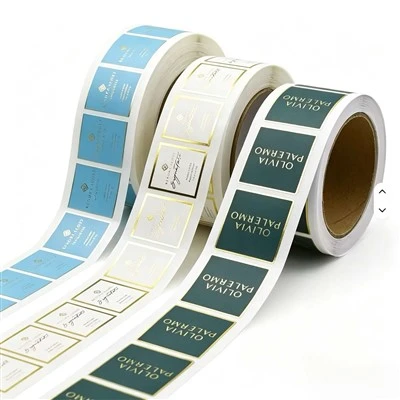
A label can remain attached to the package while its surface becomes scratched or worn.
This is particularly important for products that are frequently handled, transported, stacked, or placed inside bags and boxes. Repeated contact can gradually damage the printed surface and reduce the visual quality of the packaging.
To evaluate surface durability, rub or lightly scratch a sample under conditions similar to normal use. Then compare the tested area with an untouched section.
Look for:
Scratches
Loss of gloss
Faded printing
Damaged coating
Visible changes in texture
Peeling or cracking of the surface
For premium packaging, surface damage can be especially noticeable because the label is often part of the product's visual identity.
Using 【durable product labels】 can be a better choice when the finished product needs to maintain its appearance during repeated handling and transportation.
3. Check Water Resistance
Water exposure is one of the most common causes of label damage.
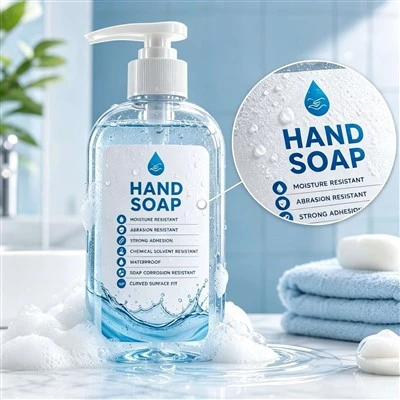
Depending on the application, a label may encounter splashes, condensation, wet hands, refrigeration, cleaning, or prolonged moisture. A label that performs well in dry conditions may change significantly after contact with water.
Place the sample on the actual packaging and expose it to the type of moisture expected during use.
After testing, check whether:
The material becomes soft
The label wrinkles
The printing runs or fades
The surface coating changes
The edges begin to lift
The label becomes difficult to read
For bottles, jars, skincare packaging, and other products exposed to moisture, 【waterproof cosmetic labels】 can provide a more suitable solution than standard paper labels.


4. Test Resistance to Oil and Common Liquids
Water is not the only concern. Oil, lotion, cosmetics, food ingredients, and other liquids can also affect label performance.
For example, a skincare bottle may come into contact with cream or lotion. An oil bottle may frequently be handled with oily fingers. Food packaging may encounter grease during use.
Apply a small amount of the relevant liquid to the label surface and observe the material after exposure.
Check whether the liquid causes:
Ink smearing
Surface discoloration
Coating damage
Material deformation
Loss of readability
Changes around the label edges
The testing liquid should ideally match the actual product environment rather than using only water as a general durability test.
5. Check for Wrinkles and Material Changes
Material stability is another important part of label durability.
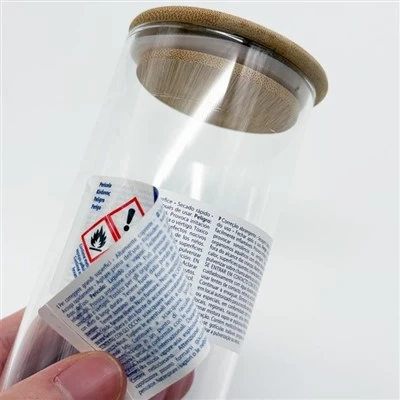
After exposure to moisture, pressure, temperature changes, or repeated handling, some labels may develop wrinkles, bubbles, creases, or surface deformation.
Apply the label to the actual packaging shape and observe it over time. Flat surfaces are usually easier to label than curved bottles, narrow containers, or flexible packaging, so the test should reproduce the real application as closely as possible.
Pay special attention to:
Curved surfaces
Corners
Flexible packages
Small-diameter bottles
Containers with uneven surfaces
If the label needs to maintain a clean appearance on a demanding surface, a more stable material such as PET may be worth considering. 【PET labels for demanding applications】 can be evaluated when resistance to handling, moisture, and environmental exposure is important.


6. Observe the Label After Extended Use
Some durability problems do not appear immediately.
A label may look completely normal after several minutes of testing but show changes after several days or weeks. For this reason, long-term observation can provide useful information before approving mass production.
Record the condition of the sample at different stages and compare it with an unused sample.
You can check:
| Test Item | What to Observe |
|---|---|
| Printing | Fading, smearing, loss of detail |
| Surface | Scratches, wear, coating damage |
| Water | Wrinkles, softening, fading |
| Oil | Discoloration, surface damage |
| Edges | Lifting, curling, deformation |
| Material | Cracking, stretching, shrinking |
| Appearance | Overall visual changes |
This simple record can make it easier to compare different label materials or suppliers.
7. Test the Finished Label, Not Just the Material
One common mistake is testing the raw label material separately from the finished product.
A label's final performance depends on more than the material itself. Printing, coating, lamination, foil, varnish, adhesive, die-cutting, and the shape of the packaging can all affect the final result.
For this reason, durability testing should ideally use a finished production sample that is as close as possible to the final label specification.
For example, if your final product uses a waterproof PET label with a protective coating and specific printing effects, testing only a plain PET material sheet will not provide the same information.
8. Compare Samples Before Mass Production
When choosing between different materials or suppliers, testing multiple samples under the same conditions can make the decision much easier.
Instead of asking only which sample looks better, compare how each one performs after exposure to the same environment.
A useful comparison can include:
Appearance before testing
Appearance after water exposure
Surface condition after rubbing
Printing stability
Edge condition
Material changes
Overall appearance after extended use
The best label is not necessarily the cheapest or the most visually impressive sample. It should provide the right balance between appearance, durability, application requirements, and production cost.
When Should You Test Label Durability?
Ideally, durability testing should be completed before finalizing the large production order.
Testing is particularly recommended when:
The product will be exposed to water or oil
The packaging will be frequently handled
The label contains important small text or barcodes
The product has a long shelf life
The packaging uses curved or unusual surfaces
The label has special finishes
The product will be transported over long distances
The appearance of the packaging is important to the brand
A small amount of testing before production can prevent much larger costs caused by unsuitable labels after production.
Conclusion
Label durability testing is not simply about checking whether a label looks good when it is newly printed. It is about understanding how the finished label performs during actual use.
Check printing stability, surface wear, water resistance, oil resistance, wrinkles, edge changes, and long-term appearance. Most importantly, perform the test on a finished label applied to the actual packaging whenever possible.
By evaluating these factors before mass production, brands can make more informed decisions about materials, printing methods, finishes, and suppliers. The goal is simple: a label should continue to look and perform as expected throughout the product's real-life use.