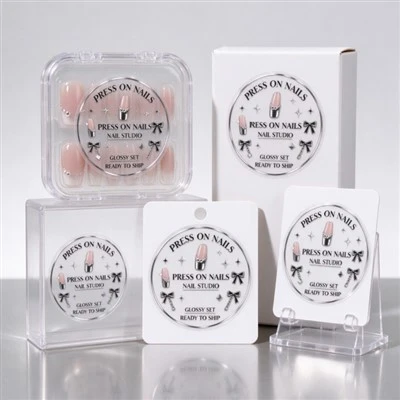
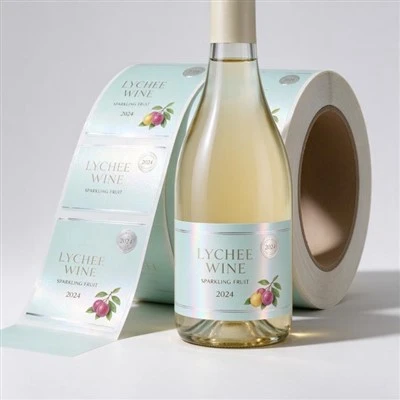
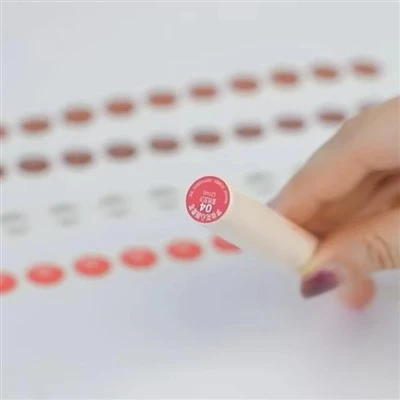
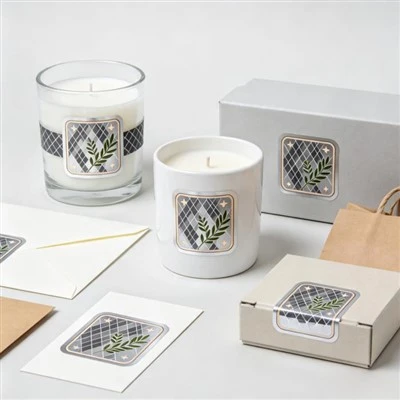
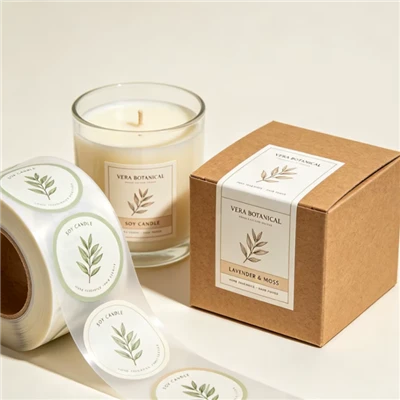
When you receive label samples from different suppliers, it can be tempting to choose the one with the lowest quotation. However, the cheapest sample does not always provide the lowest overall cost once production quality, application performance, and consistency are considered.
A proper label supplier comparison should look beyond price. Material, printing quality, color consistency, adhesion, cutting accuracy, surface finish, packaging, and actual application performance can all affect the final result. A sample that looks good on a desk may perform very differently when applied to your real packaging.
For procurement managers, packaging buyers, and brand owners, comparing samples systematically can make supplier selection much easier. Instead of asking which sample looks best, the better question is: Which supplier can consistently deliver the right quality for mass production?

1. Start With the Label Material
The first step in a label sample comparison is checking whether every supplier is using the same or equivalent material.
Different label materials can have significant differences in appearance, flexibility, moisture resistance, surface texture, and durability. Even when two samples look similar, their performance may not be the same.
Check:
Material type
Thickness
Surface texture
Transparency or opacity
Flexibility
Water resistance
Suitability for the packaging surface
For example, a paper label may be suitable for a dry carton, while a cosmetic bottle exposed to moisture may require a more resistant material.
If suppliers quote different materials, do not compare their prices directly without first confirming the specifications. A lower quotation may simply reflect a lower-cost material.
For demanding packaging applications, you can also evaluate 【premium packaging labels】 based on both appearance and functional performance.

2. Compare Printing Quality
Printing quality is one of the easiest differences to see between samples, but it should be evaluated carefully.
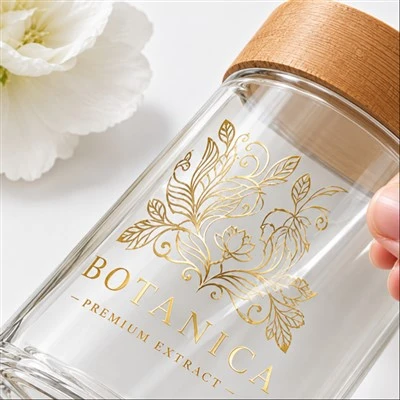
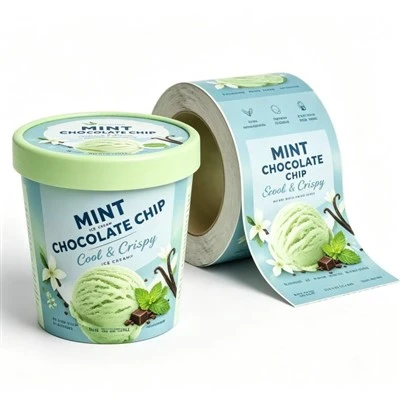
Place samples from different suppliers side by side under the same lighting. Look at the sharpness of text, images, logos, fine lines, and small details.
Pay particular attention to:
Small text
Fine graphics
Barcode clarity
Color density
Image sharpness
Registration accuracy
White areas and background coverage
A professional label should maintain clear details without obvious blurring, uneven printing, or inconsistent ink coverage.
This is especially important for brands with detailed packaging designs. A sample may look acceptable at first glance but show noticeable quality differences when viewed closely.
3. Check Color Consistency
Color can be more difficult to compare than printing sharpness.
If your brand uses a specific logo color or packaging color, ask suppliers how they control color during production. Compare samples under consistent lighting rather than relying only on how they appear on a computer screen.
Look for:
Brand color accuracy
Color saturation
Light and dark areas
Color variation between samples
Consistency across different label designs
For repeat orders, color consistency becomes even more important. Your second production batch should not look noticeably different from the first batch.
A supplier with good sample quality but poor production color control may still create problems later.
4. Test Adhesion on the Actual Packaging
A label sample should not only be inspected-it should be applied.
Apply each supplier's sample to the actual bottle, box, pouch, jar, or other packaging that will be used in production. Then observe how the label behaves.
Check whether it:
Bonds evenly
Stays firmly attached
Wrinkles during application
Lifts around the edges
Works well on curved surfaces
Maintains adhesion after handling
Different suppliers may use different adhesive constructions even when the label material looks similar.
If adhesion is important to your project, a separate practical test can provide more reliable information. See 【How to Test Label Adhesive Before Mass Production】 for a more detailed testing approach.

5. Examine Cutting Accuracy
Die-cutting quality is another detail that is easy to overlook.
Look closely at the label shape and edges. The cutting line should follow the intended design accurately without rough edges, excessive material, or obvious deviation.
For custom-shaped labels, check:
Shape accuracy
Smooth edges
Corner definition
Consistent dimensions
Position of the cut relative to the artwork
Poor cutting accuracy can make a professionally designed label look unfinished.
This is particularly noticeable with small labels, complex shapes, rounded corners, and designs that require precise alignment.
6. Compare Surface Finishes
Surface finishing can significantly change both the appearance and performance of a label.
Depending on the project, suppliers may offer finishes such as matte, gloss, lamination, varnish, foil effects, or other decorative treatments.
Do not compare finishes based only on visual appearance. Also consider how the surface feels and performs during handling.
Check for:
Smoothness
Gloss level
Surface protection
Scratch resistance
Fingerprint visibility
Compatibility with the product environment
For premium cosmetic, beverage, wine, and specialty packaging, the surface finish can contribute significantly to the perceived value of the product.
7. Test the Label in Real Application Conditions
A sample that looks excellent before application may not necessarily perform well in actual use.
This is why label supplier comparison should include a real application test whenever possible.
Apply samples to the final packaging and observe them after normal handling. If the product will encounter water, oil, refrigeration, friction, or frequent handling, reproduce those conditions during testing.
For example, a skincare label may need to withstand moisture and repeated contact, while a food label may need better resistance to condensation or handling.
You can also refer to 【How to Test Label Durability Before Mass Production】 when durability is an important part of the purchasing decision.
The goal is to evaluate the complete finished label rather than judging the printed sample alone.

8. Check Packaging and Delivery Preparation
The supplier's responsibility does not end when the labels are printed.
Packaging quality can affect whether labels arrive clean, flat, organized, and ready for production use.
When comparing suppliers, check:
How labels are counted
Whether rolls or sheets are properly protected
Protection against moisture and dust
Label organization
Outer carton strength
Product identification
Shipping protection
Good packaging can reduce damage and make it easier for your production team to store and use the labels after delivery.
9. Think About Production Consistency
One of the most important questions is whether the supplier can reproduce the approved sample during mass production.
A good sample is only the beginning.
Before selecting a supplier, consider whether they can maintain consistent:
Material specifications
Color
Printing quality
Cutting dimensions
Adhesive performance
Surface finish
Packaging standards
This is particularly important for brands that reorder the same labels regularly.
The supplier you choose should not only produce one excellent sample. They should have the production capability and quality-control process to reproduce that standard at larger quantities.
10. Don't Compare Suppliers by Price Alone
Price is certainly important in procurement, but it should not be the only deciding factor.
Imagine three suppliers:
Supplier A offers the lowest unit price, but the color changes between batches.
Supplier B has a slightly higher price but provides consistent printing, reliable adhesion, and stable production quality.
Supplier C offers an attractive sample but has poor packaging and inconsistent cutting.
The lowest quotation may not be the lowest total cost.
If defective labels need to be replaced, production has to stop, products need to be relabeled, or a shipment is delayed, the additional cost can quickly exceed the original price difference.
That is why a better purchasing decision considers total value, not just unit price.
A Simple Label Supplier Comparison Checklist
Before making a final decision, compare your samples using the same criteria:
| Evaluation Item | What to Check |
|---|---|
| Material | Type, thickness, flexibility, suitability |
| Printing | Sharpness, detail, ink coverage |
| Color | Accuracy and consistency |
| Adhesion | Bonding and application performance |
| Cutting | Shape, dimensions, edge quality |
| Finish | Texture, gloss, protection |
| Application | Performance on actual packaging |
| Durability | Water, oil, rubbing, handling |
| Packaging | Protection, organization, shipping |
| Production | Consistency and repeat-order capability |
| Price | Unit cost and overall value |
Using the same checklist for every supplier makes the comparison more objective and helps prevent price from becoming the only deciding factor.
FAQ About Comparing Label Samples
1. Should I choose the supplier with the cheapest label sample?
Not necessarily. Sample price should be considered together with material quality, printing performance, adhesion, durability, production consistency, and delivery requirements. A cheaper sample can become more expensive if it leads to defects or replacement costs during mass production.
2. What should I compare first when reviewing label samples?
Start with the specifications. Confirm that the samples use comparable materials, sizes, thicknesses, printing processes, finishes, and adhesives. Once the specifications are comparable, evaluate appearance and performance.
3. Should label samples be tested on the actual packaging?
Yes. Whenever possible, apply each sample to the actual bottle, box, pouch, jar, or other packaging. This helps you evaluate adhesion, wrinkles, edge behavior, application accuracy, and overall appearance under real conditions.
4. How can I know if a supplier can maintain sample quality during mass production?
Ask about their quality-control process and production capabilities, and confirm how the approved sample will be used as a production reference. For repeat orders, consistency in material, color, dimensions, printing, finishing, and packaging is especially important.
5. How many suppliers should I compare before choosing one?
There is no fixed number, but comparing samples from several qualified suppliers can give you a clearer picture of quality and pricing. The important point is to use the same specifications and evaluation criteria for every supplier rather than comparing different products directly.
Conclusion
Comparing label samples from different suppliers should be a quality evaluation, not simply a price comparison.
Look at the material, printing quality, color consistency, adhesion, cutting accuracy, surface finish, real application performance, packaging, and production consistency. Most importantly, test the samples on your actual packaging whenever possible.
A supplier that provides a slightly more expensive sample may ultimately offer better value if the labels remain consistent during mass production and perform reliably in real use.
A lower sample price does not always mean lower total cost.
For brands and procurement teams looking for reliable 【custom label printing services】, the best supplier is the one that can consistently turn an approved sample into stable, production-ready labels at the required quality and quantity.