Introduction
Food and cosmetic packaging often encounters moisture during storage, transportation, and everyday use. Refrigerated beverage bottles may develop condensation, food jars can come into contact with water, and skincare products are frequently stored in bathrooms or used with wet hands. Under these conditions, ordinary paper labels may wrinkle, lose their appearance, or become detached.
This is why waterproof labels are widely used for food and cosmetic packaging. They are designed to provide better resistance to water and moisture when the appropriate face material, adhesive, and protective finish are selected.
However, not every waterproof label performs equally well. A label suitable for a dry snack package may not be appropriate for a refrigerated juice bottle or a shampoo container used in a humid bathroom. Understanding the packaging environment is essential when choosing the right label construction.

1. Why Are Waterproof Labels Used for Food Packaging?
Food packaging frequently experiences moisture, temperature changes, and repeated handling. Labels need to maintain their appearance and remain attached throughout the product's intended storage and use.
Here are several common applications.
Beverage Bottles and Refrigerated Products
Water bottles, juice containers, milk bottles, and other refrigerated beverages may develop condensation when moved between different temperatures.
Ordinary paper labels can absorb moisture, causing wrinkles, discoloration, or edge lifting. Suitable film labels, such as BOPP, can provide better moisture resistance and help maintain a clean printed appearance.
For these applications, [caustom waterproof beverage labels] can be specified according to the bottle material, refrigeration conditions, and labeling process.
Food Jars and Containers
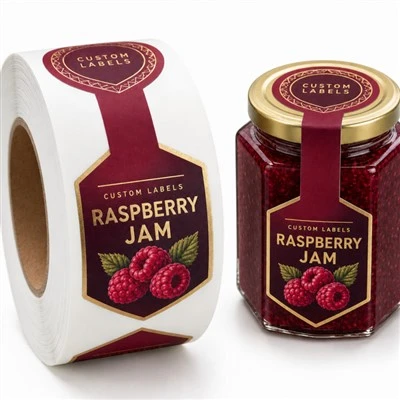
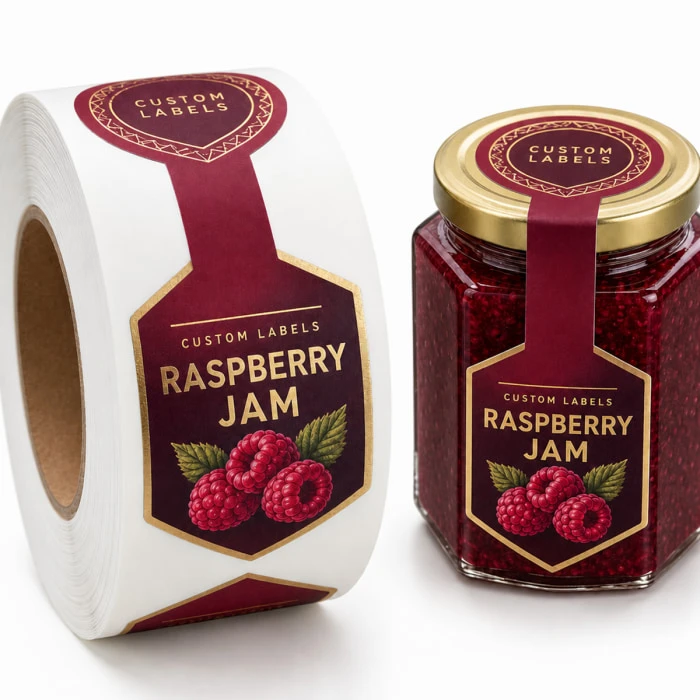
Jam, sauce, honey, and other packaged foods are often stored in glass jars or plastic containers. Their labels may encounter splashes, wet hands, or moisture during handling.
A suitable waterproof label can help protect product information, branding, and decorative graphics from everyday moisture exposure.
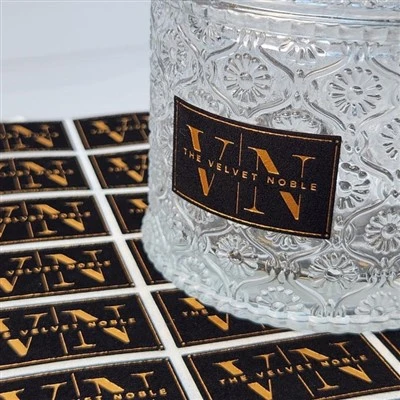
For brands using different container shapes and sizes, [custom food packaging labels] can be produced with suitable materials, adhesives, and label dimensions.
Frozen and Chilled Food Packaging
Frozen and refrigerated products require additional attention because low temperatures and condensation can affect adhesive performance.
A standard permanent adhesive may not provide reliable bonding under all cold-storage conditions. The adhesive should be selected according to the application temperature, storage temperature, packaging surface, and expected moisture exposure.
For frozen or chilled products, ask your supplier whether the complete label construction has been tested under the intended conditions.

2. Why Are Waterproof Labels Suitable for Cosmetic Packaging?
Cosmetic and personal-care products are often exposed to water, oils, lotions, and frequent handling. Labels must not only look attractive but also maintain their appearance during normal product use.
Shampoo and Body Wash Bottles
Shampoo, conditioner, and body wash containers are commonly stored in bathrooms, where humidity and water exposure are frequent.
Film-based labels can be a practical choice because suitable constructions offer better resistance to moisture than ordinary unprotected paper labels.
The adhesive should also be compatible with the bottle material, especially when labels are applied to curved or flexible containers.
Skincare and Lotion Packaging
Moisturizers, facial cleansers, lotions, and other skincare products may be handled repeatedly. Product residue, oils, and moisture can affect the label surface over time.
A suitable protective coating or laminate can help improve resistance to handling and surface wear, depending on the product construction.
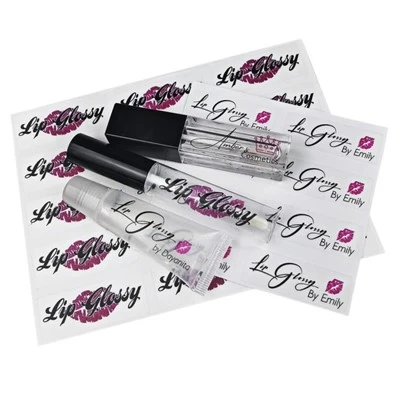
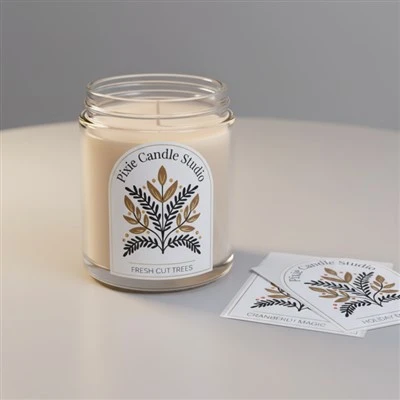
For brands developing skincare packaging, [custom cosmetic bottle labels] can be customized according to bottle shape, material, appearance, and application conditions.
Cosmetic Products With Premium Packaging
Waterproof performance does not mean labels need to look plain. Cosmetic packaging can combine moisture-resistant materials with attractive printing and finishing effects.
For example:
Matte lamination for a soft, understated appearance.
Gloss lamination for a brighter surface.
Foil stamping for metallic decorative details.
Spot UV for selected glossy design elements.
Embossing for raised visual details.
For premium skincare and beauty products, [custom waterproof cosmetic labels] can combine suitable film materials with decorative finishes to balance appearance and durability.

3. Which Materials Are Best for Waterproof Food and Cosmetic Labels?
Material selection is one of the most important decisions when designing waterproof labels. Different materials offer different levels of flexibility, durability, appearance, and print compatibility.
| Material | Common applications | Main characteristics |
|---|---|---|
| BOPP | Beverage bottles, food containers, personal-care products | Lightweight, moisture-resistant, available in white and transparent options |
| PET | Selected cosmetic packaging and durable product labels | Good dimensional stability and durability |
| PVC / Vinyl | Flexible packaging surfaces and selected specialty labels | Flexible, suitable for some curved surfaces |
| PE | Squeezable bottles and flexible containers | Soft and flexible, can follow curved packaging surfaces |
BOPP Labels
BOPP is one of the commonly used film materials for food and beverage packaging labels. It offers good moisture resistance and is available in white, clear, and other specialty appearances.
White BOPP provides an opaque printing surface, while transparent BOPP can create a clear-label appearance when applied to suitable containers.
PET Labels
PET is often selected when dimensional stability and durability are important. It can be suitable for certain cosmetic containers, equipment-related applications, and products requiring a more durable label construction.
However, the exact temperature and chemical resistance depend on the specific film, adhesive, ink, and finish.
PVC / Vinyl Labels
PVC and vinyl materials are flexible and can be used for selected curved surfaces and specialty applications. Their suitability depends on the product grade and expected exposure conditions.
PE Labels
PE is relatively flexible and can work well with squeezable containers or packaging that changes shape during use. The adhesive and application method should be evaluated to ensure the label remains attached during repeated squeezing.
For more information about film materials, read [Printing Paper Types: Best Materials for Different Applications] for a comparison of printing materials and their applications.

4. How to Choose the Right Adhesive for Waterproof Labels
Even when the face material is waterproof, the label may still peel off if the adhesive is unsuitable.
When selecting an adhesive, consider the following factors:
Packaging surface: Glass, PET, PE, and PP containers have different surface properties. Some plastics are more difficult to bond than others.
Storage temperature: Refrigerated and frozen products may require adhesives designed for low-temperature applications.
Moisture exposure: Labels exposed to condensation, splashes, or frequent washing may need an adhesive that maintains bonding under those conditions.
Container shape: Curved bottles, narrow containers, and squeezable packaging may require different adhesive performance.
Application conditions: The surface should be clean and dry unless the adhesive is specifically designed for application under other conditions.
For example, a beverage label applied to a clean PET bottle at room temperature may need different adhesive properties from a label applied to a cold glass container.
If you are unsure which adhesive is suitable, ask your supplier to recommend options based on the actual packaging surface and storage environment.
5. Does Waterproof Mean Oil-Resistant and Chemical-Resistant?
No. Waterproof, oil-resistant, and chemical-resistant describe different performance characteristics.
A waterproof label may resist water exposure but still be affected by cooking oil, cosmetic oils, alcohol-based products, detergents, or cleaning chemicals.
For food packaging, this distinction matters when labels are exposed to greasy hands, oily ingredients, or cooking environments.
For cosmetic packaging, labels may come into contact with facial oils, lotions, alcohol-based formulations, and other product residues.
If these exposures are expected, communicate them before production. Your supplier can then evaluate the face material, adhesive, ink, and protective finish as a complete construction.
6. How to Make Waterproof Labels More Durable
Choosing a film material is only the first step. Several other factors influence how well a label performs.
Use a Suitable Protective Finish
Lamination or a compatible varnish can help protect printed graphics from abrasion, handling, and surface moisture.
However, protective finishes do not automatically make a label suitable for continuous immersion, strong chemicals, or extreme temperatures. Their performance should be confirmed for the intended application.
Match the Adhesive to the Container
The adhesive must work with the actual packaging surface and storage conditions. Always confirm the recommended application temperature and service conditions.
Test the Complete Label
Before mass production, apply sample labels to the actual containers and expose them to representative conditions.
Check for:
Edge lifting or peeling.
Wrinkles or deformation.
Ink fading or smearing.
Changes in surface appearance.
Adhesion loss after refrigeration or repeated moisture exposure.
If the label is used on food or cosmetic packaging, testing should reflect the real product environment rather than relying only on a general waterproof claim.
FAQ
Are waterproof labels suitable for refrigerated food products?
Yes. Suitable waterproof film labels are commonly used for refrigerated beverages and food containers. However, the adhesive must also be appropriate for condensation and low-temperature storage.
Are waterproof labels suitable for shampoo and skincare bottles?
Yes. Waterproof film labels are commonly used for shampoo, body wash, lotion, and skincare packaging because these products may encounter moisture during everyday use.
Are BOPP labels waterproof?
BOPP film itself has good moisture resistance, which makes it a common material for waterproof packaging labels. However, the finished label's performance also depends on the adhesive, printing system, and protective finish.
Can waterproof labels withstand oil and chemicals?
Not necessarily. Water resistance does not automatically mean oil or chemical resistance. If labels may encounter oils, alcohol, detergents, or cleaning products, these conditions should be tested separately.
Are waterproof labels safe for direct food contact?
Not automatically. A waterproof label is not necessarily suitable for direct food contact. If the label will touch food directly, the face material, adhesive, inks, and other components must be evaluated against the applicable food-contact requirements.
How can I test whether a label is waterproof?
Apply a sample to the actual packaging surface and expose it to the expected conditions, such as splashing, condensation, refrigeration, or repeated handling. Inspect the label for peeling, wrinkles, ink damage, and changes in appearance.
Conclusion
Waterproof labels are a practical choice for many food and cosmetic packaging applications because they can provide better resistance to moisture and everyday handling than ordinary paper labels.
BOPP, PET, PE, and selected vinyl materials each offer different advantages. The right choice depends on the packaging surface, storage conditions, adhesive requirements, and desired appearance.
Before ordering, consider the complete label construction rather than focusing only on the face material. A suitable combination of material, adhesive, printing, and protective finish can help keep product labels attractive, readable, and securely attached throughout their intended use.