Ordering custom product labels involves more than sending a logo to a printing supplier. To receive labels that fit your packaging, match your brand identity, and perform properly during use, you need to provide clear product information, artwork, dimensions, material preferences, and application requirements.
For purchasing managers, packaging managers, and brand owners, missing details can lead to repeated artwork revisions, unsuitable materials, unexpected printing costs, or delays in production. Preparing the right information before requesting a quotation helps suppliers recommend suitable options and provide a more accurate estimate.
This guide explains what information you should prepare when ordering custom product labels, how to choose the right label materials, what to include in your label artwork, and which production details to confirm before approving an order.
1. Product Information: What Will the Label Be Used For?
The first step is to explain what product the label will be applied to. A label designed for a dry cardboard box may not perform well on a curved plastic bottle or a container exposed to water and oil.
When requesting a quotation for custom product labels, prepare the following information:
Product type: Cosmetics, food, beverages, candles, electronics, gifts, or other products.
Container material: Glass, PET plastic, HDPE plastic, metal, cardboard, or another surface.
Container shape: Flat, cylindrical, curved, tapered, or irregular.
Usage environment: Indoor storage, refrigeration, outdoor exposure, humid bathrooms, or other conditions.
Product contact: Whether the label may encounter water, oil, chemicals, friction, or frequent handling.
These details help the supplier evaluate the label construction rather than recommending a material based only on appearance.
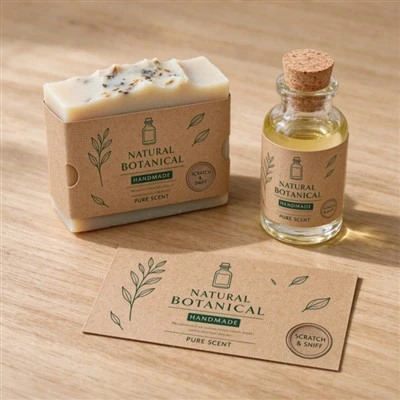
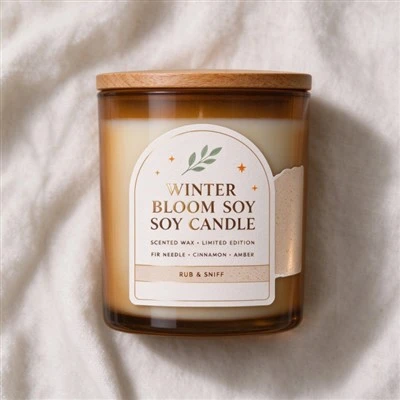
For example, a skincare brand may need a label that maintains its appearance around water and cosmetic oils. A candle brand may prioritize a refined finish and suitable adhesion to its container. An electronics manufacturer may need durable printed information, readable barcodes, and resistance to routine handling.
If you are sourcing 【Custom Cosmetic Labels】, explain the bottle or jar material and how the packaging will be stored and handled. This information can help narrow down the material, adhesive, and finishing options.
Before preparing your artwork and ordering custom labels, it is also important to understand what information should appear on the label itself. Read our guide to 【What Information Should Be Included on a Product Label?】 to learn more about common product label content and industry-specific considerations.

2. Label Size, Shape, and Application Position
Accurate dimensions are essential when ordering custom printed labels. A label that is too large may wrinkle around a curved container, overlap an edge, or interfere with other packaging elements. A label that is too small may leave insufficient room for branding and required product information.
Provide the following specifications whenever possible:
Label width and height, or diameter for round labels.
Preferred shape, such as rectangular, circular, oval, or a custom die-cut shape.
The available label area on the container.
The intended application position.
Whether the label must wrap around a bottle or fit within a specific panel.
If the label will be applied to a curved bottle, share a photo or drawing of the container and its dimensions. A physical sample is even more useful when the surface shape is complex.
For wraparound labels, confirm the required overlap or gap, if applicable. For labels applied by automated equipment, also confirm the tolerances and positioning requirements with the equipment operator.
Do not rely only on a product photo to estimate label dimensions. Measurements should be confirmed before the supplier prepares the final die line or production artwork.
3. Choose the Right Label Material
The label material affects print appearance, durability, cost, and compatibility with the application surface. It is therefore one of the most important decisions when ordering custom product labels.
| Material | Typical advantages | Common applications |
|---|---|---|
| Art paper | Clear printing and a refined paper appearance | Boxes, dry goods, decorative packaging |
| BOPP film | Good moisture resistance and durability | Food containers, personal care bottles, beverage packaging |
| PET film | Dimensional stability and durable performance | Electronics, industrial products, selected cosmetic applications |
| Clear film | Transparent appearance for a no-label-look design | Glass bottles, clear packaging, cosmetics |
| Pearl paper | Soft pearlescent shimmer and decorative appeal | Fragrance, gifts, premium packaging |
The right material depends on the actual conditions rather than the product category alone. For example, some cosmetic containers are stored in dry environments, while others may be repeatedly exposed to water or oil.
If your product requires a refined paper appearance, art paper or pearl paper may be suitable. If moisture resistance is a priority, a film material may be a better starting point.
For moisture-sensitive applications, explore 【Custom Waterproof BOPP Labels】 and discuss the intended environment with your supplier. Waterproof performance depends on the complete construction, including the face material, printing, protective finish, adhesive, and application surface.
If you are unsure which material is appropriate, provide the product details first and ask the supplier to recommend options based on your requirements.

4. Confirm the Adhesive and Application Conditions
Even a well-printed label can fail if the adhesive is not compatible with the container or application environment.
Before ordering custom product labels, explain whether the label needs permanent adhesion, removable adhesion, or stronger bonding for a difficult surface. Also share the container material, surface texture, and application conditions.
Important details include:
Whether the surface is glass, plastic, metal, paper, or another material.
Whether the surface is smooth, textured, curved, or flexible.
The temperature when labels are applied.
The expected storage and operating temperatures.
Whether condensation, oil, moisture, or chemicals may be present.
Whether the label needs to be removed cleanly later.
Plastic surfaces can be particularly challenging because different plastics have different surface characteristics. A curved bottle may also place more stress on the label edges than a flat surface.
For a new product or a large order, it is sensible to test the proposed label on the actual container before mass production. Our related guide, 【How to Test Label Adhesive Before Mass Production】, explains how buyers can evaluate adhesive suitability before committing to a full run.
5. Prepare the Label Artwork and Product Information
Your artwork tells the supplier what to print, while your product information helps the supplier understand the intended layout and application.
When preparing label artwork, provide the highest-quality source file available. Depending on the supplier's workflow, acceptable formats may include AI, PDF, EPS, or other print-ready files. Confirm the exact requirements before submission.
Your artwork package may need to include:
Logo and brand assets.
Product name and other label text.
High-resolution images or illustrations.
Brand color references or Pantone specifications, if applicable.
Fonts or outlined text, where required.
Bleed, trim, and die-line information.
White ink or special finishing instructions, if needed.
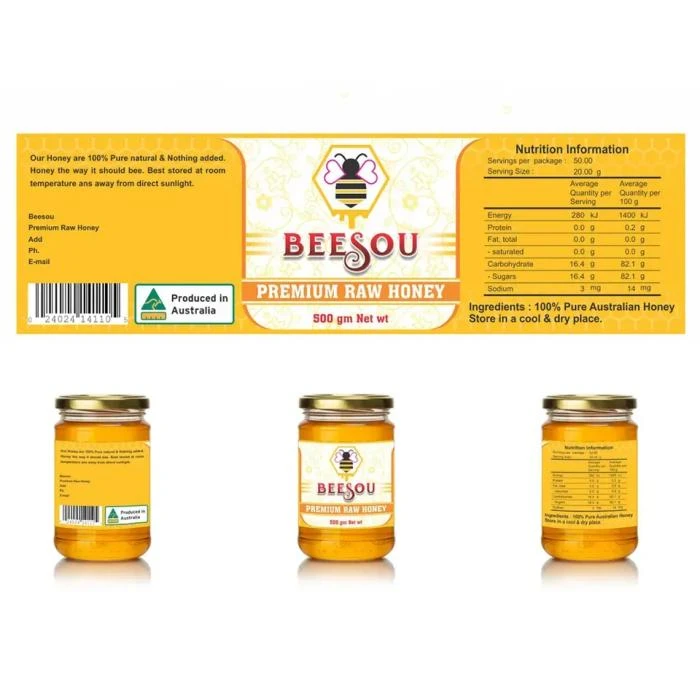
If your label includes a barcode or QR code, provide the correct source data and verify that it remains readable at the final printed size. For regulated or market-specific information, confirm the content with the appropriate responsible party before production.
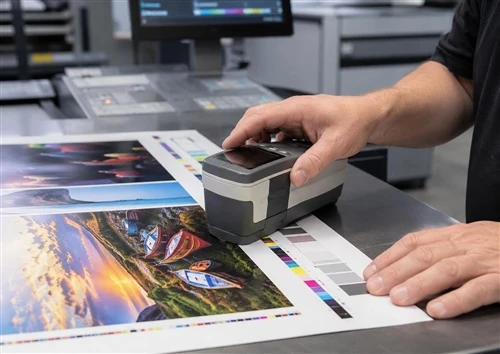
Do not assume that a digital proof guarantees an exact color match. Screens and printed materials reproduce colors differently, and transparent or metallic materials can further change the appearance. If color accuracy is critical, request an appropriate physical proof using the intended material and finish.
6. Select the Printing Process and Surface Finish
The printing process and surface finish influence how your label looks and feels. Your supplier can help identify suitable production methods based on the artwork, material, quantity, and finishing requirements.
Common options include:
Digital printing: Useful for flexible designs and projects that may require shorter runs or frequent artwork changes.
Offset printing: Suitable for many detailed, high-quality printed label projects, depending on the material and production setup.
Gloss lamination: Creates a shiny surface and can make the design appear more vibrant.
Matte lamination: Provides a softer, less reflective appearance.
Hot foil stamping: Adds metallic accents for premium packaging.
Embossing or debossing: Creates raised or recessed details.
Spot UV: Adds localized gloss to selected parts of the design.
Not every combination is suitable for every material. Ask your supplier to confirm compatibility before finalizing the design.
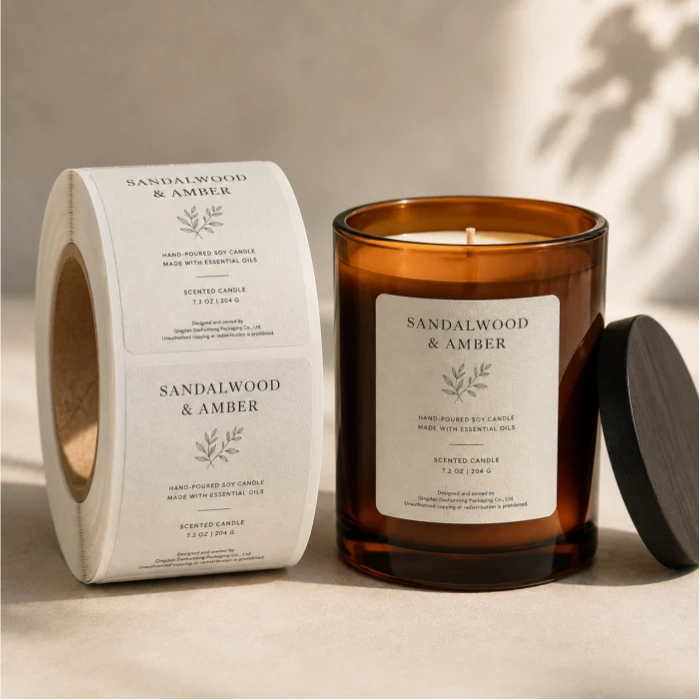
For example, a fragrance brand may combine a specialty paper with gold foil, while a food brand may prioritize a durable film and a suitable protective finish. The production choice should support the label's intended appearance and performance rather than simply adding more effects.
7. Specify the Order Quantity and Delivery Format
The quantity you need can affect the production method, unit cost, setup requirements, and lead time. To receive a useful quotation, provide your expected order quantity and any anticipated repeat-order requirements.
Also specify how you want the labels delivered:
Roll labels: Often suitable for automated labeling equipment or organized production workflows.
Sheet labels: Useful for certain manual application processes and smaller projects.
Individual labels: Suitable for some packaging, promotional, and hand-application needs.
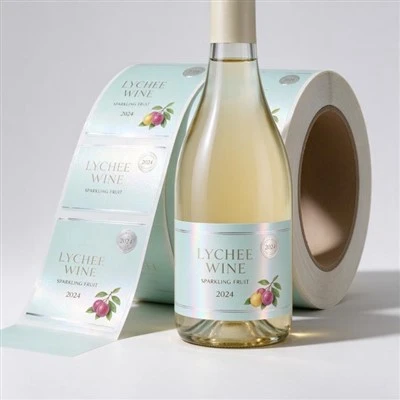
For roll labels, confirm the specifications required by your labeling machine, including core diameter, roll outer diameter, winding direction, label orientation, and any gap or spacing requirements.
If your packaging line has strict technical requirements, share the equipment specifications or a sample roll from a previous supplier. This can help reduce the risk of receiving labels that cannot run smoothly on your production line.
For a quotation, also confirm the quantity per design, the number of designs, destination country, required delivery date, and whether you need samples before production.
8. What Should You Confirm Before Mass Production?
Once the supplier has prepared the quotation and proof, review the details before approving the order.
Use this checklist:
- Product type and application surface are correct.
- Label dimensions, shape, and position are confirmed.
- Material and adhesive meet the intended requirements.
- Artwork, text, spelling, and product information are approved.
- Brand colors and finishing effects have been reviewed.
- Barcode or QR code data and readability have been checked.
- Roll or sheet specifications match the application method.
- Order quantity, packaging, and delivery requirements are confirmed.
- Any necessary physical samples have been evaluated.
- The final proof and production specifications have been approved in writing.
This checklist helps both the buyer and supplier work from the same set of requirements. If any important specification changes after approval, ask whether the artwork, quotation, or production plan needs to be updated.
Conclusion
Ordering custom product labels becomes easier when you prepare the right information before requesting a quotation. Product details, label dimensions, material, adhesive, artwork, printing finish, quantity, and delivery format all influence the final result.
You do not need to know every technical specification before contacting a supplier. Start with your product photos, container dimensions, intended use, artwork, estimated quantity, and preferred appearance. A capable label manufacturer can help you evaluate the remaining options and identify the specifications that need confirmation.
At SpeedPrint, custom label projects can be developed around different product categories, materials, printing methods, and finishing requirements. Providing clear information at the beginning helps the team recommend suitable options, prepare a more accurate quotation, and move toward production with fewer avoidable revisions.

FAQ
1. What information should I provide to a label manufacturer for a quotation?
Provide the product type, container material, label dimensions, intended application, artwork, material preferences, estimated quantity, finishing requirements, and delivery destination. If you do not know which material to choose, explain the product's usage environment and ask the supplier for recommendations.
2. Do I need print-ready artwork to order custom labels?
Print-ready artwork is helpful, but it is not always required for the initial quotation. You can begin with a logo, product information, design reference, and label dimensions. Confirm whether the supplier can assist with artwork preparation and what file formats are accepted.
3. How do I choose between paper and BOPP labels?
Paper labels are often selected for their traditional or specialty-paper appearance. BOPP film is generally more resistant to water and tearing. The best choice depends on the packaging surface, moisture exposure, desired appearance, and durability requirements.
4. Should I order samples before mass production?
For new designs, unfamiliar materials, critical brand colors, or challenging application surfaces, sampling is strongly recommended. It allows you to evaluate appearance, dimensions, adhesion, and compatibility before committing to a large order.
5. What specifications are needed for roll labels?
In addition to label size and quantity, confirm core diameter, roll outer diameter, winding direction, label orientation, spacing, and the requirements of your labeling equipment. These details help ensure that the labels can be used properly on the intended production line.
6. Can a supplier recommend the material if I am unsure what to use?
Yes. Share the product type, container photos, surface material, application environment, desired visual effect, and expected quantity. The supplier can then suggest suitable materials and finishing options for further evaluation.
References
Adobe: Create Print-Ready PDFs
GS1: Barcode Standards
Avery Dennison Label and Packaging Materials