Quick Summary
Choosing the right label material can have a significant impact on product appearance, durability, and packaging performance. Among the most widely used film materials, BOPP labels and PET labels are popular choices for brands across food, beverage, cosmetics, healthcare, and industrial products.
Although both materials offer good durability and moisture resistance, they are not identical. BOPP is often selected for its balance of performance and cost, while PET is preferred when higher durability, chemical resistance, and a more premium appearance are required.
Understanding the differences between BOPP and PET can help brands choose a label material that matches their product, packaging environment, and budget.

BOPP vs PET Labels
| Feature | BOPP Labels | PET Labels |
|---|---|---|
| Water Resistance | Excellent | Excellent |
| Durability | Very Good | Excellent |
| Chemical Resistance | Good | Excellent |
| Tear Resistance | Good | Excellent |
| Appearance | Clean and versatile | Premium and high-end |
| Cost | More cost-effective | Generally higher |
| Flexibility | Better for curved containers | More rigid |
| Common Applications | Food, beverages, cosmetics | Healthcare, industrial, premium products |
| Best For | Everyday waterproof packaging | Demanding environments |
The best choice depends on the product rather than simply choosing the material with the highest durability.
What Are BOPP Labels?
BOPP stands for Biaxially Oriented Polypropylene. It is a polypropylene film that is stretched in two directions during manufacturing, improving its strength and dimensional stability.
BOPP is widely used for product labels because it provides a useful combination of:
Water resistance
Good durability
Oil resistance
Attractive printing performance
Flexible application
Cost efficiency
For brands that need reliable labels without significantly increasing packaging costs, BOPP is often a practical option.
BOPP labels are particularly common in food, beverage, personal care, and cosmetic packaging.
What Are PET Labels?
PET stands for Polyethylene Terephthalate. PET film is known for its strength, dimensional stability, and resistance to demanding environments.
Compared with many standard label materials, PET provides excellent resistance to:
Moisture
Chemicals
Abrasion
Temperature changes
Tearing
PET labels are often selected when the label needs to remain stable and readable under more demanding conditions.
They are commonly used for industrial products, healthcare packaging, electronics, chemicals, and premium packaging.
BOPP vs PET: Which One Is More Waterproof?
Both BOPP and PET provide excellent water resistance.
This makes them much more suitable for moisture-prone applications than traditional paper labels.
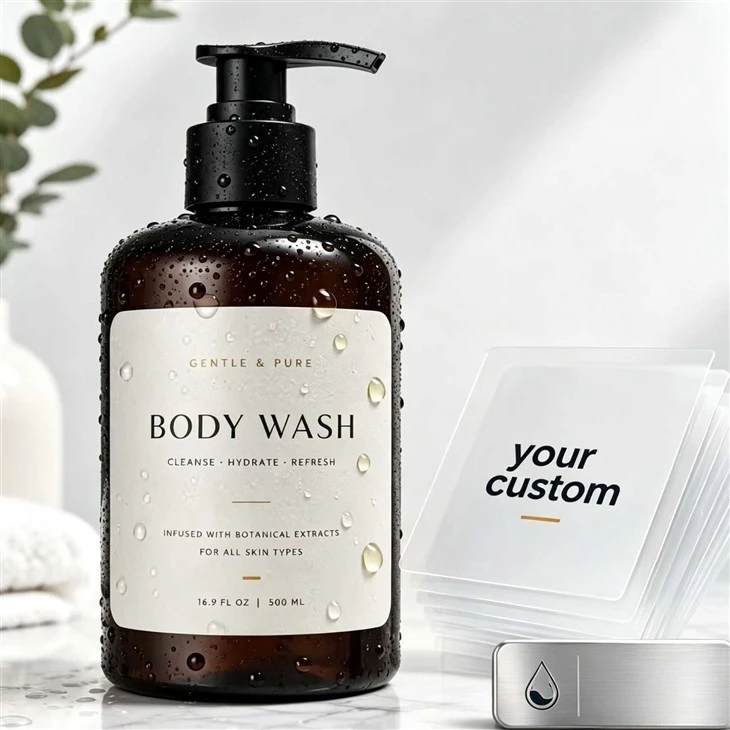
BOPP labels are commonly used on:
Beverage bottles
Shampoo bottles
Cosmetic containers
Food packaging
Household products
For products that may encounter splashes, condensation, or humidity, 【waterproof labels】 made from film materials can help maintain label appearance and readability.
PET also performs extremely well in wet environments, but its main advantage is that water resistance is combined with greater overall mechanical and chemical durability.
BOPP vs PET: Which Is More Durable?
When durability is the main consideration, PET generally has the advantage.
PET has high tensile strength and excellent dimensional stability, making it suitable for labels exposed to:
Frequent handling
Abrasion
Chemicals
Temperature fluctuations
Transportation and industrial environments
BOPP is also durable enough for many everyday products, but it is usually selected when brands want a balance between performance and cost rather than maximum durability.
For most consumer packaging, BOPP can provide sufficient performance. For demanding applications, PET may be the better choice.
BOPP vs PET: Which Is More Cost-Effective?
BOPP generally offers a better cost-to-performance balance.
This is one reason it has become popular across high-volume consumer packaging.
For brands producing large quantities of:
Food products
Beverages
Cosmetics
Household products
BOPP can provide the necessary moisture resistance and visual quality without adding unnecessary material costs.
PET generally has a higher material cost, but that additional investment can be worthwhile when the label needs superior durability or chemical resistance.
The cheapest material is not always the most economical option. A label that fails during transportation, storage, or use can create replacement costs and damage the product's appearance.
BOPP vs PET: Which Looks Better on Packaging?
Both materials can produce high-quality printed labels, so the final appearance depends heavily on the printing process, artwork, and finishing.
BOPP is available in different appearances, including:
White
Clear
Gloss
Matte
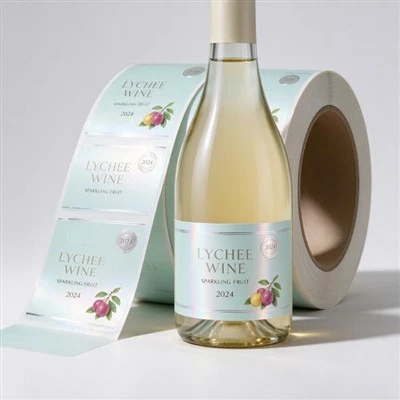
Clear BOPP can create a clean "no-label" appearance, which is particularly popular in cosmetics and beverage packaging.
PET can also provide a clean and premium appearance and is often selected for products positioned at a higher price point.
For brands looking to create more distinctive packaging, combining the right film with 【custom label printing】 and finishing techniques can produce a much stronger visual result.
Which Material Is Better for Food and Beverage Labels?
BOPP is frequently used for food and beverage packaging because it provides a strong combination of:
Water resistance
Good printability
Flexibility
Cost efficiency
For refrigerated products or beverages exposed to condensation, BOPP can be a practical alternative to paper labels.
PET can also be used when additional durability is required, particularly for products exposed to harsher environments.
The final choice should consider the container, storage conditions, application method, and expected product lifespan.

Which Material Is Better for Cosmetic Labels?
For cosmetics and personal care products, appearance is often just as important as durability.
BOPP is a popular option because it can provide:
Smooth printing
Waterproof performance
Gloss or matte appearance
Flexible application
Good cost efficiency
Clear BOPP is especially useful for bottles and containers where brands want the packaging material or product color to remain visible.
For premium beauty products, PET may be considered when greater rigidity, durability, or chemical resistance is required.
You can also explore different options for 【custom cosmetic labels】 based on container shape and product positioning.
Which Material Is Better for Industrial Products?
Industrial environments can expose labels to more challenging conditions.
Labels may come into contact with:
Oils
Cleaning chemicals
Solvents
Abrasion
Heat
Frequent handling
In these situations, PET is often the stronger choice because of its excellent mechanical and chemical resistance.
For less demanding industrial applications, BOPP can still provide adequate performance at a more economical cost.
The adhesive should also be selected according to the application environment. Choosing the film alone is not enough to guarantee label performance.
When Should You Choose BOPP Labels?
BOPP is generally a good choice when you need:
Waterproof performance
Attractive printing
Flexible application
Cost efficiency
Good everyday durability
It is particularly suitable for high-volume consumer products where performance and production cost both matter.
Typical applications include:
Food labels
Beverage labels
Cosmetic labels
Personal care products
Household product labels
If you need labels for products exposed to moisture but do not require extreme chemical resistance, BOPP is often an efficient solution.
When Should You Choose PET Labels?
PET is generally a better option when durability is a higher priority.
Consider PET when your product requires:
High mechanical strength
Strong chemical resistance
Excellent dimensional stability
Long-term durability
Premium label performance
Common applications include:
Industrial products
Chemical containers
Electronics
Healthcare packaging
Products exposed to harsh environments
For demanding applications, 【durable product labels】 can help maintain product information throughout transportation, storage, and use.
Don't Choose Label Material Based on Price Alone
One of the most common mistakes when selecting label materials is comparing only the price per label.
A better approach is to consider the total packaging requirement.
Ask:
Where will the product be used?
A bathroom product may require strong moisture resistance, while an industrial product may require chemical resistance.
How long must the label last?
A short-term promotional product has different requirements from a product expected to remain packaged for several years.
What type of container is being used?
Glass, plastic, metal, and flexible packaging may require different label constructions.
How will the product be handled?
Frequent handling can increase the need for abrasion resistance.
What is the brand positioning?
Premium products may benefit from higher-end materials and finishing.
This approach helps avoid choosing a material that is either insufficient for the application or unnecessarily expensive.
BOPP vs PET: Which One Should Your Brand Choose?
There is no universal winner between BOPP and PET.
Choose BOPP when your priority is:
Waterproof performance
Cost efficiency
Attractive packaging
Flexible applications
Consumer products
Choose PET when your priority is:
Maximum durability
Chemical resistance
Dimensional stability
Demanding environments
Premium applications
For many consumer products, BOPP provides an excellent balance of cost and performance. For more demanding applications, PET can justify its higher cost through improved durability.
If you are unsure which material fits your product, a professional 【custom label manufacturer】 can evaluate the container, application environment, adhesive requirements, and expected label lifespan before recommending a material.
Conclusion
BOPP and PET are both reliable film materials for modern product labeling, but they serve different priorities.
BOPP labels are an excellent choice for brands looking for waterproof performance, attractive printing, flexibility, and cost efficiency. They are particularly suitable for food, beverages, cosmetics, and other consumer products.
PET labels are better suited to applications where durability, chemical resistance, and long-term performance are more important. They are commonly considered for industrial, healthcare, and demanding packaging environments.
Instead of asking which material is universally better, brands should ask:
Which material is better for my product, container, environment, and budget?
Choosing the right material at the beginning can improve label performance, reduce packaging problems, and create a better overall product experience.
Frequently Asked Questions
Are BOPP labels waterproof?
Yes. BOPP is naturally resistant to moisture and is widely used for waterproof product labels.
Are PET labels more durable than BOPP labels?
Generally, yes. PET offers higher mechanical strength, chemical resistance, and dimensional stability, making it suitable for more demanding applications.
Are BOPP labels cheaper than PET labels?
BOPP is generally more cost-effective, especially for high-volume consumer packaging.
Which is better for cosmetic labels, BOPP or PET?
Both can work well. BOPP is often preferred for its combination of appearance, waterproof performance, and cost, while PET may be chosen for premium or more demanding applications.
Can BOPP and PET labels be customized?
Yes. Both materials can be customized in size, shape, artwork, printing, finish, and adhesive according to product requirements.
Which material is better for products exposed to chemicals?
PET is generally the better choice when strong chemical resistance is required.
Can transparent BOPP labels be produced?
Yes. Transparent BOPP can create a clean, premium, or "no-label" appearance on suitable containers.
How do I know which label material is right for my product?
Consider the container material, moisture exposure, chemical exposure, temperature, handling conditions, required lifespan, appearance, and budget. A professional label supplier can help evaluate these factors before production.
References
ExxonMobil – Polypropylene and BOPP Film Technology
PlasticsEurope – Polyethylene Terephthalate (PET) Information
Avery Dennison – Label Materials and Solutions
FINAT – European Self-Adhesive Label Industry Association
Smithers – Global Label and Packaging Industry Research