Introduction
When choosing labels for product packaging, paper is not always the best option. Products exposed to water, oil, friction, temperature changes, or frequent handling may require plastic label materials that offer better performance under specific conditions.
Common options include BOPP, PET, PVC, PE, and PP films. Although these materials can all be used in packaging and label applications, they differ in flexibility, dimensional stability, appearance, and suitability for different container surfaces. Understanding these differences helps brands choose labels that perform well throughout storage, transportation, and everyday use.
1. BOPP: A Practical Choice for Everyday Product Labels
BOPP stands for biaxially oriented polypropylene. It is widely used for food, beverage, personal-care, and household product labels because it is lightweight and offers good resistance to moisture.
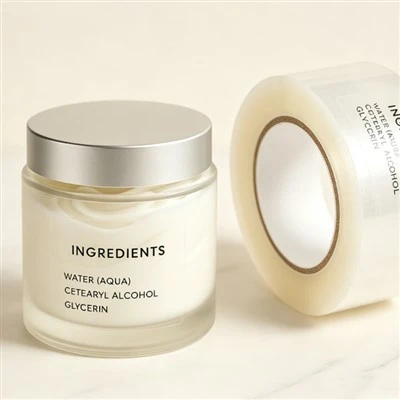
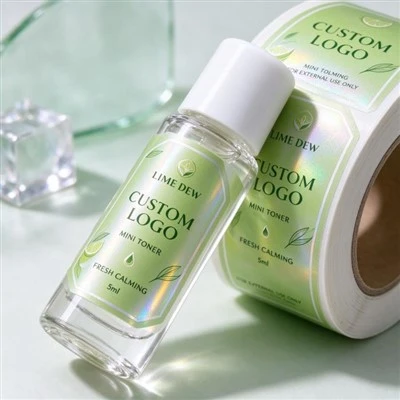
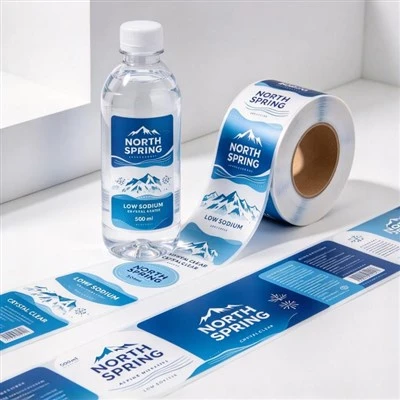
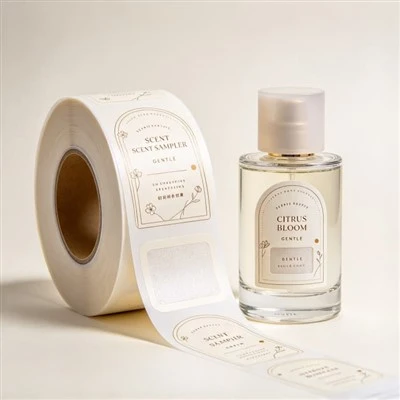
BOPP label materials are available in several finishes, including white, clear, and pearlescent. White BOPP supports colorful graphics, while clear BOPP can create a "no-label look" on transparent bottles when the adhesive and application surface are suitable.
Common applications:
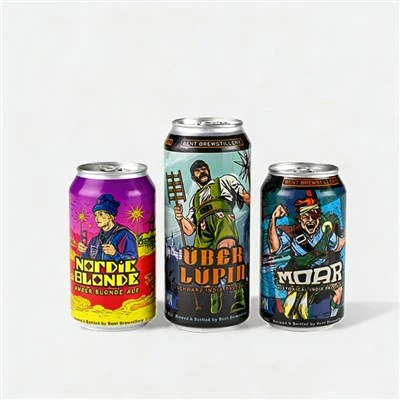
Water and beverage bottles
Food jars and containers
Shampoo and body wash bottles
Household cleaning products
BOPP is a useful option for brands looking for an attractive label that can handle ordinary moisture exposure. However, resistance to oil, chemicals, abrasion, and prolonged immersion depends on the complete label construction, including the adhesive, ink, and protective finish.

2. PET: For Durable and Dimensionally Stable Labels
PET, or polyethylene terephthalate, is a polyester film valued for its dimensional stability and durability. It is often considered for applications where a label needs to maintain its shape and remain legible during handling or exposure to demanding conditions.
PET labels are commonly used on electronic devices, equipment, cosmetic containers, and other products where appearance and durability matter. Depending on the grade and construction, PET can also provide good resistance to heat and certain chemicals.
Common applications:
Electronic equipment and product identification
Industrial equipment labels
Selected cosmetic and personal-care packaging
Product information and warning labels
PET is generally less conformable than softer PE films, so it may not be the first choice for highly squeezable containers. When selecting PET, check the required temperature range, adhesive compatibility, and whether the label will be applied to a flat or curved surface.

3. PVC / Vinyl: Flexible Labels for Curved Surfaces
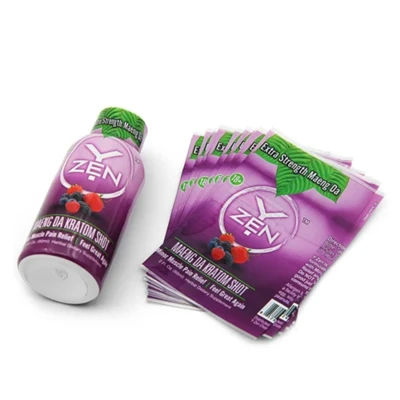
PVC, commonly called vinyl in many label applications, offers flexibility and can be suitable for labels that need to conform to curved or irregular surfaces. It is used in product labeling, graphics, decals, and some outdoor applications.
Depending on the formulation, PVC films can be produced with different thicknesses, finishes, and performance characteristics. Some grades are designed for flexible bottle surfaces, while others are made for signs and promotional graphics.
Common applications:
Curved containers and bottles
Promotional stickers and decals
Selected outdoor signs and graphics
Product labels requiring flexible film
PVC is not automatically suitable for every outdoor or chemical-exposure application. Actual performance depends on the film grade, ink system, adhesive, and environmental conditions. Brands should also consider relevant recycling requirements and local material restrictions when selecting PVC.

4. PE: Better Conformability for Squeezable Packaging
PE, or polyethylene, is a flexible plastic film that can conform well to soft containers and curved packaging. This makes it a useful choice for products packaged in squeezable bottles or containers that deform during use.
Compared with more rigid films, PE can accommodate movement of the container more readily. The right adhesive and label construction remain important because repeated squeezing can place stress on the label edges and adhesive bond.
Common applications:
Squeezable personal-care bottles
Flexible household-product containers
Selected cosmetic packaging
Containers with curved or deformable surfaces
If your product uses a soft bottle, evaluate how the label behaves when the container is squeezed, stored, and handled. A sample application test can help reveal lifting, wrinkling, or edge separation before production begins.

5. PP Film: Lightweight Material for Packaging Applications
PP stands for polypropylene. It is used across packaging and labeling applications because it is lightweight and offers good moisture resistance. BOPP is one specific type of polypropylene film that has been stretched in two directions to improve its properties.
This distinction matters when comparing material specifications: BOPP is a type of PP film, rather than a completely unrelated material. Different PP film structures can have different stiffness, clarity, printability, and conformability.
Common applications:
Packaging labels
Selected food and personal-care labels
Lightweight product identification labels
Printed packaging components
When choosing PP film, confirm whether the product specification refers to BOPP or another PP film construction. This helps prevent confusion when comparing samples or requesting quotations.

6. How to Choose the Right Plastic Label Material
The best plastic label material depends on the product's actual conditions, not simply on which film is considered the most durable.
| Requirement | Material to consider | What to check |
|---|---|---|
| Everyday moisture resistance | BOPP / PP | Water exposure, finish, adhesive |
| Durable product identification | PET | Temperature, chemicals, surface |
| Flexible graphics or curved surfaces | PVC / vinyl | Film grade, flexibility, outdoor exposure |
| Squeezable containers | PE | Conformability, edge lifting, adhesive |
| Transparent bottle appearance | Clear BOPP or PET | Clarity, adhesive transparency, bubbles |
Use this table as a starting point rather than a fixed rule. For example, clear BOPP and clear PET can both be suitable for transparent labels, but the best choice depends on the bottle material, desired appearance, printing method, and application environment.
Check the Container Surface
A label designed for glass may not perform the same way on a squeezable plastic bottle. Surface energy, texture, curvature, and the presence of oil or dust can all affect adhesion.
Consider Water, Oil, Heat, and Friction
"Waterproof" does not necessarily mean resistant to every chemical or suitable for prolonged immersion. Identify the real exposure conditions, including condensation, refrigeration, cleaning agents, and repeated handling.
Evaluate the Complete Label Construction
The face film is only one part of a self-adhesive label. The adhesive, printing inks, protective coating, and release liner also affect application and performance. Ask for samples and test them on the actual container before approving a large production run.
7. Plastic Film Labels vs. Paper Labels
Plastic films are often preferred when labels need moisture resistance, flexibility, or a transparent appearance. Paper labels remain valuable when brands want a natural texture, easy writability, or a traditional printed look.
If you are comparing materials across the broader printing industry, read [Printing Paper Types: Best Materials for Different Applications] for an overview of paper stocks and their common uses.
For a more focused comparison of self-adhesive paper face materials, see [6 Types of Paper Label Materials and Their Best Uses]. That guide covers coated paper, writable paper, kraft paper, metallic paper, thermal labels, and cast-coated paper labels.
The key is to match the material to the product. A paper label may be ideal for a dry indoor application, while a film label may be more appropriate for packaging exposed to moisture or repeated handling. Neither material is universally better for every use.
FAQ
Are BOPP labels waterproof?
BOPP film has good moisture resistance, but the performance of the finished label also depends on its adhesive, ink, coating, and application surface. Test the complete label under the conditions it will encounter.
What is the difference between BOPP and PET labels?
BOPP is a polypropylene film commonly used for everyday packaging labels, while PET is a polyester film often selected for dimensional stability and demanding labeling applications. The right option depends on the container, environment, and required appearance.
Is PE suitable for squeezable bottles?
PE is flexible and can conform well to squeezable packaging. However, the adhesive and label design must also accommodate repeated deformation without wrinkling or lifting.
Can plastic film labels be transparent?
Yes. Clear BOPP and clear PET are both used for transparent labels. The final appearance depends on film clarity, adhesive selection, printing, and the surface of the container.
How can I choose between paper and plastic labels?
Start with the application environment. Consider moisture, oil, temperature, friction, container flexibility, appearance, and end-of-life requirements. Then test samples on the actual packaging before confirming the material.
Conclusion
BOPP, PET, PVC, PE, and PP offer different advantages for label and packaging applications. BOPP is a common option for everyday product labels, PET can suit durable identification needs, PVC provides flexibility for selected graphics and curved surfaces, and PE can conform to squeezable containers. Other PP film constructions may also work for lightweight packaging applications.
Before making a final decision, evaluate the complete label system rather than the face material alone. Matching the film, adhesive, printing, and finish to the product helps improve label appearance, application reliability, and performance throughout the product's lifecycle.