Introduction
CMYK offset printing is a well-established printing technology widely used for high-quality commercial printing and packaging. By combining cyan, magenta, yellow, and black inks, it can reproduce detailed images, rich colors, gradients, illustrations, and complex graphic designs with consistent results.
For brands that rely on packaging to communicate product quality, CMYK offset printing labels offer a professional solution for reproducing detailed artwork and maintaining a consistent visual identity. The process is particularly valuable when a packaging design needs to be reproduced across large quantities or multiple product sizes.
Unlike simply choosing four ink colors, successful offset printed labels depend on the interaction between artwork preparation, color separation, printing plates, ink application, label material, and finishing. Understanding how these factors work together helps brands make better decisions about label production.

What Is CMYK Offset Printing?
CMYK offset printing is a printing process based on four process colors: Cyan, Magenta, Yellow, and Key Black. Instead of printing every color separately as a ready-made ink, these four colors are combined in carefully controlled proportions to reproduce a broad range of colors.
The term "offset" refers to the image transfer process. The image is transferred from a printing plate to a rubber blanket and then from the blanket onto the final printing surface. This indirect transfer method helps achieve controlled ink distribution and detailed image reproduction.
Before printing begins, the original artwork is separated into four color channels. Each channel corresponds to one of the CMYK colors. During production, the four layers are accurately registered so that they combine to form the final image.
For example, a photograph on a food label may contain hundreds of subtle color variations, but these colors can be reproduced through different combinations of cyan, magenta, yellow, and black. This makes CMYK offset printing particularly useful for packaging designs containing photographs, illustrations, gradients, and detailed graphics.
For brands developing professional packaging, 【custom printed labels】 can combine CMYK printing with different materials and finishing processes to create packaging that is both functional and visually distinctive.
How Is CMYK Offset Printing Made?
The production process starts with artwork preparation. Designers and printers check image resolution, color mode, typography, bleed, registration requirements, and other technical specifications before the artwork is prepared for printing.
The artwork is then separated into the four CMYK color channels. A printing plate is created for each color, meaning that a typical four-color CMYK job requires four separate plates.
During printing, each plate controls where its corresponding ink is applied. The image moves through the press in a controlled sequence, with each color being transferred onto the substrate. Accurate registration is essential because even a small misalignment between color layers can affect the sharpness of text, images, and graphic elements.
After the four colors are printed, the labels may receive additional finishing depending on the design. Coatings can provide matte or glossy surfaces, while foil stamping can introduce metallic effects. Embossing and debossing can create physical depth, and die cutting determines the final label shape.
This means that custom offset printing is not simply a four-color printing process. It is a complete production system in which prepress preparation, printing, finishing, and quality control all contribute to the final result.

What Printing Effects Can CMYK Offset Printing Achieve?
One of the major strengths of CMYK offset printing is its ability to reproduce detailed and visually complex artwork.
It can produce smooth color transitions, photographic images, illustrations, fine graphic elements, and large areas of color. When the artwork and production parameters are properly controlled, the finished label can have a clean and professional appearance.
Color reproduction also changes according to the label material and surface finish. A glossy material can make colors appear brighter and more vivid, while a matte surface can create a softer and more understated appearance.
Brands can also combine CMYK printing with decorative finishing. For example, a label may use CMYK to reproduce the main artwork and then use gold foil to emphasize the logo. Embossing can make selected text or graphics physically raised, while a special coating can create contrast between different areas of the design.
This combination of printing and finishing gives offset printed labels much greater design flexibility than simply printing a flat four-color image.
Why Is Color Accuracy Important?
Color consistency is particularly important for brands with established visual identities.
Imagine a company selling several beverage flavors. Each product may use a different color, but all labels still need to look like part of the same product family. If colors vary significantly between production batches, the packaging can appear inconsistent.
CMYK printing achieves colors through combinations of four inks, so accurate control of ink density, registration, substrate, and production conditions is essential.
However, CMYK is not the same as Pantone spot-color printing. CMYK uses four process inks to simulate colors, while Pantone systems use standardized spot colors. If a brand has a highly specific signature color that must be reproduced consistently, the printer may need to evaluate whether CMYK, Pantone, or a combination of both is appropriate.
For offset printing for packaging, color management becomes even more important because packaging may be produced repeatedly over an extended period. The objective is not simply to create an attractive first batch, but to maintain a recognizable brand appearance across future production.

What Materials Are Suitable for CMYK Offset Printing?
The choice of label material has a direct influence on the final printing effect.
Paper remains widely used because it provides good printability and can support many different packaging styles. Depending on the surface treatment, paper labels can create natural, traditional, premium, or contemporary appearances.
Synthetic materials can be considered when the product requires greater resistance to moisture, handling, or environmental exposure. Materials such as BOPP and PET are commonly used in applications where durability is more important.
The printing process should always be evaluated together with the substrate. Ink absorption, surface smoothness, opacity, coating, and reflectivity can all influence the final appearance of printed colors.
For example, the same CMYK artwork may look slightly different on an uncoated paper surface compared with a coated film surface. This is why professional proofing and material testing are important before large-scale production.
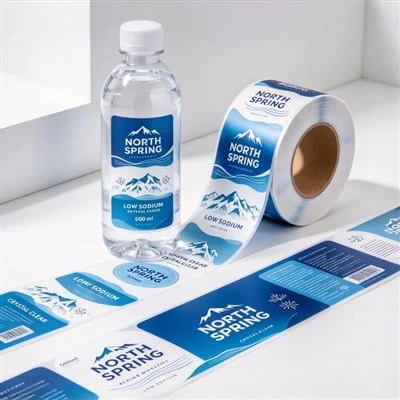
For products exposed to moisture, refrigeration, or frequent handling, 【waterproof labels】 can provide a more appropriate solution when the material, adhesive, and printing process are selected as a complete system.
Where Are CMYK Offset Printed Labels Used?
CMYK offset printing labels are particularly useful for products where detailed graphics and professional packaging presentation are important.
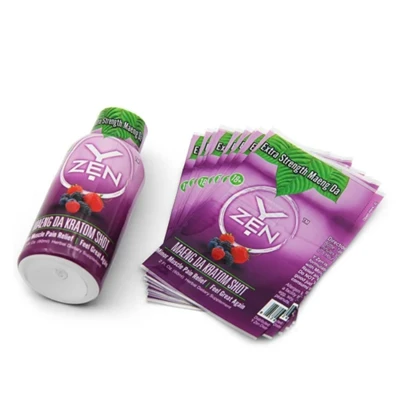
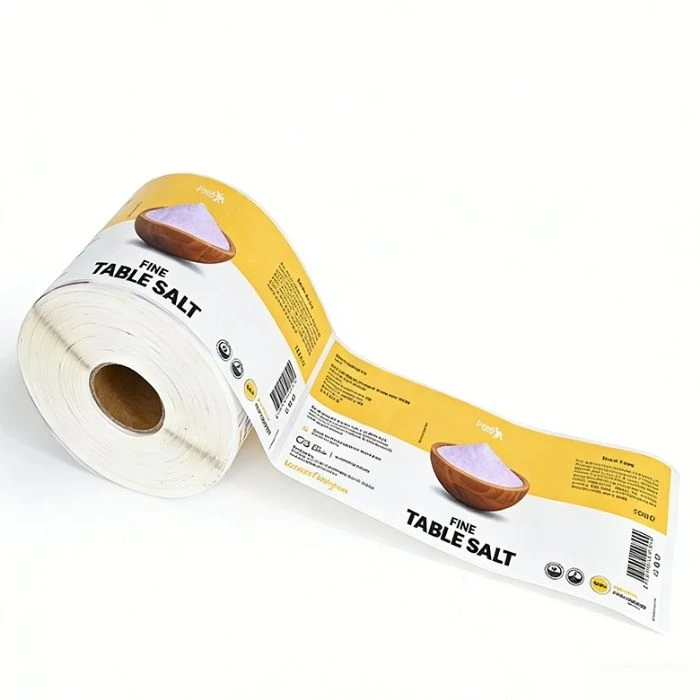
Food packaging is a common application because brands often use product photography, ingredient illustrations, colorful backgrounds, and detailed typography to communicate flavor and quality. High-quality color reproduction helps these visual elements remain attractive on the shelf.
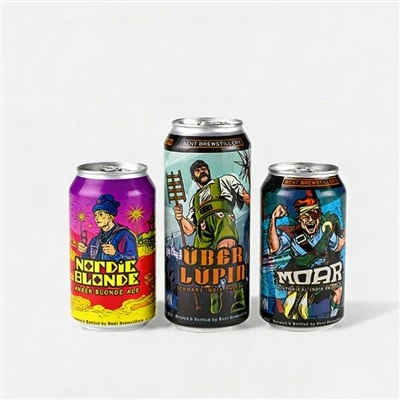
Beverage packaging is another strong application. Wine, specialty drinks, juices, sauces, and other beverages often use sophisticated designs that combine illustrations, typography, background graphics, and decorative elements.
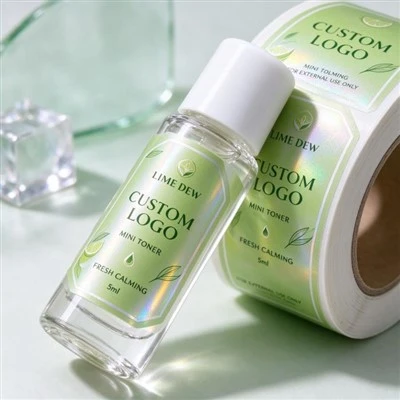
Cosmetics and personal care products can also benefit from custom offset printing. These products often depend heavily on packaging appearance to communicate positioning, quality, and brand personality. Fine typography, subtle colors, gradients, and decorative patterns can all be reproduced through suitable offset printing processes.
For premium beauty packaging, 【cosmetic labels】 can combine CMYK printing with matte finishes, foil stamping, embossing, or other decorative techniques to create a more sophisticated appearance.
Other applications include household products, specialty food products, promotional packaging, and consumer goods where packaging needs to balance visual quality with production consistency.

CMYK Offset Printing vs Digital Printing
Both offset and digital printing can produce high-quality labels, but their production characteristics are different.
Digital printing transfers artwork directly from a digital file without traditional printing plates. This makes it particularly flexible for short production runs, multiple designs, variable information, and frequent artwork changes.
Offset printing requires more preparation because printing plates must be created before production. However, once the press is properly prepared, it can provide highly consistent results for suitable production volumes and established designs.
For example, a startup launching a new product with several label versions may prefer digital printing because it can change designs more easily. An established brand producing a large quantity of the same packaging design may find offset printing for packaging more suitable.
The decision should therefore consider more than the unit price. Brands should evaluate order quantity, design stability, color requirements, finishing, material, production schedule, and total production cost.
For shorter runs or frequently changing designs, 【digital printed labels】 may offer greater flexibility.
When Should a Brand Choose CMYK Offset Printing?
CMYK offset printing is often a strong choice when a brand has a relatively stable design and requires consistent, detailed, high-quality reproduction.
It can be particularly suitable when the packaging contains complex graphics, photographs, illustrations, gradients, or large areas of color. It can also work well when the same design needs to be reproduced consistently across a substantial production run.
By contrast, brands producing highly customized short runs may benefit from digital printing. Products that require specialized variable information may also need a digital solution.
Production quantity is therefore only one part of the decision. The material, artwork, application environment, finishing requirements, color expectations, and production schedule should also be considered.
A professional 【custom label manufacturer】 can evaluate these factors together rather than recommending a printing method based only on order quantity.
Combining CMYK Printing With Finishing Techniques
The printed image is only one part of a finished label. Finishing techniques can significantly change the way packaging looks and feels.
A CMYK-printed label can be combined with gold or silver foil stamping to highlight a logo or product name. Embossing can add physical depth to important design elements, while debossing creates a recessed effect.
Matte and glossy finishes also influence how consumers perceive the packaging. Matte surfaces generally create a softer and more sophisticated appearance, while glossy surfaces can make colors appear brighter and more energetic.
Die cutting provides another opportunity for customization. A label does not necessarily have to be rectangular. Custom shapes can follow a logo, bottle design, product theme, or decorative concept.
For offset printed labels, combining several finishing techniques should be done carefully. Too many effects can make packaging visually complicated. Well-planned finishing usually works best when it emphasizes one or two important brand elements.
Common Production Considerations
Good CMYK printing begins before the printing machine starts running.
Artwork files should be prepared according to the printer's specifications. Images need sufficient resolution, colors should be prepared correctly, and important elements should have enough space from cutting edges.
Small text and fine lines also need to be evaluated according to the selected material and printing process. Very small details may become difficult to reproduce depending on the substrate and production conditions.
Material selection is equally important. Different surfaces absorb and reflect ink differently, which can influence the appearance of CMYK colors.
Proofing is therefore an important stage for professional custom offset printing. A proof allows the brand and printer to review the design, color expectations, material appearance, and finishing before mass production.
For large packaging programs, this preparation can prevent expensive reprints and reduce inconsistencies between production batches.
Why CMYK Offset Printing Remains Important for Packaging
Digital printing has changed the label industry, but offset technology remains relevant because packaging production involves many different requirements.
Brands may need detailed images, consistent color reproduction, large production quantities, and sophisticated finishing. In these situations, offset printing can provide a practical combination of quality and production stability.
The technology is also adaptable. A CMYK base can be combined with spot colors, coatings, foil effects, embossing, and other finishing processes to create different packaging styles.
For this reason, offset printing for packaging is not limited to traditional or simple designs. With appropriate materials and finishing, it can support modern packaging ranging from minimalist consumer products to highly decorative premium labels.
Conclusion
CMYK offset printing remains an important technology for brands that need detailed graphics, reliable color reproduction, and consistent packaging quality.
Its four-color printing system can reproduce photographs, illustrations, gradients, typography, and complex graphic designs. When combined with appropriate substrates and finishing techniques, CMYK offset printing labels can achieve a wide range of visual and tactile effects.
The right printing solution depends on the entire production requirement rather than one individual factor. Order quantity, artwork complexity, color expectations, label material, application environment, finishing, and budget all need to be considered.
For stable designs and suitable production volumes, offset printed labels can provide a reliable and professional packaging solution. When carefully combined with modern finishing techniques, custom offset printing can help brands create packaging that is consistent, distinctive, and aligned with their market positioning.
Frequently Asked Questions
What does CMYK mean in offset printing?
CMYK stands for Cyan, Magenta, Yellow, and Key Black. These four process colors are combined in different proportions to reproduce a wide range of colors.
What is the main advantage of CMYK offset printing?
The main advantages include detailed image reproduction, consistent color output, and the ability to produce complex packaging graphics at suitable production volumes.
Are CMYK offset printing labels suitable for photographs?
Yes. CMYK printing is particularly suitable for photographs, illustrations, gradients, and other designs containing multiple colors and fine details.
Is CMYK offset printing suitable for small quantities?
It can be used for different production requirements, but digital printing is often more flexible for very small quantities because it does not require traditional printing plates.
Can offset printed labels have gold stamping or embossing?
Yes. Offset printed labels can be combined with foil stamping, embossing, debossing, matte coating, glossy coating, and custom die cutting.
What is the difference between CMYK and Pantone printing?
CMYK uses four process inks to reproduce colors, while Pantone printing uses standardized spot colors. The appropriate option depends on the design and color consistency requirements.
What products are suitable for CMYK offset printing?
Common applications include food, beverages, cosmetics, personal care products, specialty products, and other consumer packaging that requires detailed and professional graphics.
References
FINAT – European Association for the Self-Adhesive Label Industry
Labels & Labeling – Global Label Industry Information
Smithers – Packaging and Printing Industry Research
Avery Dennison – Label and Packaging Materials
Packaging Europe – Packaging Industry News and Technology