

Starting a small product business involves many decisions, from product development and packaging to branding and customer experience. Labels may seem like a small part of the package, but they often have a direct impact on how a product looks, feels, and is recognized.
For startups and growing brands, custom labels offer a practical way to create professional packaging without completely redesigning the package itself. However, choosing the right material, adhesive, size, printing method, and finish can be confusing, especially when ordering labels for the first time.
This guide explains what small businesses should consider when choosing custom product labels, how different options affect the final result, and what to check before placing an order.

Why Custom Labels Matter for Small Businesses
For a small business, packaging often needs to do several jobs at once. It needs to present the product clearly, communicate the brand, provide important information, and withstand the environment in which the product will be stored or used.
Well-designed small business labels can help create a consistent visual identity across different products. A coffee brand, for example, may use the same logo, typography, and color system across coffee bags, jars, and promotional packaging. A cosmetic brand may use coordinated labels across different bottle sizes and product lines.
Custom printing also gives smaller brands more flexibility than relying entirely on standard stickers. The label can be produced according to the actual container, including its dimensions, shape, surface, and application requirements.
For brands that are launching a new product or testing the market, this flexibility can be particularly useful. Instead of changing the entire package, the brand can update the label design while keeping the basic container structure.
What Should You Consider When Choosing Custom Product Labels?
Choosing custom product labels should start with the product itself rather than the printing process. The container, storage conditions, application surface, and expected product life all influence the appropriate label specification.
Product Type and Packaging Surface
A label for a dry food package does not necessarily need the same construction as a label for a refrigerated beverage or cosmetic bottle.
Paper labels can provide a natural, textured, or premium appearance and are suitable for many dry products and general packaging applications. BOPP and PET materials are often considered when better resistance to moisture, handling, or demanding environments is required.
The shape of the container also matters. Flat boxes and pouches are generally easier to label than curved bottles or small containers with limited application space.

Material and Adhesive
Material selection is one of the most important decisions when ordering custom labels.
Common options include paper, BOPP, PET, and other synthetic materials. The right choice depends on appearance, durability, moisture exposure, application surface, and budget.
Adhesive should also be considered. A label intended for a smooth glass bottle may have different requirements from one applied to textured cardboard, plastic, or a curved container.
If you are unsure which material or adhesive is appropriate, providing the label supplier with information about the product and packaging environment can help narrow down the options.
For products exposed to water or condensation, you can also explore for additional material and construction considerations.

Paper or Waterproof Materials: Which Should a Small Business Choose?
There is no single material that works for every product. The better approach is to match the label construction to the product's actual environment.
Paper labels are commonly selected when visual appearance, texture, and cost are important. They can work particularly well for dry food, specialty products, gift packaging, and brands that want a traditional or natural appearance.
BOPP labels are suitable for applications where resistance to moisture and everyday handling is important. They are widely used for beverage, food, cosmetic, and other consumer packaging.
PET labels can be considered when a more durable synthetic material and a clean, premium appearance are required.
For example, a dry cookie box may work well with a paper label, while a refrigerated beverage bottle may require a material designed to handle moisture and condensation.
You can also compare 【BOPP labels】 and other synthetic materials before deciding on your final specification.
The key point is that material should be selected according to the product's actual conditions-not simply because one material is considered more premium or more expensive.
How Much Customization Does a Small Business Need?
One advantage of custom printed labels is that almost every important element can be adjusted to match the product.
Typical customization options include:
Label size and shape
Paper or synthetic material
Adhesive type
CMYK or Pantone colors
Matte or glossy finish
UV printing
Foil stamping
Embossing or debossing
Special die-cut shapes
Variable information
However, more customization does not automatically mean better packaging.
For a new small business, a clean design with the right material and accurate printing may be more effective than adding multiple decorative effects. Special finishes should support the product's positioning rather than make the packaging unnecessarily complicated.
For premium products, techniques such as foil stamping or embossing can add visual and tactile details. For everyday consumer products, strong color reproduction and clear information may be more important.
The objective is to create a label that looks appropriate for the product while remaining practical for production and application.

How to Order Custom Labels
The ordering process becomes much easier when the key information is prepared in advance.
1. Prepare Your Artwork
Provide the final artwork in a suitable print-ready format and make sure the text, logo, barcode, and product information are correct.
If the design is not finalized, a professional label supplier may also be able to provide design support or check whether the artwork is suitable for printing.
2. Confirm the Label Size and Shape
Measure the application area carefully. The available space on a bottle, box, pouch, or jar determines the maximum practical label size.
For curved containers, it is particularly important to consider how the label will wrap around the surface.
3. Choose the Material and Adhesive
Explain how and where the product will be used. Mention factors such as refrigeration, moisture, outdoor exposure, oil, handling, or long-term storage.
This information can help determine the appropriate label material and adhesive.
4. Select Printing and Finishing
Choose the printing method according to the artwork, quantity, color requirements, and desired appearance.
You can also decide whether the product needs a matte or glossy surface, metallic effects, embossing, or other finishing options.
5. Review the Proof or Sample
Before mass production, carefully check the artwork, dimensions, colors, text, barcode, and finishing details.
A sample can also help you evaluate how the label looks and performs on the actual packaging.
6. Start Production
After the specifications and artwork are confirmed, the labels can move into production, finishing, inspection, and packing.
For brands ordering labels internationally, confirming production specifications and shipping requirements early can help reduce unnecessary delays.
Common Mistakes Small Businesses Make When Ordering Labels
First-time buyers often focus heavily on price and overlook the relationship between the label and the product.
One common mistake is choosing a material without considering the application environment. A low-cost paper label may look good initially but may not be suitable for a product exposed to moisture.
Another mistake is using the wrong label dimensions. A label that is too large can wrinkle around a curved container, while one that is too small may leave too much empty space and weaken the overall packaging design.
Artwork quality is another important consideration. Low-resolution images, incorrect colors, missing bleed, or unclear small text can create printing problems.
Some brands also add too many finishing effects. Foil, embossing, UV effects, and special materials can all create visual interest, but the final design should remain consistent with the brand.
Finally, businesses should consider the adhesive and application method. A label that looks perfect on a sample may behave differently if the packaging surface, temperature, or application conditions change.

Custom Labels for Different Small Business Products
Different product categories have different packaging priorities.
For food and beverage brands, labels may need to combine attractive graphics with moisture resistance and clear product information. Paper, BOPP, and PET can all be considered depending on the product.
For cosmetic brands, the label often needs to fit relatively small bottles, tubes, or jars while maintaining a refined appearance. Material, typography, color accuracy, and finishing can all influence the final presentation.
For coffee and specialty food brands, texture and color can be important parts of the brand identity. A carefully selected paper or synthetic material can change the overall impression of the package.
For candles, handmade products, and lifestyle products, labels can become an important part of the product's visual personality. Unique shapes, textured materials, foil, or embossing can help create a more distinctive package.
For e-commerce brands, consistency across product lines is especially useful. A coordinated label system can make different products look like part of the same brand even when their containers are different.
If you are developing a complete packaging system, 【custom packaging labels】 can also be combined with boxes, bags, hang tags, or other printed packaging components.
Why Work With an Experienced Custom Label Manufacturer?
The printing process is only one part of producing a successful label. A reliable supplier should also understand materials, artwork preparation, finishing, quality inspection, and the practical requirements of different packaging surfaces.
For small businesses, communication can be especially important. A good supplier should be able to discuss the intended application, explain available options, identify potential production problems, and help you choose specifications that match your product.
This is also where 【custom label manufacturer】 services can provide value beyond simply printing a supplied file.
Instead of selecting every specification independently, brands can provide their product details, packaging dimensions, artwork, quantity, and expected application conditions. The supplier can then help determine a suitable combination of material, adhesive, printing, and finishing.
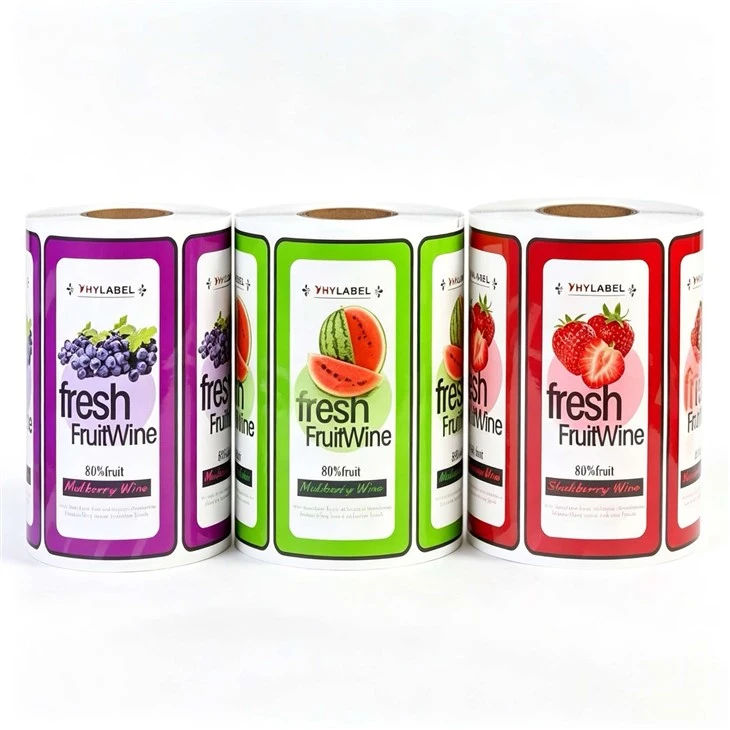
FAQ About Custom Labels for Small Businesses
What are the best labels for a small business?
The suitable label depends on the product, packaging material, environment, design, quantity, and budget. Paper, BOPP, PET, and other materials can all be appropriate for different applications.
Can small businesses customize label size and shape?
Yes. Custom product labels can generally be produced in different sizes and die-cut shapes according to the packaging design and application area.
Are custom labels waterproof?
Some custom labels are designed for waterproof or moisture-resistant applications. Synthetic materials such as BOPP or PET can be considered when the product is exposed to moisture.
Can I add foil or embossing to a product label?
Yes. Finishing options such as foil stamping, embossing, debossing, UV effects, and specialty coatings can be combined with printed labels depending on the material and production requirements.
What should I provide when requesting a label quotation?
Useful information includes label size, shape, material preference, quantity, artwork, application surface, product environment, printing colors, finishing requirements, and packaging type.
Conclusion
Choosing small business labels is not simply a matter of picking the cheapest sticker or the most decorative finish. The right solution should balance appearance, material performance, adhesive requirements, printing quality, application conditions, and production needs.
For a growing brand, a well-planned label can create a more consistent product identity while allowing packaging to evolve as the business grows. By understanding the relationship between the product, packaging surface, material, printing process, and finishing options, small businesses can make more informed decisions before placing an order.
For brands looking for 【custom printed labels】, working with an experienced manufacturer can also make the process easier-from material selection and artwork review to production and final quality inspection.
References
Avery Dennison - Label and Packaging Materials
https://label.averydennison.com/
FINAT - European Association for the Self-Adhesive Label Industry
https://www.finat.com/
Packaging Europe - Packaging Industry News and Insights
https://packagingeurope.com/
Oliver Inc. - The Oliver Guide to Commercial Label Printing
https://www.oliverinc.com/the-oliver-guide-to-commercial-label-printing
Paper Print Services - Label Printing Processes
https://www.paperprintservices.com/labels-labelling/label-printing-processes


