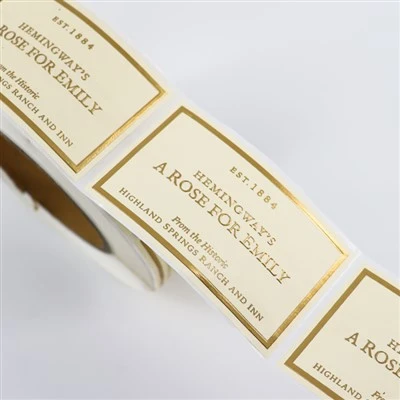
Introduction
Have you ever noticed a product label that changes color when you move it under the light? That eye-catching effect often comes from holographic stickers. Unlike ordinary printed labels, they reflect light into different colors and patterns, helping products attract attention on crowded retail shelves.
But their purpose is not limited to appearance. Depending on the material and construction, holographic labels can also support brand recognition, product identification, and certain anti-counterfeiting applications.
For businesses choosing packaging labels, the important question is not simply whether a holographic effect looks attractive. It is whether it solves a real packaging problem. This guide explains what holographic stickers are, where they are used, and how to select the right type for your products.
1. What Are Holographic Stickers?
Holographic stickers are self-adhesive labels made with a special reflective material or optical surface. When light hits the surface, it produces rainbow colors, shifting patterns, or a three-dimensional visual effect that changes depending on the viewing angle.
This effect is different from ordinary metallic printing. A silver foil label mainly reflects light with a metallic appearance, while a holographic surface can display multiple colors and moving visual patterns as the product is viewed from different directions.
Common constructions include:
Holographic film labels: Use a holographic film as the main label material.
Holographic foil labels: Apply a holographic foil effect to selected areas of a printed label.
Transparent holographic labels: Add an iridescent effect while allowing parts of the packaging design to remain visible.
Custom-pattern holographic labels: Use a selected pattern, logo, or visual design to create a more distinctive brand appearance.
The right construction depends on the packaging surface, artwork, desired visual effect, and whether the label is intended for decoration or security.
2. What Problems Can Holographic Stickers Solve?
Before choosing a label, brands should identify the problem they want to address. Holographic stickers can help with several common packaging challenges.
Problem 1: Products Look Too Similar on Retail Shelves
When several products use similar bottle shapes, colors, and packaging layouts, customers may struggle to notice the differences between brands.
A holographic label introduces a reflective visual element that catches light and creates a more noticeable appearance. It can be used on a product logo, decorative border, product name, or selected graphic area.
Best suited for: Cosmetics, gift products, specialty foods, craft beverages, and promotional packaging.
Problem 2: Standard Labels Do Not Match a Premium Product Positioning
Some products need packaging that communicates a more distinctive or premium appearance. However, changing the entire bottle, jar, or box design can increase packaging costs and require additional production adjustments.
Using a holographic label or a holographic accent can refresh the appearance of existing packaging without redesigning the entire container.
Best suited for: Skincare collections, perfume packaging, beauty gift sets, limited-edition products, and specialty beverages.
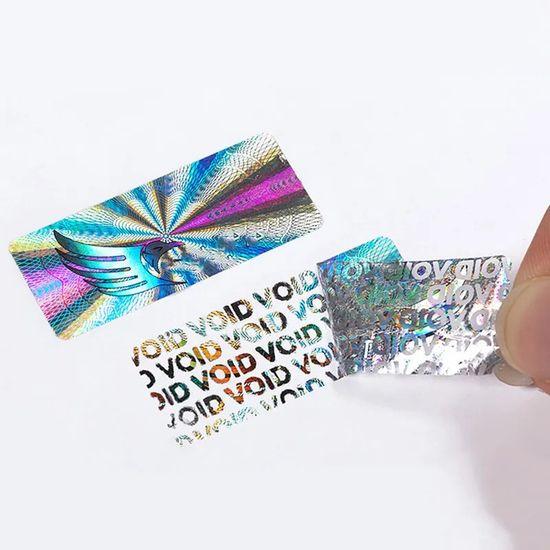
Problem 3: Brands Want an Additional Visual Authentication Feature
Counterfeit products can damage customer confidence and brand reputation. A customized holographic design can give customers and distributors a recognizable visual feature to check when identifying genuine products.
However, an important distinction matters: a standard holographic film is primarily decorative. It does not automatically provide strong anti-counterfeiting protection.
For more demanding product authentication, brands may need a customized security hologram, unique serial numbers, QR codes, hidden features, or tamper-evident materials. The actual protection depends on the complete security design and verification process.
Best suited for: Electronics, branded accessories, warranty labels, selected cosmetics, and products that require additional authentication.
3. Where Are Holographic Stickers Used?
Holographic labels can be applied to different products and packaging formats. Their suitability depends on the material, adhesive, surface shape, and actual usage environment.
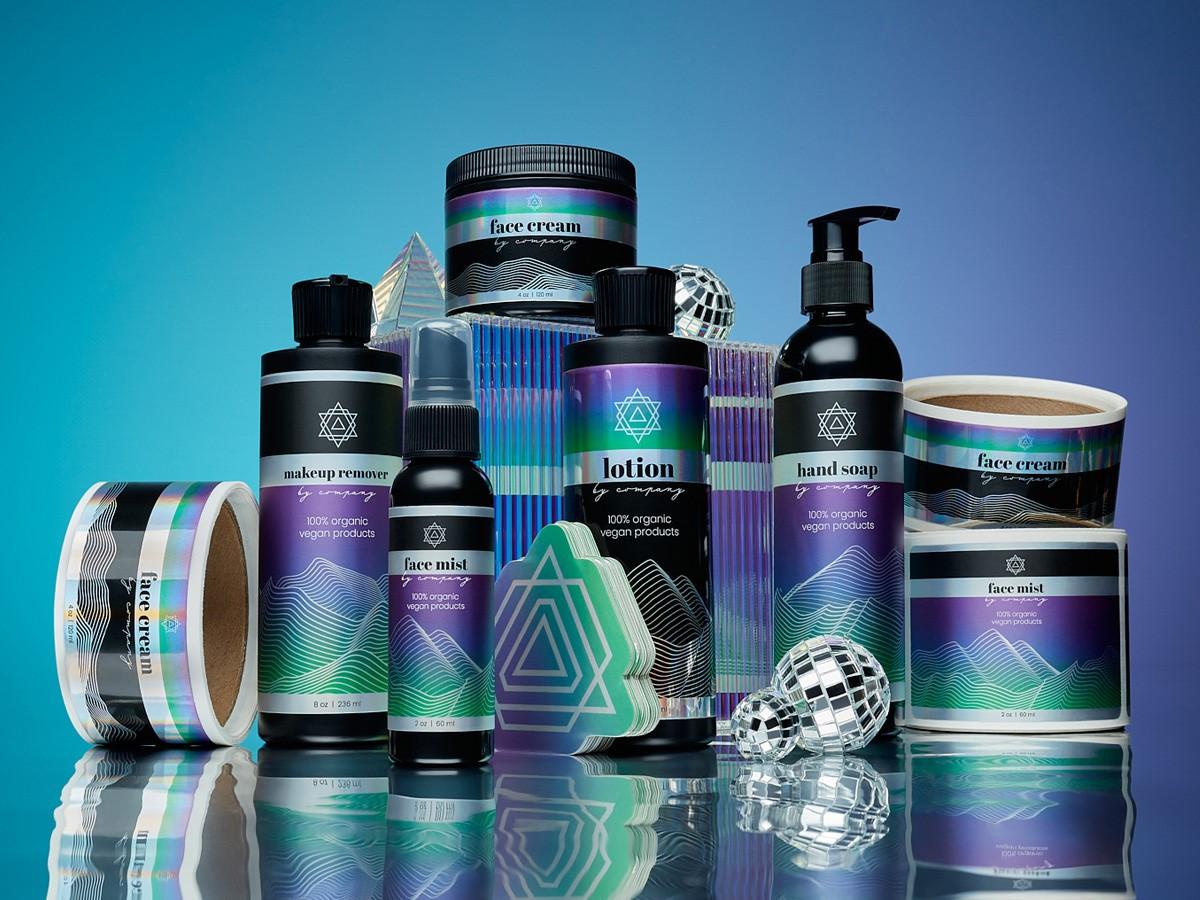
Cosmetics and Personal Care
and skincare brands often use holographic stickers to make product packaging more distinctive. They can be applied to lotion bottles, shampoo containers, serum boxes, makeup packaging, and beauty gift sets.
For example, a skincare brand can use a holographic logo label on a clean white bottle to create a contrast between a simple package design and a reflective brand element.
For curved bottles or small containers, label flexibility and adhesive compatibility should be checked before mass production.
Food and Specialty Product Packaging
Specialty food brands may use holographic labels to distinguish limited-edition products, gift packaging, confectionery, or premium product collections.
A small holographic element can highlight a brand logo or product name without covering the entire package. This is useful when the original packaging design needs to remain visible.
For food products stored in refrigerators or exposed to moisture, buyers should also consider water resistance, adhesive performance, and the actual storage temperature.
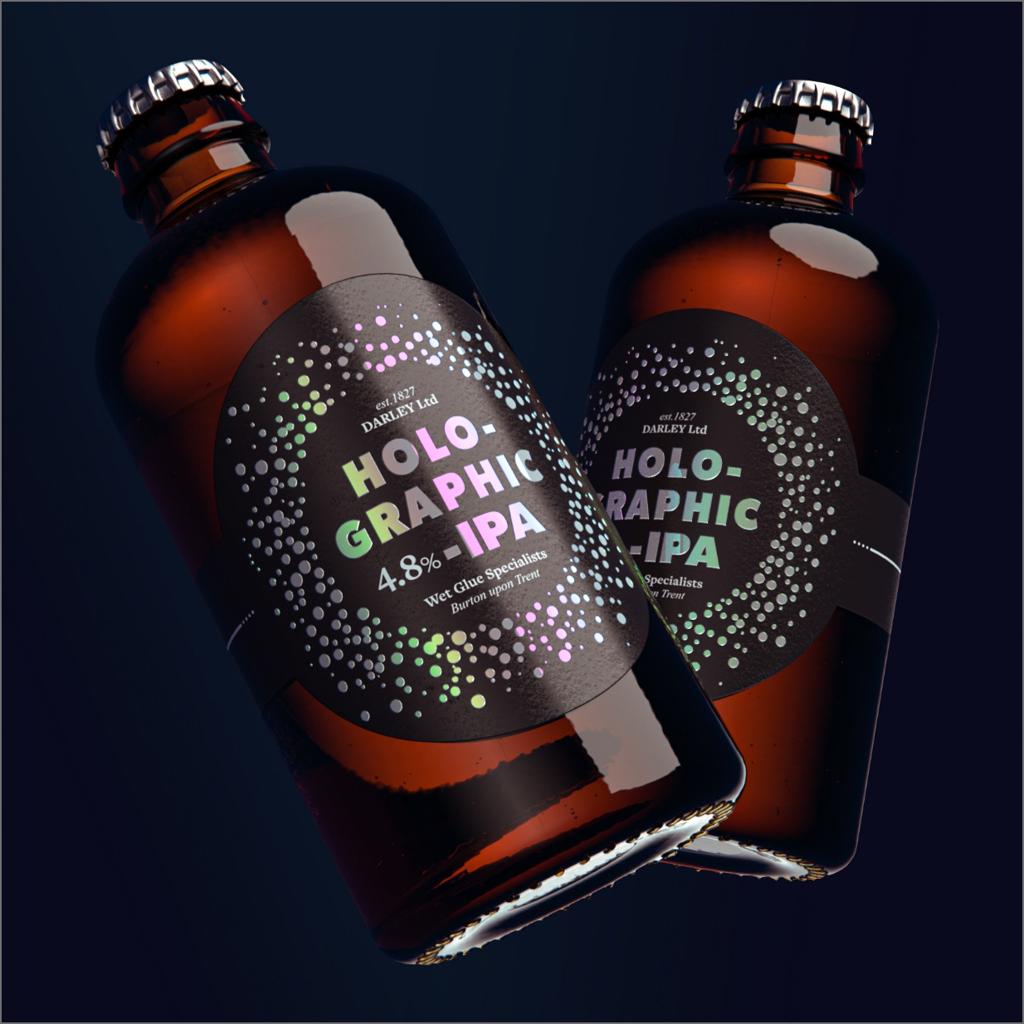
Beverage Bottles and Cans
Craft beer, specialty drinks, wine, and promotional beverages can use holographic labels to create a more noticeable appearance.
For refrigerated bottles, condensation can affect label adhesion and appearance. The label material, adhesive, and protective coating should therefore be selected according to the product's storage and handling conditions.
A holographic effect alone does not make a label waterproof. The complete label construction must be evaluated for the intended environment.
Electronics and Accessories
Electronic products often require labels for brand identification, product information, warranty management, or additional visual authentication.
Holographic stickers can be placed on product boxes, accessories, electronic components, and warranty areas. If the label must show whether a package has been opened or removed, a suitable tamper-evident construction should be specified separately.
Gifts and Promotional Products
Gift boxes, event merchandise, promotional products, and limited-edition collections can use holographic stickers to add a colorful decorative detail.
Custom shapes, logos, and patterns allow the sticker to match a campaign or product theme.
4. Decorative Holographic Stickers vs. Security Hologram Labels
One common purchasing mistake is assuming that every holographic sticker can prevent counterfeiting. In practice, decorative and security-oriented labels serve different purposes.
| Feature | Decorative Holographic Sticker | Security Hologram Label |
|---|---|---|
| Main purpose | Visual appeal and branding | Product authentication |
| Appearance | Rainbow or reflective patterns | May include customized optical features |
| Design | Standard or custom decorative patterns | Brand-specific security design |
| Tamper evidence | Not automatic | Available with suitable construction |
| Typical use | Packaging and promotions | Authentication and brand protection |
If your main goal is to improve packaging appearance, decorative holographic labels may be sufficient.
If your business faces counterfeiting, unauthorized opening, or warranty fraud, discuss a security-focused solution instead. A holographic effect alone cannot guarantee complete product protection.
5. How to Choose the Right Holographic Label
Choosing the right label involves more than selecting a rainbow pattern. Consider these factors before requesting a quotation.
1. Label application surface
Is the label going onto a glass bottle, plastic container, paper box, or curved surface? Different surfaces may require different materials and adhesives.
2. Desired visual effect
Decide whether you need a full holographic background, a transparent holographic effect, or a smaller holographic logo area.
3. Printing and finishing
Discuss the required artwork, colors, printing method, and protective finish. Make sure the printed design remains clear against the reflective background.
4. Storage and handling conditions
Consider moisture, refrigeration, friction, sunlight, and temperature changes. These conditions influence material and adhesive selection.
5. Security requirements
If the label needs to show signs of removal or support product authentication, specify this before production. VOID effects, destructible materials, customized holograms, and unique codes are different options that should be evaluated according to the required protection level.
6. Sample testing
Request a sample on the actual packaging surface whenever possible. Check adhesion, appearance, readability, and resistance under realistic storage and handling conditions before approving a larger order.
6. Custom Holographic Stickers for Different Packaging Needs
There is no single holographic label construction that suits every product. A cosmetic bottle, refrigerated beverage, electronics box, and promotional gift package have different requirements.
When developing custom holographic stickers, brands can discuss label size, shape, material, adhesive, holographic pattern, printing colors, and surface finishing according to the intended application.
At LumoLabels, we provide customized label solutions for different product packaging needs. Our team can help evaluate the label design and material options based on your artwork, packaging surface, and application environment.
Before placing an order, prepare your product photos, label dimensions, packaging material, expected quantity, and intended use. These details make it easier to evaluate a suitable label construction and prepare an accurate quotation.
Frequently Asked Questions
Are holographic stickers waterproof?
Not all holographic stickers are waterproof. Water resistance depends on the film, adhesive, printing, and protective finish. For refrigerated beverages or products exposed to moisture, request a construction suitable for those conditions and test it on the actual package.
Can holographic stickers be customized with a company logo?
Yes. Depending on the material and printing process, a company logo, text, colors, and selected graphic elements can be incorporated into the label design.
Are holographic stickers suitable for cosmetic bottles?
Yes. They can be used on skincare bottles, shampoo containers, lotion packaging, and cosmetic boxes. The material and adhesive should be selected according to the container surface and product environment.
Do holographic stickers prevent counterfeiting?
A decorative holographic sticker does not automatically prevent counterfeiting. For stronger authentication, brands should consider customized security holograms and additional features such as serial numbers, QR codes, or tamper-evident materials.
Can holographic labels be applied to curved bottles?
They can be suitable for many curved containers, but the result depends on the label material, flexibility, bottle shape, and adhesive. Testing on the actual container is recommended.
Conclusion
Holographic stickers are useful when brands need more than a standard printed label. They can improve shelf visibility, create a distinctive packaging appearance, support promotional designs, and form part of a wider product authentication solution.
The best choice depends on the problem you are trying to solve. If you need decorative packaging, focus on the holographic effect and label compatibility. If you need product protection, evaluate security features and tamper evidence separately.
Choosing the right material and construction from the beginning helps avoid unnecessary costs and ensures the finished label works with your actual packaging.