CUSTOM LABELS VS STICKERS:UNDERSTANDING THE DIFFERENCE
Introduction
If you run a skincare, food, beverage, handmade goods or gift brand, you have definitely encountered two terms: custom labels and custom stickers. Many entrepreneurs, designers and even printing suppliers often treat these two words as interchangeable. People casually use "sticker" to refer to bottle packaging labels, and call decorative die-cut decals "labels". However, in professional packaging and printing industries, custom labels and stickers have clear differences in core purposes, material selection, structural design, production formats and applicable scenarios. Choosing the wrong option will lead to unnecessary cost waste, poor sticking effect, and even non-compliance risks for exported products.
At first glance, both custom labels and stickers are self-adhesive printed items with backing liner. They can be printed with custom logos, patterns and text. This similarity is why so many buyers get confused. But once you dive into their design logic, you will see a clear dividing line.
In short: Custom labels are functional packaging carriers for products, focusing on information display and long-term fixed attachment on packaging containers. Stickers are independent decorative and promotional items, designed for flexible use, brand dissemination and personal decoration.
This guide will break down all key distinctions, include a detailed comparison table, analyze typical application cases, and help you confidently decide whether custom labels or stickers match your brand's packaging plan.
Core Definition: Custom Labels VS Custom Stickers
What Are Custom Labels?
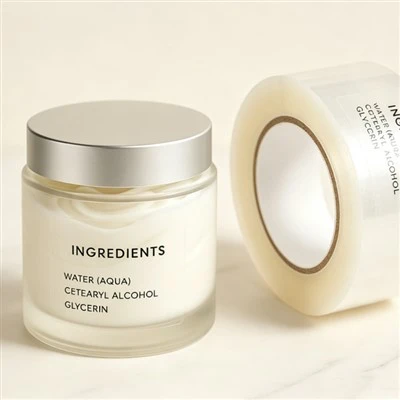
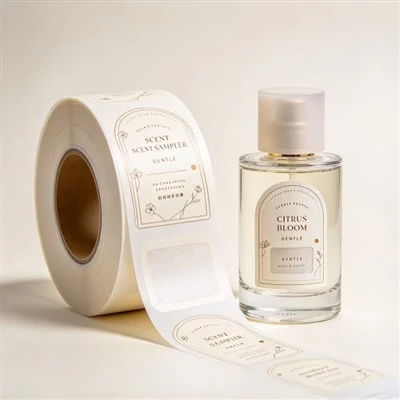
Custom labels are purpose-built self-adhesive stickers designed to be permanently attached to product packaging as an essential part of finished goods. They are mainly applied to bottles, jars, cartons and packaging containers before products leave the factory. Labels carry mandatory product information, including brand logo, ingredient list, net content, expiry date, barcode, warning statements and origin information.
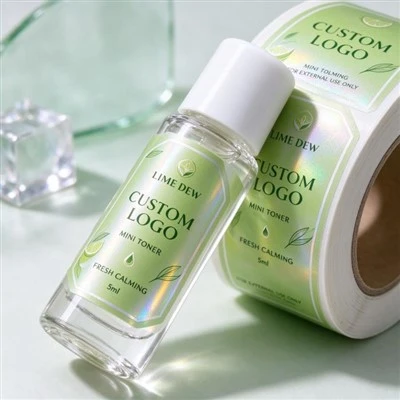
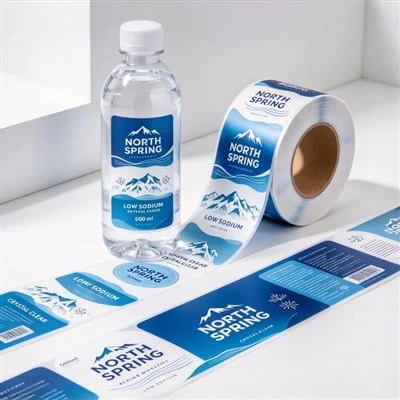
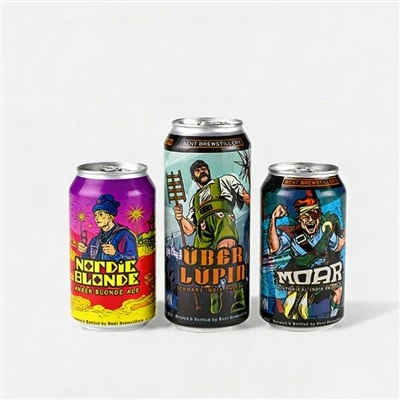
Custom labels prioritize practicability and stability. Manufacturers normally produce them in roll format, perfectly compatible with automatic labeling machines for mass production. They can also be supplied in sheet form for small-batch manual operation. Materials and adhesive types are selected according to the working environment: waterproof, oil-proof, moisture-resistant properties are widely required for cosmetics, daily chemicals and food packaging.
Common types: cosmetic bottle roll labels, food jar labels, household detergent container labels, warehouse identification labels.
What Are Custom Stickers?
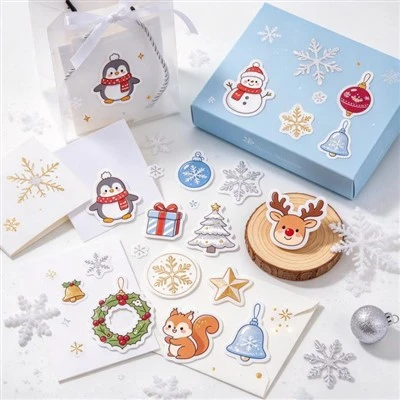
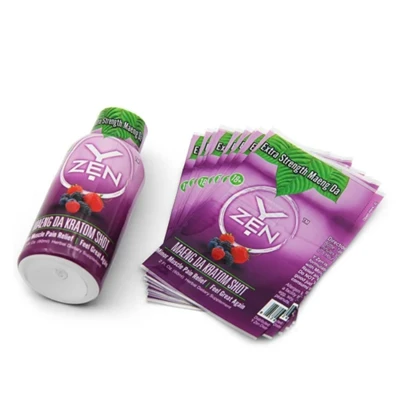
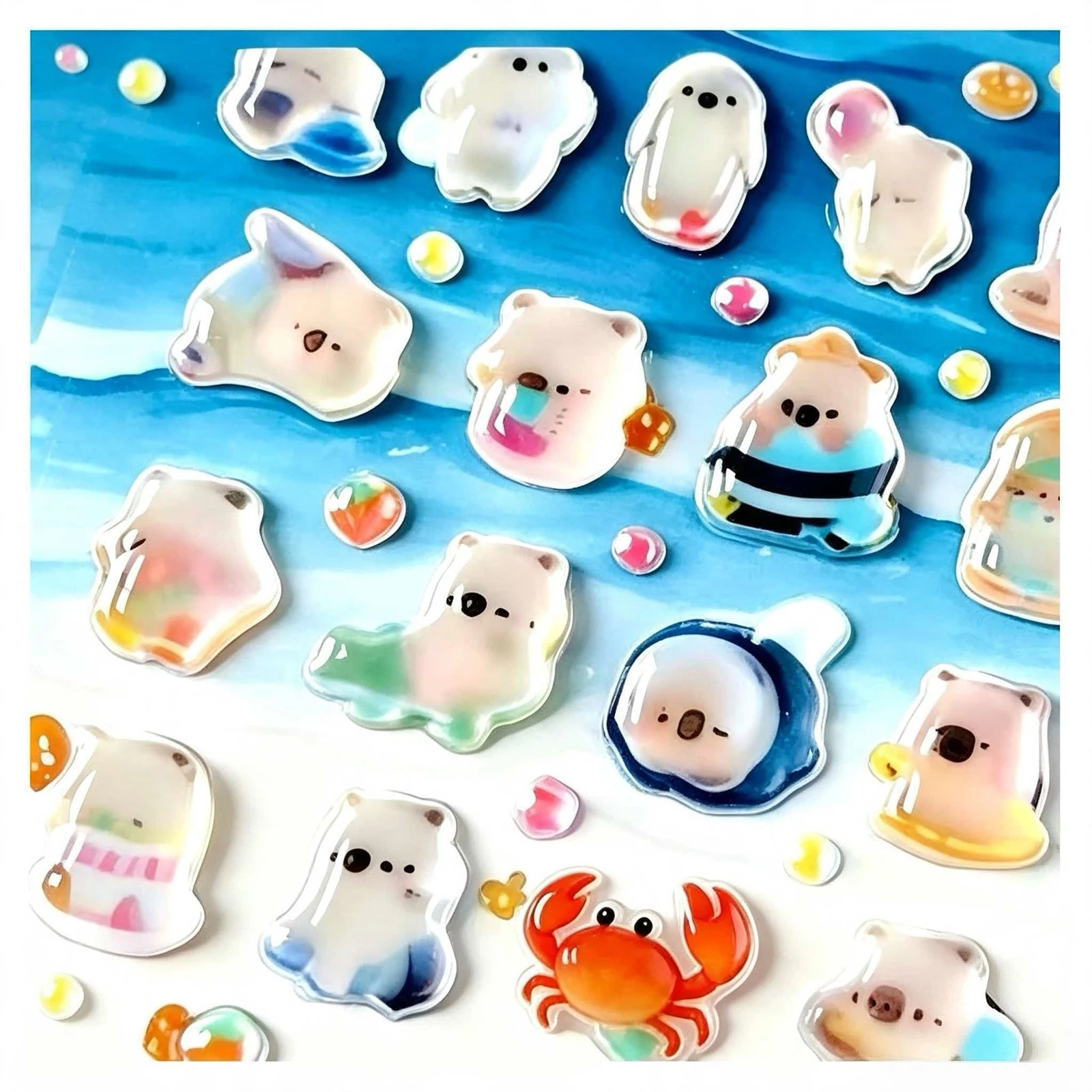
Custom stickers (die-cut stickers / decorative decals) are independent adhesive decorations focused on visual expression and brand promotion. They do not belong to compulsory packaging components. They can be freely pasted on water bottles, laptops, gift boxes, shopping bags, vehicle surfaces and countless other surfaces. End users can choose where and when to apply them.
Stickers emphasize artistic design and personalized experience. Most are die-cut along the outline of graphics, with no extra blank border. They are usually supplied as individual pieces or sticker sheets, and widely used as promotional free gifts, merchandise for sale, holiday decoration accessories. Compared with labels, stickers pursue thicker vinyl substrates, excellent outdoor weather resistance, and eye-catching creative patterns.
Common types: brand promotional stickers, handmade craft decorative stickers, gift box embellishment decals, laptop & tumbler stickers.
| Comparision Item | Custom Labels | Custom Stickers |
| Primary Purpose |
Functional identification; display product information; meet regulatory compliance requirements; become fixed part of product packaging |
Decoration & brand promotion; personalized expression; independent promotional merchandise; flexible decorative accessories |
| Main Content |
Mix of text, barcodes, QR codes, specification data, legal warning text + brand logo; information layout needs to maintain high readability |
Mainly patterns, artistic logos, slogans; simple text; focus on visual attractiveness |
| Production Format |
Mostly roll format for automatic labeling; sheet labels for small orders; regular shapes (rectangle, round, oval) are mainstream |
Sheet format or individual die-cut single pieces; irregular special shapes are very common; seldom used for automatic labeling machines |
| Common Base Materials |
Coated paper, matte BOPP, frosted PP, waterproof PET; relatively thin substrate |
Thick vinyl/PVC, holographic film; thicker face stock for better texture |
| Adhesive Options |
Permanent acrylic adhesive; customized glue resistant to oil, water, chemical solvents according to packaging materials |
Permanent / removable repositionable adhesive; removable glue is popular for consumer decorative stickers |
| Durability Focus |
Stable adhesion on fixed packaging; resist moisture, oil, low temperature in storage and transportation; avoid blistering or falling off during product shelf life |
Strong anti-UV, waterproof, scratch-proof; suitable for repeated contact and outdoor long-term exposure |
| Typical Application Surfaces |
Glass bottles, plastic jars, cosmetic containers, food cans, packaging cartons (fixed packaging surface) |
Water bottles, notebooks, gift bags, car surfaces, packaging outer decoration, consumer personal belongings |
| Compliance Function |
Can be printed with all mandatory information to meet food, cosmetic import and export regulatory standards |
Generally cannot be used as official product information carrier; only serve as extra decoration |
| Typical Order Scenarios |
Mass production assembly line labeling; formal retail commodity packaging |
Brand activity giveaways, boutique retail merchandise, handmade gift decoration |
Deep Dive Into Key Differences
Functional Position: Compliance Carrier VS Decorative Gift
The biggest gap between labels and stickers lies in functional positioning. Custom labels undertake legal information transmission obligations. For cosmetics, food and cross-border exported goods, market regulators require complete product information printed directly on packaging labels. You cannot replace formal product labels with decorative stickers. If you only attach stickers with brand logos on bottles without standard labels, your goods may face customs seizure or offline market removal risks.
Stickers have no regulatory obligations. Even if you print brand logos on stickers, they only act as secondary decoration. Many brands put stickers inside gift boxes as free gifts, allowing customers to stick them on personal items. This explains why stickers pursue creative graphics, while labels balance aesthetics and information readability.
Shape & Design Tendency
Custom labels tend to adopt regular shapes. Rectangular, round and oval labels fit flat bottle surfaces and maintain neat text layout. Although special-shaped labels are available, they are less common due to higher die cost. Designers need to reserve enough space for ingredient tables, production dates and barcodes.
Stickers favor irregular contour die-cutting. The outline follows the edge of patterns, such as cartoon figures, plant silhouettes, brand icon shapes. There is no need to reserve space for dense text. Creativity is the primary design principle
Typical Application Cases
Suitable Scenarios for Custom Labels
1.Cosmetic, serum, perfume, essential oil bottle official packaging;
2.Honey, juice, sauce, wine and other food & beverage container marking;
3.Detergent, shampoo, body wash daily chemical bottle labeling;
4.Warehouse inventory identification, logistics barcode marking;
5.All commodities that need to print legal product specification information for retail sales.
Suitable Scenarios for Custom Stickers
1.Brand promotional free gifts placed inside parcels;
2.Decorative accessories for gift boxes, shopping bags and handmade crafts;
3.Merchandise sold independently in boutiques;
4.Decoration for tumblers, laptops, skateboards and cars;
5.Limited holiday activities, pop-up market creative decorative supplies.
Conclusion
To sum up, custom labels and custom stickers share similar production technology, but they serve completely different commercial purposes. Custom labels are an indispensable part of standardized product packaging, balancing functionality, regulatory requirements and brand display. Custom stickers are flexible marketing tools focusing on creativity, interaction and brand outreach.
When you place an order with printing manufacturers, clearly defining whether you need labels or stickers can help suppliers recommend suitable substrates, adhesive types, production formats and cutting techniques, avoiding wrong samples and repeated modification. Many brands use both solutions simultaneously: custom labels for formal bottle packaging, and matching custom stickers as parcel free gifts, combining standardized product marking and creative brand marketing.