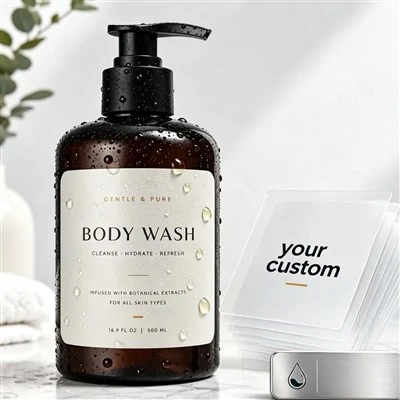
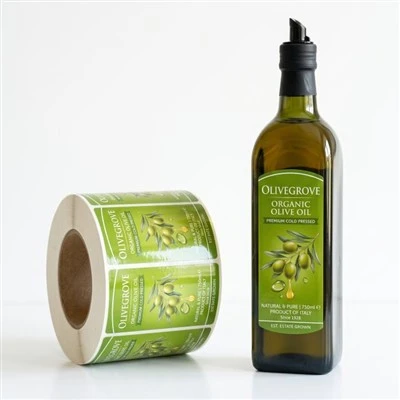
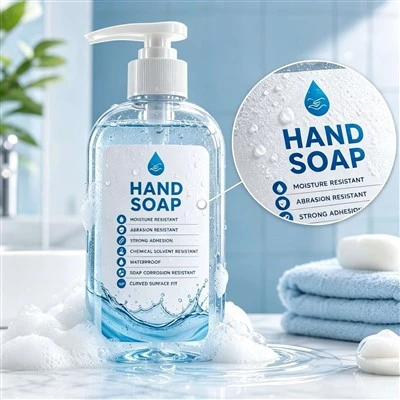
SpeedPrint Era (Xiamen) Digital Co., Ltd. is one of the leading manufacturers and suppliers of laboratory reagent bottle labels in China. If you're going to wholesale bulk eco-friendly laboratory reagent bottle labels, welcome to get free sample from our factory. All customized products are with high quality and low price.
Laboratory Reagent Bottle Labels are custom self-adhesive labels for reagent bottles, buffer solutions, prepared laboratory liquids, and research chemicals. Paper and synthetic film constructions are available for different bottle surfaces and handling conditions. Custom options include dimensions, adhesive, printing, finish, and roll configuration. Layouts accommodate chemical names, concentrations, batch numbers, preparation dates, storage instructions, and barcodes. Material selection is based on the container substrate, chemical exposure, storage temperature, and labeling process.
Key Advantages
Clear Information: Print layouts organize chemical names, concentrations, batch codes, and storage details within the available label area. Text size and contrast are reviewed against the final dimensions to support routine identification.
Bottle Surface Fit: Custom die-cut shapes and dimensions accommodate flat panels and curved bottle walls. Adhesive selection accounts for glass, HDPE, PP, surface condition, and application temperature.
Application-Based Resistance: Face stock, ink, adhesive, and protective finish are assessed as a complete construction. Selection considers the named chemical, concentration, contact duration, wiping method, and temperature.
Traceable Identification: Batch codes, serial numbers, barcodes, and QR codes can be incorporated into the artwork to support laboratory inventory and product identification workflows.
Material Options
PET Film: Polyester film is an option for labels requiring dimensional stability, moisture resistance, and a smooth printing surface. Chemical compatibility depends on the selected grade, ink, adhesive, and exposure conditions.
PP Film: Polypropylene film suits many bottle-labeling applications requiring moisture resistance and flexible packaging compatibility. Adhesion should be evaluated on the actual bottle surface.
Coated Paper: Coated paper is suitable for many dry, indoor applications where standard identification and printed information are the primary requirements.
Adhesive and Protective Finish: Permanent acrylic adhesive options can be evaluated for glass and plastic containers. Varnish or lamination may improve abrasion protection. Solvent resistance must be confirmed for the complete printed label construction.
Product Applications
Chemical Reagent Bottles: Identification labels accommodate chemical names, concentrations, hazard information, and batch references according to the approved artwork and applicable labeling requirements.
Buffer and Solution Bottles: Layouts provide space for solution names, preparation dates, concentrations, expiry dates, and storage conditions.
Research and Testing Laboratories: Labels identify working reagents, analytical solutions, and quality-control materials used in laboratory procedures.
Laboratory Supply Packaging: Consistent layouts support product ranges with different formulations, bottle sizes, languages, and batch identifiers.
Product Specifications
|
Parameter |
Reference Specification |
|
Label type |
Pressure-sensitive self-adhesive |
|
Face material |
Coated paper, PET, or PP film |
|
Label width |
10–100 mm |
|
Label height |
10–150 mm |
|
Shape |
Rectangle, square, circle, or custom die-cut |
|
Adhesive |
Permanent acrylic options |
|
Printing |
1–8 colors, subject to process confirmation |
|
Surface finish |
Matte, gloss, or protective coating |
|
Core diameter |
25.4 mm or 76.2 mm |
|
Roll direction |
4 standard orientations, subject to confirmation |
|
Label gap |
2–5 mm, subject to equipment requirements |
|
Supply format |
Roll labels; other formats subject to confirmation |
Customization Options
Dimensions and Die-Cut: Specify width, height, corner radius, and shape according to the available bottle panel. Curved bottle surfaces require suitable dimensions to limit edge lifting.
Artwork and Variable Data: Custom layouts accommodate product information, symbols, batch codes, barcodes, and designated data fields. Final artwork should be approved before printing.
Material Construction: Face stock, adhesive, ink, and protective finish are selected according to the container and intended exposure conditions. Sample evaluation helps confirm the proposed construction.
Roll Configuration: Core diameter, winding direction, label gap, roll quantity, and maximum roll diameter can be specified according to storage and application requirements.
Printing and Information Requirements
Small-Format Printing: Font size, line spacing, contrast, and symbol dimensions should be checked at actual label size. The layout must provide adequate space for essential information.
Barcode and QR Code Printing: Code dimensions, contrast, quiet zones, and print quality affect scanning performance. Verification should use the final printed label and intended scanning conditions.
Chemical and Safety Information: Provide approved text, symbols, and destination-market language before artwork release. Applicable chemical labeling requirements should be reviewed for the product and intended use.
Material Selection and Quality Checks
Chemical Compatibility: Identify the chemical, concentration, contact method, duration, and temperature. Splash exposure, repeated wiping, and immersion require separate evaluation conditions.
Adhesion Performance: Confirm bottle material, surface curvature, cleanliness, and application temperature. Evaluate adhesion on the actual substrate, including plastic bottles with low surface energy.
Print Durability: Check legibility, ink transfer, abrasion, and barcode readability after representative handling and chemical exposure. Record the test conditions and acceptance criteria before production approval.
Frequently Asked Questions
Q: Can laboratory reagent bottle labels be customized?
A: Yes. Dimensions, shape, material, adhesive, printing, finish, and roll configuration can be specified for the intended application.
Q: Which material is suitable for reagent bottles?
A: PET and PP films are options for moisture-exposed applications, while coated paper suits many dry indoor uses. Selection depends on the chemical, container surface, and handling conditions.
Q: Can the labels resist solvents?
A: Selected constructions can be evaluated for specified solvents. Performance depends on chemical concentration, contact duration, temperature, printing system, adhesive, and protective finish.
Q: Can batch numbers and barcodes be included?
A: Yes. Batch identifiers, serial numbers, barcodes, and QR codes can be incorporated into approved artwork, subject to the required data format and print specifications.
Q: What information is needed for a quotation?
A: Provide bottle material, label dimensions, quantity, artwork, chemical exposure conditions, storage temperature, and roll specifications. These details help establish the required construction and production parameters.
Hot Tags: laboratory reagent bottle labels, China laboratory reagent bottle labels manufacturers, suppliers, factory