SpeedPrint Era (Xiamen) Digital Co., Ltd. is one of the leading manufacturers and suppliers of salad dressing bottle labels in China. If you're going to wholesale bulk eco-friendly salad dressing bottle labels, welcome to get free sample from our factory. All customized products are with high quality and low price.
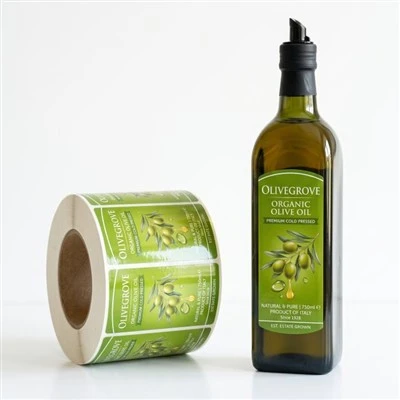
Salad Dressing Bottle Labels are custom pressure-sensitive labels for vinaigrettes, ranch, Caesar dressing, Italian dressing, and other bottled condiments. Paper and film options support different packaging requirements, with customization available for label dimensions, adhesive, printing, surface finish, and roll format. Front, back, and wraparound layouts accommodate different bottle shapes and product ranges.
Key Advantages
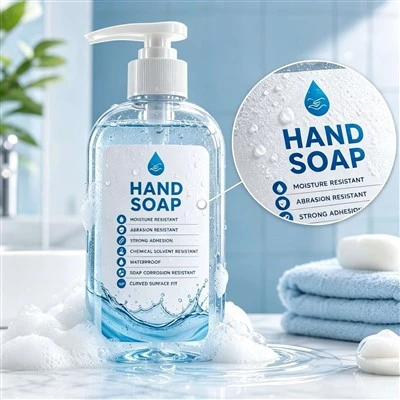
Moisture-Resistant Materials: BOPP film provides a suitable facestock option for bottles exposed to splashes and condensation. The adhesive and surface finish should match the storage environment and expected handling conditions.
Accurate Label Fit: Custom dimensions and die-cut shapes follow the usable bottle panel. Correct sizing supports consistent positioning, clear product information, and a uniform appearance across multiple package sizes.
Consistent Brand Presentation: Controlled artwork, color references, and print registration help maintain visual consistency across flavors and repeat production runs.
Materials & Adhesives
White BOPP Film: Provides an opaque, smooth printing surface for product names, ingredient information, barcodes, and detailed graphics. Suitable for many glass and plastic bottles when matched with a compatible adhesive.
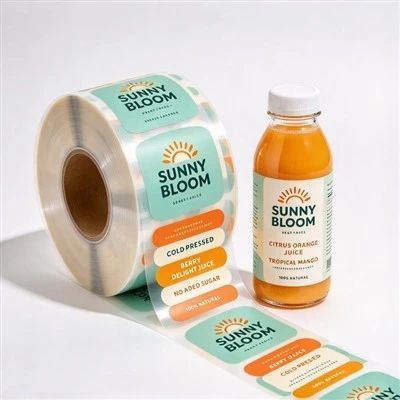
Clear BOPP Film: Creates a transparent-label effect on clear containers. Selective white ink can improve opacity beneath specific design elements.
Coated Paper: Offers a paper-based finish for dressing ranges requiring a traditional label appearance. A compatible protective coating can help preserve the printed surface during routine handling.
Adhesive Selection: Adhesive choice depends on the bottle material, surface energy, curvature, application temperature, and storage conditions. Refrigerated products require particular attention to condensation and application conditions. Confirm the complete label construction on the intended container.
Custom Specifications
|
Parameter |
Reference Range or Option |
|
Label width |
30–150 mm |
|
Label height |
40–180 mm |
|
Facestock thickness |
50–90 μm |
|
Materials |
White BOPP, clear BOPP, coated paper |
|
Shapes |
Rectangle, oval, circle, custom die-cut |
|
Printing |
1–8 colors, subject to process |
|
Surface finish |
Gloss, matte, varnish, lamination |
|
Core inner diameter |
25.4, 40, or 76 mm |
|
Roll outer diameter |
100–300 mm, subject to equipment |
|
Supply format |
Roll labels, custom winding direction |
Printing & Finishing Options
Color Reproduction: CMYK and selected spot colors support detailed graphics and flavor identification. Approved artwork should include bleed, legible text, and defined color references.
Surface Protection: Gloss or matte varnish and compatible laminates provide different surface appearances and levels of handling protection. Selection depends on the facestock and intended use.
Die-Cut Design: Custom outlines and rounded corners can follow the available labeling panel. Die-line dimensions should account for bottle shoulders, tapers, and label placement.
Applications
Retail Dressing Bottles
Suitable for vinaigrette, ranch, Caesar, Italian, honey mustard, and other bottled salad dressings.
Refrigerated Products
Material and adhesive combinations can be selected for chilled storage. Condensation exposure and application temperature should be specified before production.
Foodservice Packaging
Custom label sizes and layouts accommodate dressing bottles used in restaurants, catering, and commercial kitchens.
Private-Label Product Ranges
Consistent design layouts distinguish flavors, sizes, ingredients, and product variations across a coordinated packaging range.
Bottle Compatibility & Label Application
Container Surface: Glass and PET commonly provide smooth labeling surfaces. HDPE and other lower-surface-energy plastics may require adhesives formulated for the specific substrate.
Bottle Geometry: Measure the usable panel width, height, and circumference before setting label dimensions. For tapered or contoured bottles, verify label fit and edge contact using the actual container.
Application Conditions: Specify whether labels are applied before or after filling, the bottle temperature, and the presence of moisture. Evaluate adhesion and positioning under the intended application conditions.
Quality Control & Production Requirements
Artwork Inspection: Check finished dimensions, print registration, die-cut alignment, barcode placement, and text legibility against the approved artwork.
Material Verification: Confirm the facestock, adhesive, and finish against the approved specification before production. Documented specifications support consistency across repeat orders.
Roll Inspection: Verify core diameter, outer diameter, winding direction, label orientation, and spacing against the labeling equipment requirements.
Ordering Information
Bottle Details: Provide the container material, dimensions, shape, and available labeling area. A bottle drawing, photograph, or sample helps establish the required fit.
Artwork and Quantity: Submit the artwork, finished label dimensions, number of design variations, and quantity required per design.
Storage and Application: Specify storage temperature, expected moisture exposure, application temperature, and manual or automatic labeling.
Roll Configuration: For machine application, provide the core diameter, maximum roll diameter, unwind direction, and equipment requirements. Confirm the production specification and approve a sample before the order proceeds.
Frequently Asked Questions
Q: Can salad dressing bottle labels be customized?
A: Yes. Dimensions, materials, adhesive, shape, printing, finish, and roll configuration can be specified for each packaging project.
Q: Which material suits refrigerated dressing bottles?
A: BOPP film is a common option. The adhesive and complete label construction should be matched to the bottle surface, application temperature, and condensation conditions.
Q: Can labels be produced for glass and plastic bottles?
A: Yes. Material and adhesive selection depends on the substrate, bottle geometry, and application conditions. Testing on the intended container helps confirm suitability.
Q: Are roll labels available for automatic application?
A: Roll formats can be specified for the intended equipment. Core diameter, roll diameter, winding direction, and label spacing should be confirmed before production.
Q: What information is needed for a quotation?
A: Provide the bottle material and dimensions, label size, material preference, artwork, order quantity, storage conditions, application method, and roll requirements where applicable.
Hot Tags: salad dressing bottle labels, China salad dressing bottle labels manufacturers, suppliers, factory