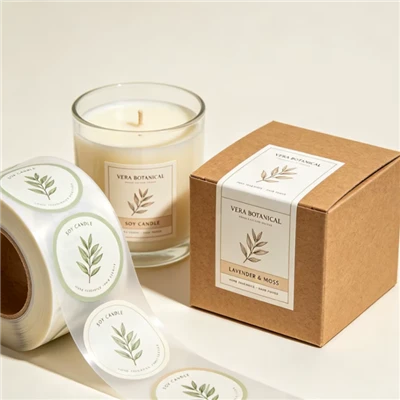
Supplement labels play an important role in how vitamins, nutraceuticals, and wellness products are presented and identified. Beyond branding, a label needs to accommodate product information, fit the packaging properly, and remain suitable for the conditions in which the product is stored and handled.
As supplement packaging continues to diversify, brands can choose from different label materials, finishes, shapes, and printing options. Understanding these choices can make it easier to select a label that matches both the product and the packaging.
What Are Supplement Labels?
Supplement labels are custom-printed labels used on products such as vitamins, dietary supplements, nutraceuticals, herbal supplements, and other wellness products.
Depending on the packaging, a supplement label may include information such as the product name, ingredients, Supplement Facts, directions for use, warnings, net quantity, barcode, and brand information.
Because supplement containers are often relatively small while containing a large amount of information, label design needs to balance readability, organization, and visual appeal.

What Products Use Supplement Labels?
Supplement labels are used across a wide range of health and wellness products.
Vitamins
Vitamin products commonly use labels on bottles or jars. Different products, such as multivitamins, Vitamin C, Vitamin D, and mineral supplements, may use a consistent label structure while using different colors or product names for identification.
Dietary Supplements
Capsules, tablets, gummies, powders, and other dietary supplements can all require custom labels. The label format usually depends on the type and size of the packaging.
Nutraceuticals
Nutraceutical products often contain detailed product information and may use labels designed around a more technical or professional appearance.
Herbal Supplements
Herbal products frequently use natural-looking packaging and label designs. Paper textures, muted colors, and simple typography are common choices, although the final design depends on the brand.
Wellness Products
The broader wellness category includes many different products, so label requirements can vary considerably depending on the container, ingredients, and intended use.

How Do You Choose the Right Material for Supplement Labels?
Label material affects both appearance and performance.
There is no single material that is suitable for every supplement product. The choice usually depends on the packaging surface, storage environment, expected handling, and desired appearance.
Paper Labels
Paper is widely used when the packaging calls for a traditional, natural, or premium appearance.
It can work well for products stored in relatively dry environments where high moisture resistance is not a primary requirement.
BOPP Labels
BOPP is a synthetic material commonly used for bottles and jars.
Compared with standard paper, it offers better resistance to moisture and everyday handling, making it suitable for supplement packaging that may be exposed to condensation or humid environments.
Clear Labels
Clear labels allow part of the bottle or container to remain visible through the label.
They are often used for minimalist or modern packaging designs and can create a "no-label" visual effect when applied correctly.
When Should You Use Waterproof Supplement Labels?
Not every supplement requires a waterproof label, but environmental conditions should be considered before choosing the material.
A bottle stored in a bathroom, kitchen, refrigerator, gym bag, or other humid environment may encounter moisture during normal use.
For these applications, a synthetic material may be more appropriate than conventional paper.
The important consideration is not simply whether a label is called "waterproof," but whether the label material, adhesive, and packaging surface are suitable for the actual application.
Matte vs. Gloss Supplement Labels
The finish of a label can significantly change the appearance of the finished package.
Matte Finish
Matte surfaces have a softer, low-reflection appearance. They are often associated with minimalist, natural, and premium packaging.
Gloss Finish
Gloss surfaces reflect more light and can make colors appear brighter and more vibrant.
They can work well for products that rely on strong colors or bold graphics.
Soft-Touch Finish
Soft-touch finishes provide a smooth tactile surface and are often used when the packaging is intended to feel more premium.
The choice between matte, gloss, and soft-touch is primarily a design decision, although the final result also depends on the label material and printing process.
Why Is Print Quality Important for Supplement Labels?
Supplement labels often contain a large amount of information within a limited space.
Small text, tables, ingredient lists, barcodes, and other detailed elements need to remain clear and readable.
For this reason, printing quality is particularly important for supplement packaging.
High-resolution digital printing can be useful for designs that contain:
Fine text
Small graphics
Detailed illustrations
Multiple colors
Gradients
Barcodes
Variable information
Good label design should also leave enough visual space between different information areas so the packaging does not appear overcrowded.

How Can Different Supplement SKUs Have a Consistent Look?
Brands with multiple supplement products often need to balance product differentiation and brand consistency.
For example, a supplement range might include:
Multivitamin
Vitamin D
Magnesium
Collagen
Probiotics
Each product can use a different color or product name while maintaining the same logo, typography, layout, and overall label structure.
This creates a recognizable product family while allowing customers to distinguish between individual products.
Common Label Shapes for Supplement Packaging
The shape of a supplement label usually follows the shape of the container.
Common formats include:
Rectangular labels
Wrap-around labels
Front and back labels
Oval labels
Die-cut custom shapes
Full-body labels
For cylindrical bottles, wrap-around labels are particularly common. For smaller containers, front-and-back labels may provide more flexibility for organizing product information.
The label dimensions should be tested against the actual packaging before mass production, especially when the container has curves, tapered surfaces, or seams.
What Should You Consider Before Ordering Supplement Labels?
Before producing custom supplement labels, it is useful to confirm several details:
Packaging: What type of bottle, jar, pouch, or container will be used?
Dimensions: What label size and shape will fit the packaging?
Material: Will the product be exposed to moisture, oil, refrigeration, or frequent handling?
Design: How much information needs to fit on the label?
Finish: Should the packaging have a matte, gloss, soft-touch, or specialty appearance?
SKUs: Will several products need to share the same label design system?
Considering these factors before printing can help avoid problems with label fit, readability, or material performance later.

Final Thoughts
Choosing a supplement label is a combination of design, material, printing, and packaging considerations.
A good label should fit the container, remain readable, suit the product's environment, and communicate the brand's visual identity clearly.
For vitamin, nutraceutical, dietary supplement, and wellness products, understanding the differences between materials, finishes, label formats, and printing options can make the packaging development process much easier.
Frequently Asked Questions
What are supplement labels?
Supplement labels are printed labels used for vitamins, dietary supplements, nutraceuticals, herbal products, and other wellness products. They typically display product information, ingredients, directions, warnings, and brand details.
What material is best for supplement labels?
The best material depends on the packaging and storage environment. Paper works well for a natural or premium appearance, while BOPP and other synthetic materials are often preferred when moisture resistance and durability are important.
Are waterproof labels necessary for supplements?
Not always. Waterproof or moisture-resistant materials are useful for products exposed to humidity, condensation, refrigeration, or frequent handling.
What information should a supplement label include?
Depending on the market, supplement labels may include the product name, Supplement Facts, ingredients, serving information, directions, warnings, net quantity, barcode, and manufacturer information. U.S. requirements should be checked with the FDA.
Do supplement labels need to follow local regulations?
Yes. Labeling requirements vary by country and market. Brands should review the applicable regulations before finalizing label artwork.
References
U.S. Food & Drug Administration (FDA) - Dietary Supplement Labeling Guide
FDA Dietary Supplement Labeling Guide
FDA - General Dietary Supplement Labeling
FDA General Dietary Supplement Labeling
FDA - Nutrition Labeling / Supplement Facts
FDA Nutrition Labeling Guide